REVIEW · ROME
Rome at Night Segway Small Group Tour
Book on Viator →Operated by Fat Tire Tours Holdings LLC - Italy · Bookable on Viator
Rome glows better after dark. This small-group Segway tour turns a first Rome night into a smooth route past the Pantheon area, Spanish Steps, Piazza Navona, and an illuminated Trevi Fountain. I love that the ride lets you cover ground like a tour bus, but you still stop often enough to actually look up, take photos, and hear the stories from a licensed guide like Alessandro or Stefano.
The second big win for me is the training side: you start with a safety briefing and time to get comfortable before you roll into the squares and streets. One possible drawback is simple but real: it runs only with good weather, and you’ll be moving through city crossings on a Segway even if your guide keeps things controlled.
In This Review
- Key things to know before you go
- Rome at Night by Segway: The big advantage
- Meet at Via dei Delfini: training, helmets, and the first crossings
- Piazza Navona After Dark: Four Rivers, Santa Agnese, and photo time
- Trevi Fountain glowing at night: what to notice in 10 minutes
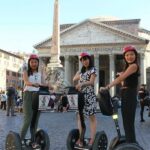
- Pantheon from outside: iconic views without entrance planning
- Spanish Steps at night: evening energy with a calmer pace
- St. Ignazio’s 3D effect: the quick stop that teaches your eye
- How much time you really get (and how to plan your photos)
- Price and value: is $90.74 worth 2.5 hours on a Segway?
- Who should book this Rome Segway night tour
- Should you book Rome at Night by Segway?
- FAQ
- How long is the Rome at Night Segway small group tour?
- Where do I meet for the tour?
- What’s included in the price?
- Do I need tickets for the Pantheon?
- What are the age and weight requirements?
- What should I wear?
- What happens if weather is poor?
Key things to know before you go
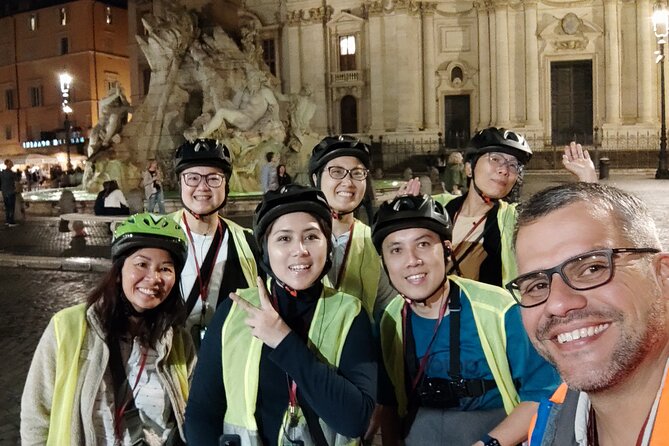
- Max 8 riders keeps the pace human and the learning curve manageable
- Guides like Alessandro, Stefano, and Nico focus on comfort and safety before you head out
- Short, timed stops give you great nighttime viewing without turning the tour into an all-night slog
- Trevi Fountain at night is a big-photo moment with built-in explanation time
- Outside viewing at the Pantheon means you see the look of it without monument-entry planning
- St. Ignazio’s 3D effect is pointed out from outside so you know what you’re looking for
Rome at Night by Segway: The big advantage
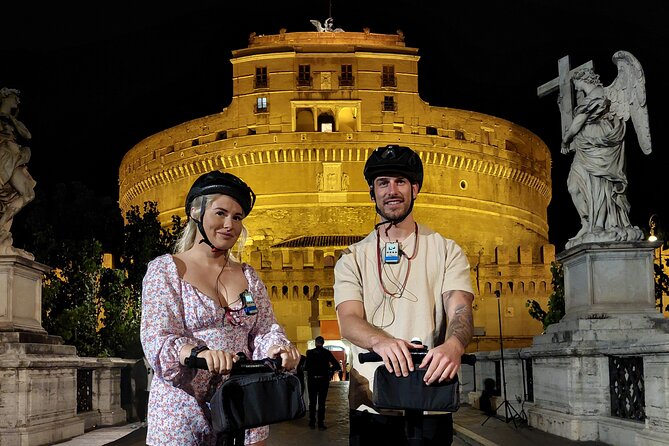
Rome at night is when the city stops feeling like a checklist and starts feeling like a movie set. This tour leans into that by pairing iconic landmarks with the calmer evening vibe, so you’re not only looking at history on paper. You’re seeing Rome lit up—then getting to move through the spaces between them instead of burning time on navigation.
A Segway also changes the rhythm. On foot, you end up shuffling from one hot spot to the next. Here, you get that faster “zip” between major stops, which matters when you have about 2 hours 30 minutes to work with.
And because it’s a small group, you’re not stuck behind ten slow walkers when the route tightens or when you want that one good angle for a photo.
You can also read our reviews of more tours and experiences in Rome.
Meet at Via dei Delfini: training, helmets, and the first crossings
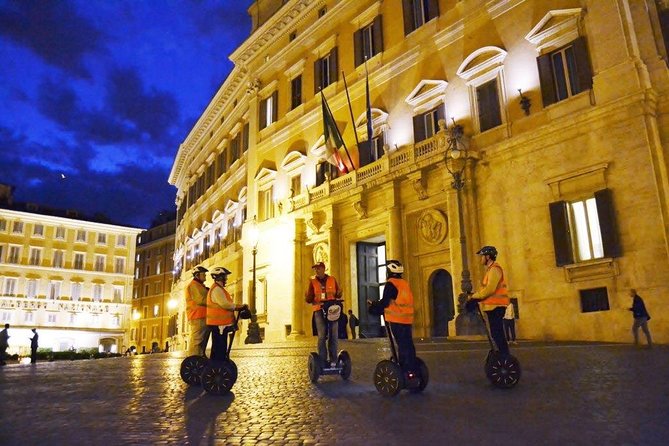
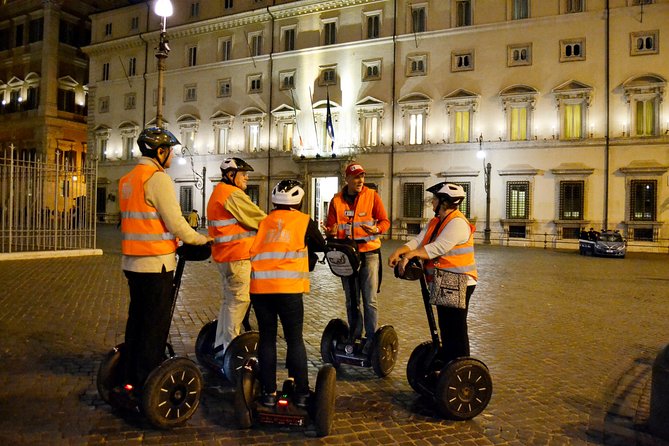
You meet at Via dei Delfini, 35, 00186 Roma, and the tour ends back there—so you’re not guessing about where to regroup. The start includes a safety briefing plus an orientation session, and you get a helmet. Riders need to be at least 16 years old, and there’s also a weight requirement of 40 kilos (90 pounds).
What makes this part work well is the emphasis on getting comfortable before you head into traffic-adjacent streets. People who had never ridden before still reported that the guide teaching moments were patient and that they felt ready after a short practice. Guides like Alessandro and Nico are specifically called out for making sure everyone could operate the Segway safely before rolling into the evening route.
Here’s the practical reality: you’ll be crossing streets and sharing road space. Your guide watches for crossings and will manage the flow for the group. If the idea of that worries you, remember that you’re not thrown into chaos on minute one—you build comfort first, then you go.
Also, wear comfortable shoes. You’ll be standing and maneuvering more than you expect, and evening footwear that’s fine on a museum floor may not be ideal for Segway time.
Piazza Navona After Dark: Four Rivers, Santa Agnese, and photo time
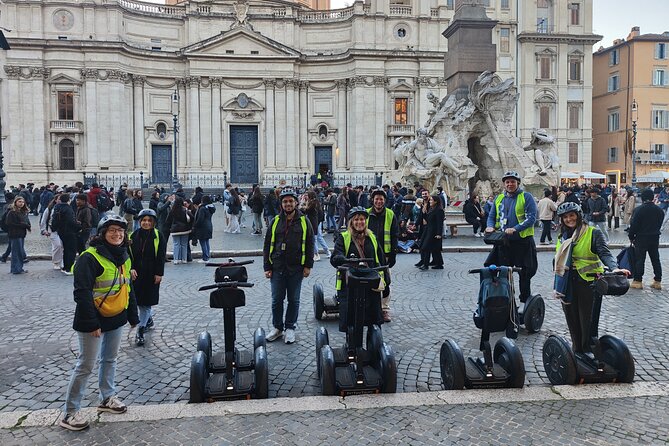
The tour begins with a stop at Piazza Navona, one of Rome’s liveliest squares. At night, the square feels less like a daytime stampede and more like a stage: bright architecture, open sightlines, and enough breathing room to look closely.
At this stop you get:
- An explanation of the square
- Time to see the Fountain of the Four Rivers
- A look at Chiesa di Santa Agnese in Agone
- A dedicated photo moment
Ten minutes sounds short, but it’s timed for what you can do best here: take in the overall layout first, then zoom in for photos of the fountain and church façade details. The fountain is the kind of subject where you’ll want two shots: one from far enough back to show the full composition, and another closer angle to catch sculptural detail.
One extra “wow” factor you may encounter on night tours is a VR-style model mentioned in connection with Piazza Navona. If it’s offered by your guide that evening, it can help you picture what you’re seeing around you instead of just reading about it later.
Trevi Fountain glowing at night: what to notice in 10 minutes
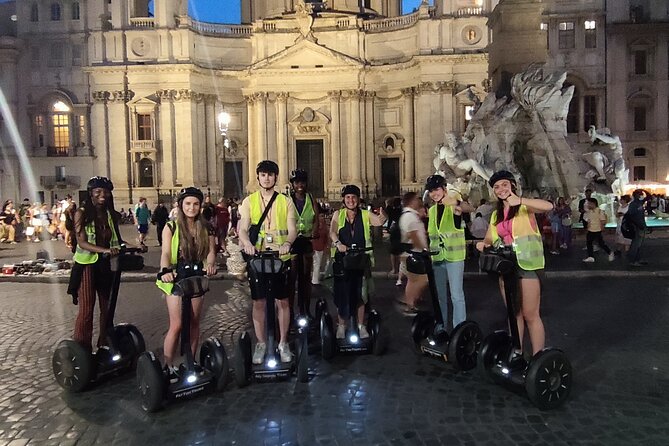
Next is Trevi Fountain (Fontana di Trevi), one of those landmarks that almost forces you to slow down. At night, the lighting changes everything. The water reflections and the stonework contrast feel more dramatic, and your photos tend to come out better with fewer bright daytime shadows.
You’ll get:
- A viewing moment
- Explanation time
- Time for pictures
Ten minutes here is a sweet spot for two reasons. First, the fountain is visually dense—if you rush, you’ll miss the big forms. Second, Trevi attracts crowds even at night, so having a guide bring you in and out efficiently keeps the tour moving without turning your time into a constant wait.
Practical tip: plan for a quick tripod-free shot strategy. If you’re using a phone, try switching between a wider shot (to capture the whole fountain) and a tighter shot (to frame statues or edges). You won’t get unlimited time, so think “two good photos” rather than “one perfect photo.”
Pantheon from outside: iconic views without entrance planning
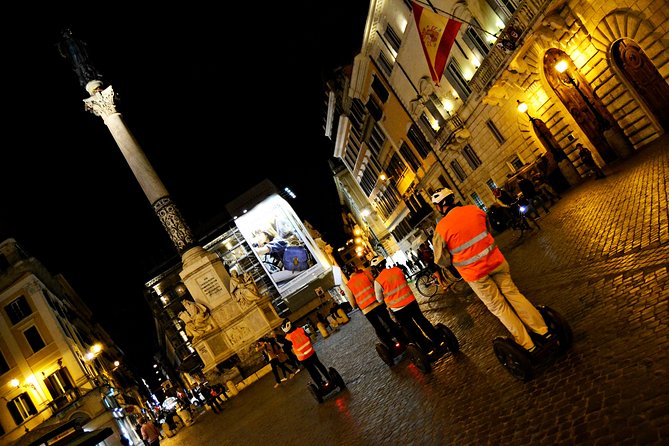
After Trevi, the route includes an outside look at the Pantheon with a short viewing stop. The important detail here is that admission is not included, so you’re viewing it from outside rather than going in.
This is actually a smart way to handle the Pantheon on a night tour. The building’s exterior presence still hits hard in evening light, and you don’t have to juggle entry lines or ticket timing during a tight 2.5-hour experience. You get the visual takeaway plus a guide’s explanation, then you move on.
Stop time is about 7 minutes. That may sound brief, but it’s enough if you use it with purpose:
- Look at the façade first from the most open angle you’re given
- Then shift your position slightly to see how the lighting changes the surfaces
- Save your deep photo time for places where you have more minutes (like Trevi and Spanish Steps)
If you’re the type who wants to do the Pantheon interior in full detail, this tour won’t replace that plan. It sets you up nicely for a daytime revisit or a separate ticketed visit when you have more time.
Spanish Steps at night: evening energy with a calmer pace
Then you head to the Spanish Steps, another Rome classic that’s often crowded in daylight. At night, you still get the lively energy, but the evening lighting makes it feel more composed and scenic.
You’ll have about 10 minutes for:
- Viewing and guidance
- Explanation and photo time
This stop is all about angles and people-watching. The steps are a natural stage for photos because you can find multiple lines of sight: the stairs themselves, the edges of the buildings, and the way the city lights sit above the stonework. Even if you skip a full-on photo session, you’ll probably want at least a quick one just because Spanish Steps looks so good after dark.
If you’re traveling on your first night in Rome, this is a great “orientation stop.” It gives you a sense of scale for the city’s layout, and you’ll start recognizing how areas connect when you explore later on foot.
St. Ignazio’s 3D effect: the quick stop that teaches your eye
The final featured stop includes Chiesa di Sant’Ignazio di Loyola (listed as St. Ignazio) with viewing from outside. You won’t be going inside during this segment, and the ticket entry isn’t included.
What you do get is an explanation of the 3D effect of the architecture from the outside. That’s valuable because this church is one of those places where the detail is hard to appreciate unless someone tells you what to look for. The short timing here (about 4 minutes) works because you’re not trying to learn everything. You’re learning how to notice the illusion.
This is also where a guide’s style shows. If they point out the exact visual cues—lines, angles, or the way the façade plays with perspective—you’ll leave with an actual “aha” moment instead of just snapping a quick exterior photo.
How much time you really get (and how to plan your photos)
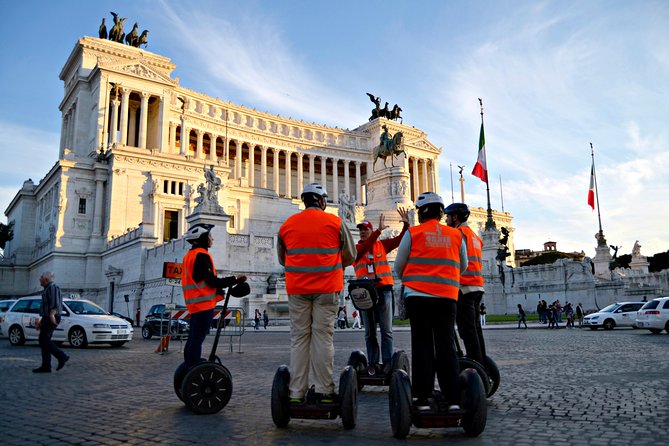
This tour is built around short, efficient stops. You’ll spend roughly:
- Piazza Navona: about 10 minutes
- Trevi Fountain: about 10 minutes
- Pantheon: about 7 minutes (outside view)
- Spanish Steps: about 10 minutes
- St. Ignazio area: about 4 minutes
In other words, you’re not getting a long, slow sightseeing day. You’re getting a night circuit that prioritizes seeing major icons and learning enough context to make them meaningful.
For photos, that means you should show up ready. Charge your phone, clear space on your camera roll, and consider wearing a jacket you can move in. Night lighting looks great, but it often pushes phones toward slower shutter speeds, so shaky hands are the enemy.
Also: bring your expectations down to earth. The tour is not about standing in one place for 30 minutes waiting for the perfect crowd-free moment. It’s about giving you multiple iconic moments with guide timing and photo time you can use.
Price and value: is $90.74 worth 2.5 hours on a Segway?
At $90.74 per person for about 2 hours 30 minutes, this isn’t a budget add-on. The value is in what you get packaged together: training, helmet use, a licensed guide, and transportation that lets you cover multiple top sights without constantly walking between them.
If you compare this to piecing together your own route at night, you’d still face two issues: time and fatigue. Rome’s top sights are spread out, and walking at night can turn your evening into sore feet and zigzagging. The Segway makes the route feel manageable, and the guide helps you see the “why,” not only the “what.”
I also think the small group size matters for value. With a maximum of 8 travelers, the guide can keep things moving without leaving you behind or forcing long waits at every stop.
One more practical value point: entrance tickets aren’t included. You’re mainly getting exterior views plus guided context, with special photo moments at the bigger open-sky stops. If you’re hoping to visit museums or go inside major sites during the Segway window, you’ll need a separate plan.
Who should book this Rome Segway night tour
This tour fits best if you:
- Want a fun first-night activity that gives you a strong overview of central Rome
- Like taking photos at major landmarks but don’t want to spend hours walking between them
- Are comfortable with city movement on a Segway after the training session
- Prefer a small group pace rather than a large bus style crowd
It may not be the best match if you:
- Have a strong fear of riding a device in traffic-like settings (even with safety planning)
- Want long interior museum time
- Are traveling with weather-sensitive plans, since the experience depends on good conditions
The reviews you’ll see for this tour consistently point to the same theme: once people get past the first-minute learning curve, the experience turns into a highlight—especially for night lighting and a less chaotic feel around the landmarks.
Should you book Rome at Night by Segway?
If you’re trying to decide whether this is the right “night plan,” I’d book it if you want a high-impact evening in limited time. This tour does exactly what most first-time night itineraries fail to do: it covers big names (Piazza Navona, Trevi Fountain, Pantheon area, Spanish Steps) and gives you enough guidance to make those stops stick in your mind.
If you’d rather go slow, linger for long stretches, or you’re only interested in ticketed interiors, then spend your money on separate daytime entrance visits and keep your night simple. But if your idea of fun includes gliding through Rome’s open squares and getting a guide who keeps the route safe and the stops useful, this is an excellent way to start your Rome trip.
FAQ
How long is the Rome at Night Segway small group tour?
It lasts about 2 hours 30 minutes.
Where do I meet for the tour?
You meet at Via dei Delfini, 35, 00186 Roma RM, Italy, and the tour ends back at the same meeting point.
What’s included in the price?
The tour includes an orientation session, the Segway tour, a local licensed tour guide, and helmet use. Entrance to monuments and museums is not included.
Do I need tickets for the Pantheon?
The tour includes an outside viewing of the Pantheon, and Pantheon admission is not included.
What are the age and weight requirements?
Riders must be at least 16 years old and weigh at least 40 kilos (90 pounds).
What should I wear?
Wear comfortable shoes. You’ll be standing and riding, so avoid footwear that feels unstable.
What happens if weather is poor?
This experience requires good weather. If it’s canceled due to poor weather, you’ll be offered a different date or a full refund.