REVIEW · ROME
Ancient Rome Half-Day Segway Tour
Book on GetYourGuide →Operated by Rolling Rome Segway & Golf-Cart · Bookable on GetYourGuide
Glide through Rome without sprinting. This half-day Segway tour lets you cover Imperial Rome fast on an easy-to-learn, eco-friendly ride, while your guide ties each stop to what made the Caesars’ city tick. I love the way you get to move between major sights with minimal fuss, and I also like the small-group feel that keeps the pace human.
You’ll spend time on the 7 Hills of Rome, with standout views from Palatine Hill and photo-worthy panoramas that feel like the city opens up in front of you. I’m also a fan of the variety in the stops: you go from legend and viewpoints to the Capitoline Hill redesign work connected to Michelangelo, then on toward the Imperial Forum and the Colosseum.
One consideration: part of your time goes to a Segway training session, so the first stretch is about getting comfortable rather than sightseeing. If you’re expecting a fully relaxed, walk-only tour, plan for that quick start-up period.
In This Review
- Key things to know before you go
- Why a half-day Segway fits Imperial Rome so well
- Where you start: Piazza del Gesù and the 3-hour rhythm
- Training on self-balancing Segways: quick comfort, not a stunt show
- Palatine Hill and the Romulus and Remus legend
- Passing Circus Maximus to Aventine Hill and the Orange Grove
- Santa Maria in Cosmedin: San Valentino remains and the Mouth of Truth
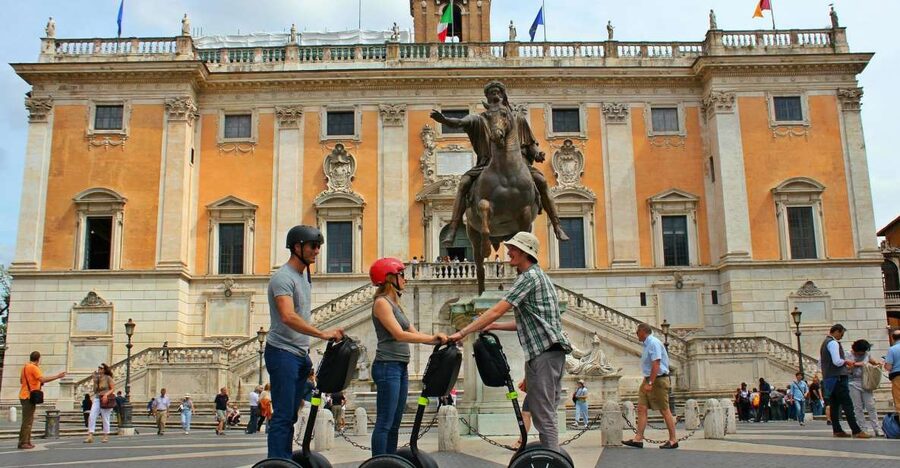
- Capitoline Hill and Michelangelo’s redesign
- The Imperial Forum ride and the Colosseum payoff
- Price and value: is $100 worth it?
- Guides and the difference great commentary makes
- Practical tips for getting the most from the ride
- Who this tour is for (and who should reconsider)
- Should you book the Ancient Rome Half-Day Segway Tour?
- FAQ
- FAQ
- How long is the Ancient Rome Half-Day Segway Tour?
- Where is the meeting point?
- What’s included in the tour?
- Is the tour limited to small groups?
- What language is the live tour guide?
- How much does it cost?
- What is the cancellation policy?
- Is there a pay-later option?
Key things to know before you go
- Easy Segway training before you roll out onto the streets
- Small group (max 8), which helps with pacing and questions
- Palatine Hill panoramas plus the legend of Romulus and Remus
- Stops that link myth to monuments, from Circus Maximus to Capitoline Hill
- Imperial Forum and Colosseum as the big visual payoff
Why a half-day Segway fits Imperial Rome so well
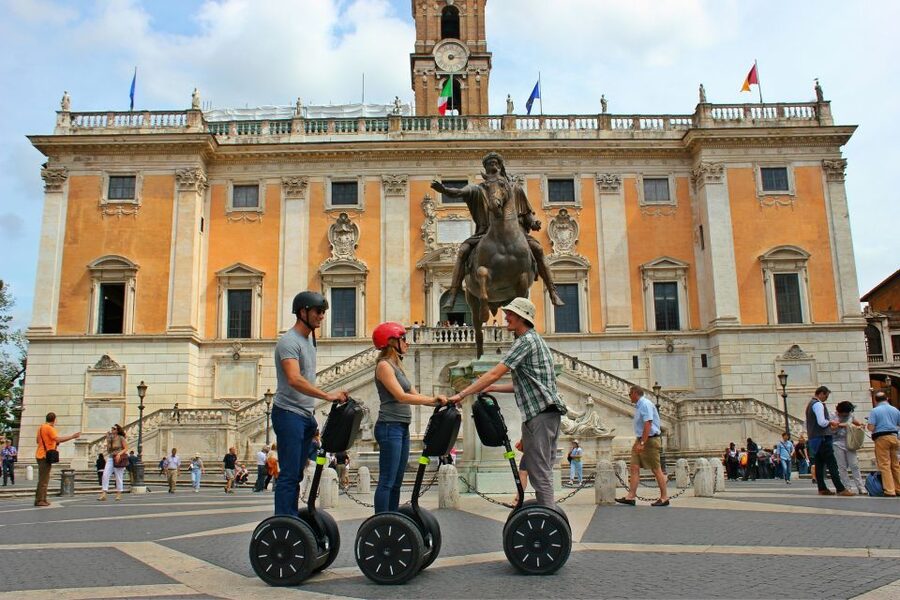
Rome is a lot on foot. Even if you love walking, you’re still fighting distance, crowds, and the time sink of getting from one “must-see” to the next. This tour is built for exactly that problem: it’s short enough to stay energetic, and it uses a Segway so you can cover ground efficiently without feeling rushed.
At 3 hours long, you get a tight hit of the city’s big themes: imperial power, religious and civic landmarks, and the views you only really understand when you see the hills from above. The route also focuses on recognizable anchors like the Colosseum, while still threading in stops that round out the story, like Santa Maria in Cosmedin and the Mouth of Truth.
The fact that it’s limited to 8 participants matters more than people think. With small numbers, you’re less likely to get stretched out, and your guide can keep the group together as the streets shift and traffic patterns change.
You can also read our reviews of more tours and experiences in Rome.
Where you start: Piazza del Gesù and the 3-hour rhythm
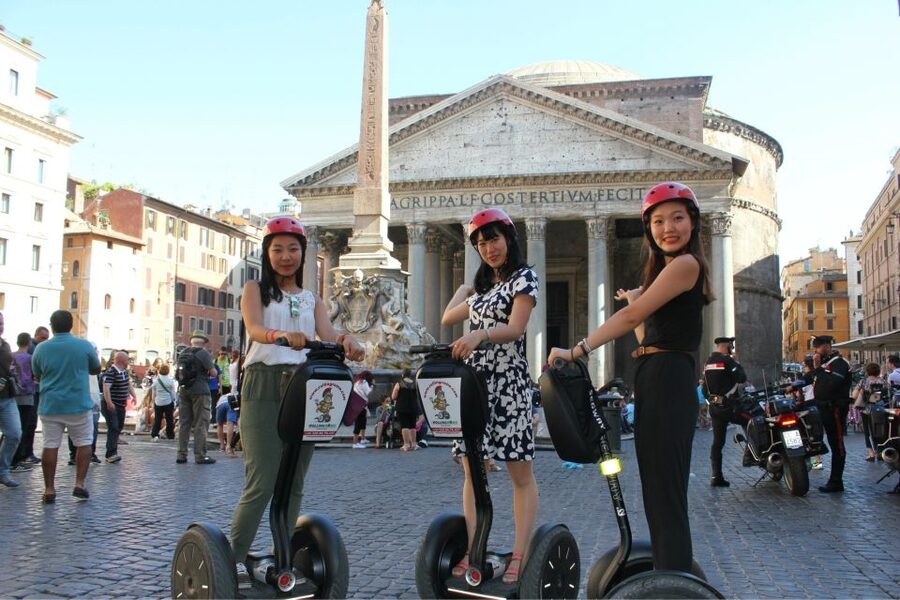
You meet at Piazza del Gesù, 47. That’s a practical start because it puts you in the center of things, so the early minutes don’t feel wasted on a long ride just to reach the action.
The schedule is designed around a smooth rhythm:
- First, training so everyone can ride confidently.
- Then, an organized loop across key hill areas and famous monuments.
- Finally, the big “wow” sights—especially the Colosseum—before you wrap up.
Because the total duration is 3 hours, you’ll want to treat this as a highlight tour, not a slow museum day. If you’re the type who likes to linger at every doorway, you’ll probably wish you had more time later. If you prefer to collect the essentials and then go back on your own, it’s a strong format.
Training on self-balancing Segways: quick comfort, not a stunt show
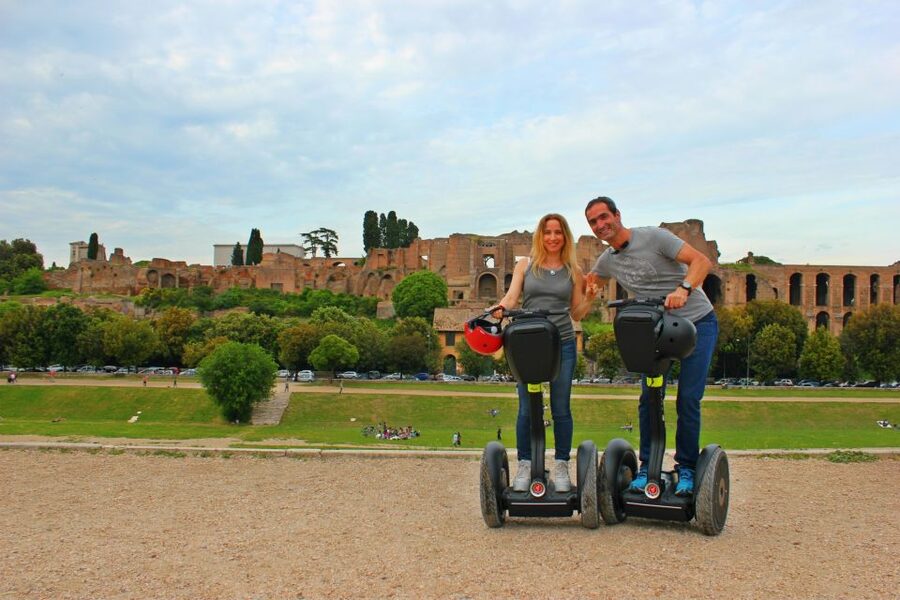
A big part of why this tour works is that it doesn’t assume you already know how to ride. You get a Segway training session with your guide, and the goal is simple: help you feel stable and in control before you join the sightseeing loop.
In real life, the first few minutes determine whether you enjoy the rest. The best guides on this kind of tour are calm, patient, and practical—exactly the approach you want when you’re learning balance on a moving platform. If you’re new to Segways, you can relax knowing the tour is set up for first-time riders, not just confident city bikers.
One small mental tip: treat training as part of the tour experience. Once your brain stops questioning every movement, you free up attention for the history and the views.
Palatine Hill and the Romulus and Remus legend
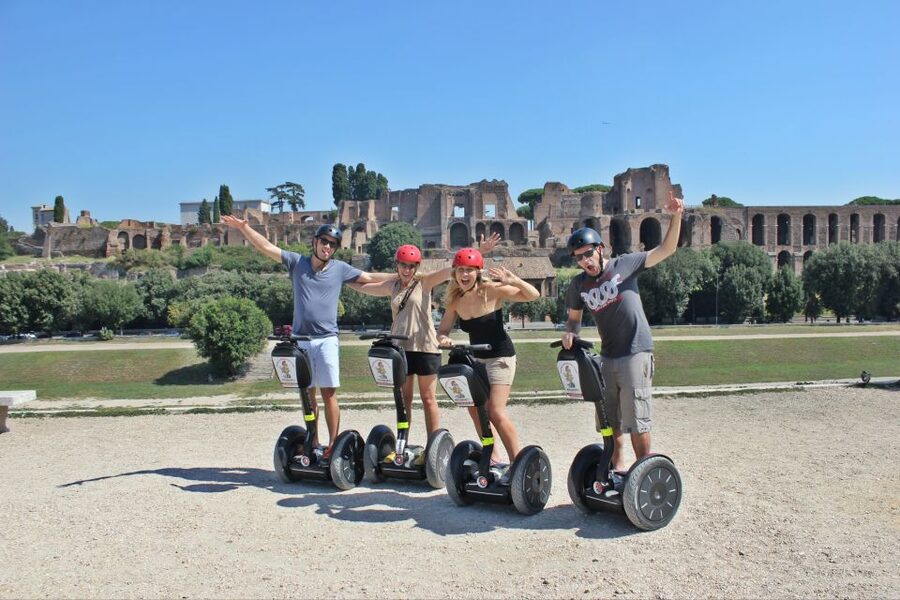
This is where the tour’s storytelling starts to click. On Palatine Hill, you get panoramic city views, the kind that help you understand why Rome’s founders picked high ground in the first place.
Your guide also explains the legend of Romulus and Remus, which is more than trivia. When you hear the story in a place like Palatine—where the city’s myth and power overlap—it makes the whole layout feel logical. You’re not just looking at buildings; you’re imagining Rome’s origins and how later emperors turned those stories into legitimacy.
Expect your guide to connect viewpoint to meaning: what you can see, why it matters, and how later landmarks built on earlier claims. This is the kind of framing that makes the rest of the tour easier to follow.
Passing Circus Maximus to Aventine Hill and the Orange Grove
From Palatine, the route continues with a classic Rome sweep, including Circus Maximus as you move onward. The Circus Maximus is famous enough that it can sometimes feel like a single big name. On a Segway tour, though, you get the benefit of motion: you don’t just see it once, you glide through the surrounding context, which helps the scale register.
Next comes the move toward Aventine Hill and the Orange Grove. Even if you don’t know the hill’s specifics, Aventine is one of those places where Rome feels layered—different eras stacked in the same skyline. A stop like this gives you a change of angle, so the tour doesn’t turn into a one-note sequence of “important streets.”
If you like your sightseeing with a bit of variety—views, landmarks, and mood shifts—this middle section is a good one.
Santa Maria in Cosmedin: San Valentino remains and the Mouth of Truth
Then the tour pivots into a more intimate, story-forward stop at Santa Maria in Cosmedin. This is where Roman culture gets personal. You’re not just looking at grand imperial architecture; you’re seeing how relics and legends lived in everyday city life.
Inside this stop:
- You’ll see the remains of San Valentino (the Valentine’s Day connection).
- You’ll also encounter the marble mask of the Mouth of Truth, known as a kind of ancient lie detector.
What I like about including a stop like this is that it breaks up the emperor-heavy narrative. Rome isn’t only about power and monuments. It’s also about belief, symbolism, and the way stories got physically embedded in public spaces.
Even if you’ve seen photos of the Mouth of Truth before, seeing it as part of a guided circuit—right between hills and major landmarks—makes it feel less like a gimmick and more like a real piece of the city’s social world.
Capitoline Hill and Michelangelo’s redesign
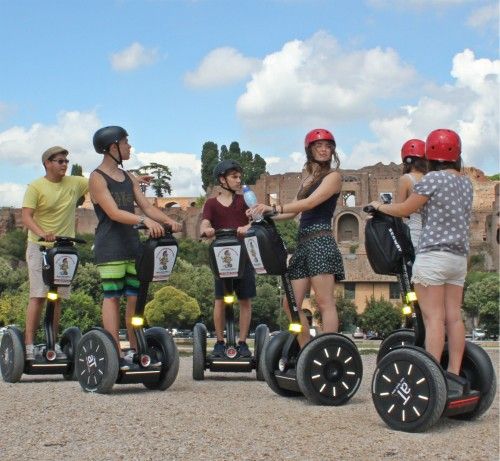
Next up is Capitoline Hill, described as the most important of the imperial hills. This matters because the Capitoline is where Rome’s civic and political identity tightens into something you can feel, even at a glance.
The guide brings in Michelangelo’s influence here, tied to the Renaissance redesign. That’s useful for two reasons. First, it helps you interpret why the Capitoline looks the way it does—so it doesn’t feel like random architecture. Second, it connects Rome’s imperial past to how later artists and rulers re-shaped the city to match their own goals.
On a short tour, a stop like Capitoline is a smart move because it compresses layers of time. You get imperial references, then Renaissance reinterpretation, all in one workable chunk.
The Imperial Forum ride and the Colosseum payoff
After Capitoline Hill, you ride through the Imperial Forum, following in the footsteps of Roman emperors toward one of the world’s most impressive sights: the Colosseum.
This is where the tour’s value really shows. A half-day Segway format can’t replace a full-day deep dive into every corner of the Forum. But it can give you a clear mental map: where the power centered, what the city’s movement patterns looked like, and how the main arenas fit into the broader imperial grid.
You’ll also appreciate the way motion helps. If you’re walking only, the Forum can feel like a maze of ruins that you can’t fully connect. Gliding through key segments with a guide’s explanation keeps the “why here?” questions from piling up.
The Colosseum is the obvious anchor, but the best part is how it lands after you’ve learned enough to see it as more than a postcard. It becomes part of a system—forums, streets, civic spaces, and the message emperors wanted to send.
Price and value: is $100 worth it?
At $100 per person for a 3-hour tour, the price is not cheap, but it also isn’t trying to be. The value comes from three things you don’t get from a basic walk:
- You cover more ground in less time, without the heavy fatigue.
- You get live English guiding with a focus on connecting sites and stories.
- You get Segway training included, which removes a big learning hurdle.
The small-group cap of 8 also helps justify the cost. You’re not sharing the guide with a crowd that turns every question into background noise. That tends to improve the whole experience, even when you’re simply listening.
If your goal is to see Imperial Rome’s greatest hits efficiently, you’re paying for time saved and comfort gained. If your goal is slow wandering and long stops inside every site, you might decide to spend that money elsewhere. This tour is best for people who want the essentials, quickly and well explained.
Guides and the difference great commentary makes
One of the strongest themes tied to this experience is the quality of the guide. Names that have shown up include Nico, Julio, Jean Paul, and Alex—and across those examples, the common thread is clear, understandable narration paired with real professionalism.
People tend to remember two things: whether the guide can make Rome make sense, and whether you feel safe while learning something new. Here, guides are praised for being patient with first-time riders and for keeping the group together responsibly. That’s not fluff. Safety and comfort make it easier to actually enjoy the stops.
If you’re the type who likes quick historical context—without drowning in details—this tour format fits well. You get the stories and connections, then you get to ride on and see the next landmark before your attention drops.
Practical tips for getting the most from the ride
This is an outdoor experience built on movement. To keep it enjoyable:
- Wear comfortable shoes that work well on city surfaces.
- Bring sunscreen or a hat if the day is bright. One guide in past tours actively found shade when it was needed.
- Expect that road conditions and closures can happen. During Holy Week, the guides handled street restrictions and pivoted beautifully so the experience kept moving.
- If you’re new to Segways, mentally plan for your first few minutes to be about balance, not photos.
You’ll likely finish feeling like you saw more of the city’s skeleton than you would on a slower walk. Then you can return later for deeper exploration on your own schedule.
Who this tour is for (and who should reconsider)
I’d steer you toward this tour if:
- You want to see major Imperial Rome landmarks in a half-day.
- You’d rather ride than walk the entire time.
- You like guided storytelling that connects myths, architecture, and monuments.
- You’re traveling with limited time and want a strong plan that doesn’t waste hours.
I’d reconsider if:
- You strongly dislike riding motorized personal transport (even with training).
- You want a fully flexible pace with long photo stops and slow wandering at each site.
- You’re looking for a purely museum-style experience with lots of interior time. This tour is designed for moving between major points outdoors.
Should you book the Ancient Rome Half-Day Segway Tour?
If your time in Rome is tight, this is a smart way to get a lot of the city’s most important visuals and stories into one block. The combination of Segway training, small group size, and a guide who keeps explanations clear makes the tour feel efficient without feeling empty.
For me, the decision comes down to this: you’re paying for movement plus meaning. If that matches how you like to travel, book it. If you’re hoping for a slow, wander-at-your-own-speed day, you may prefer a walking tour with more unstructured time.
FAQ
FAQ
How long is the Ancient Rome Half-Day Segway Tour?
It runs for about 3 hours.
Where is the meeting point?
The meeting point is Piazza del Gesù, 47.
What’s included in the tour?
You get a live English guide, a Segway training session, and the Segway tour itself.
Is the tour limited to small groups?
Yes. The group is limited to 8 participants.
What language is the live tour guide?
The live tour guide speaks English.
How much does it cost?
The price is $100 per person.
What is the cancellation policy?
You can cancel up to 24 hours in advance for a full refund.
Is there a pay-later option?
Yes. You can reserve now and pay later.