REVIEW · GETTYSBURG
Gettysburg: Western Battlefield Licensed Guided Segway Tour
Book on GetYourGuide →Operated by Segways on the Square · Bookable on GetYourGuide
Gliding through Gettysburg feels oddly personal. You’ll ride a Segway along the western battlefield route while a licensed guide connects the dots across all three days of fighting, from the Peach Orchard area to Little Round Top.
I especially like the way the tour mixes motion with meaning: you get wide views from your seat, then you stop and get clear explanations at the key places you’d otherwise rush past. The main thing to consider is that this is a Segway experience, so it’s not suitable for kids under 14, people with mobility issues, or anyone with visual or hearing impairments.
In This Review
- Key things to know before you ride
- Why Gettysburg’s western battlefield fits a Segway so well
- Getting up to speed: Segway training and first impressions
- Meeting point at 11 Lincoln Square: how to find it without stress
- The structure of the tour: Union and Confederate lines, three days of battle
- Stop-focused riding: Peach Orchard, Wheatfield, and Devil’s Den
- Longstreet Headquarters and the museum-like feeling of being on the ground
- North Carolina Memorial and Virginia Memorial: a memorial tour that doesn’t feel like a checklist
- Little Round Top: the view you earn by getting there the right way
- Cemetery Ridge, High Water Mark, and the Pennsylvania Memorial
- Riding route highlights you’ll recognize (even if you only know Gettysburg from movies)
- The guide makes it click: how small-group pacing helps you learn
- What to bring so the 3 hours feel comfortable
- Who this tour suits best (and who should skip)
- Price and value: what $127 buys you for 3 hours
- Should you book the Western Battlefield Segway Tour?
- FAQ
- How long is the Gettysburg Western Battlefield Segway tour?
- What does the tour price include?
- Where does the tour start?
- Is hotel pickup included?
- What time should I plan for?
- What language is the guide?
- What should I wear or bring?
- Is the tour suitable for kids?
- Are there weight or accessibility limits?
Key things to know before you ride
- Small group (up to 8) keeps the pace friendly and makes it easier to ask questions.
- Licensed guide means you’re not just driving between stops; you’re learning the battle story as you go.
- Western-side highlights include Peach Orchard, Devil’s Den, Little Round Top, and the major memorial cluster.
- More than monuments: you’ll also pass places like Lutheran Theological Seminary, McMillan Woods, and Meade’s Headquarters.
- Training first, then riding: you’ll get time to learn the Segway before the guided portion starts.
Why Gettysburg’s western battlefield fits a Segway so well
Gettysburg can feel huge on foot, and driving gives you motion but not much context. This tour solves that mismatch by letting you cover ground quickly while still stopping at the sites that make the story make sense.
On the western side, you’ll ride through the geography that shaped key moments of the battle. The wind-in-your-face feeling matters here, too. It’s one thing to read about a place; it’s another to feel exposed terrain and then hear why that terrain mattered.
Getting up to speed: Segway training and first impressions
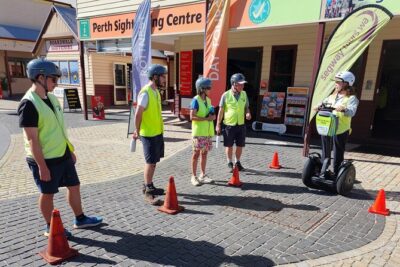
Before you set off, you meet your guide at the start point and get time to train. The goal is simple: get comfortable with steering and slowing down so the tour feels smooth instead of stressful.
The Segways are described as simple to use, and that lines up with how this kind of tour is meant to work: you don’t need tech skills, you need a calm first few minutes. Wear closed-toe shoes and bring water, because once you’re rolling, you’ll want to stay focused on the sites ahead.
Meeting point at 11 Lincoln Square: how to find it without stress
The tour starts at 11 Lincoln Square. When you arrive, look for the activity provider location tucked between the Lincoln Square Inn and Ghost City Tours. There’s a statue of Lincoln and Perry Como out front, which makes for an easy landmark.
If you’re driving, parking is available at 74 E Racehorse Alley. It’s a short walk (about one block) to the starting location, so you won’t lose your momentum before training begins.
The structure of the tour: Union and Confederate lines, three days of battle
The heart of the experience is following the battlefield route while tracing both sides. Your licensed guide ties what you see to the larger narrative, including all three days of the battle.
This approach helps because Gettysburg isn’t one single moment. It’s a chain of decisions, terrain choices, and movements that stack on each other. When you move site to site—then stop to hear what happened there—it’s easier to keep the timeline straight than it is when you’re reading plaques alone.
Stop-focused riding: Peach Orchard, Wheatfield, and Devil’s Den
You’ll head through some of the most recognizable terrain on the western side. The route is built around stops that connect to major actions, not just pretty views.
Peach Orchard is one of the first big story anchors. From here, your guide can explain why the area matters and what both sides were trying to gain. Then comes time around the Wheatfield, where the battlefield details start to feel sharper because you’re physically close to the ground where movement and exposure would have been felt.
Next is Devil’s Den, a place people remember for its steep, rugged feel. Even without inventing extra facts, the practical value is clear: you’ll have a real sense of why soldiers would have cared about cover, angles, and the difficulty of movement. Expect chances to ask questions at stops, not just listen while passing by.
Longstreet Headquarters and the museum-like feeling of being on the ground
Between the major dramatic sites, you’ll also ride by locations that add structure to the battle story. Longstreet Headquarters is one of those key stops, helping you shift from battlefield drama to command-level decisions.
As you move, you’ll also encounter areas like McMillan Woods and Lutheran Theological Seminary. These places give you context for the battlefield map in a way that feels more accurate than looking at a distant photo. You’re still outside, still on the route, and the guide’s explanations help you interpret what you’re seeing.
North Carolina Memorial and Virginia Memorial: a memorial tour that doesn’t feel like a checklist
The tour includes the memorial stops on the western side, including the North Carolina Memorial and Virginia Memorial. What makes these valuable on a Segway tour is that you’re not treating them like separate tourist attractions. They show up as part of the same battlefield story you’ve been hearing the whole time.
This is where the tour’s pacing starts to pay off. You arrive at these memorials after you’ve already learned what the units were trying to do and where the fighting was headed. That sequencing makes the names and locations feel grounded in something you can picture.
Little Round Top: the view you earn by getting there the right way
Little Round Top is one of the places you’ll ride to, and it’s a stop that naturally turns your attention forward. Without needing any special knowledge, you’ll understand the importance of the terrain because you can see why elevation would affect observation and movement.
What I like about arriving by Segway is the balance. You’re close enough for perspective, but you’re not arriving after a long, exhausting walk that makes it hard to stay present. You can focus on what your guide is pointing out—then take a moment to absorb the wider view.
Cemetery Ridge, High Water Mark, and the Pennsylvania Memorial
The tour continues onto Cemetery Ridge, including the area connected to High Water Mark. These are the kinds of battlefield points where a map helps, but the ground helps more. The tour helps you connect the idea of turning points to actual physical location.
You’ll also visit the Pennsylvania Memorial, a stop that benefits from everything you’ve already learned. By the time you reach it, you’ve already been moving through the timeline and the terrain, so the memorial doesn’t feel like a lone object. It feels like part of a sequence.
Along the way, your guide also covers places you pass, including Meade’s Headquarters and the National Cemetery. Those additions matter because they broaden the story from just combat to leadership and aftermath—still in a way that stays practical and on-route.
Riding route highlights you’ll recognize (even if you only know Gettysburg from movies)
You might know Gettysburg mostly from popular references, but this tour helps turn those references into place names you can picture. The experience is built around iconic locations you’ll likely recognize, including the Peach Orchard, Devil’s Den, and Little Round Top.
Then it layers in the supporting cast of the battlefield map: McMillan Woods, Longstreet Headquarters, Meade’s Headquarters, and the memorial area stops. The result is a tour where the big names and the connective tissue both show up.
The guide makes it click: how small-group pacing helps you learn
Your group stays limited to 8 participants, which matters more than it sounds. With a small group, you’re more likely to hear explanations clearly during stops, and you’re less likely to get packed into a slow moving line.
The guide style also comes through in the way the tour is run. In the experience, guides like Truman, Katie, and Christy are mentioned as being excellent, and that fits the overall format: you’re not just listening while you ride. You’re stopping, looking, and getting answers as you go.
If you like asking questions, this is the kind of tour where those questions actually land. The stops create natural pauses, and the guide has time to answer without rushing you back onto the route.
What to bring so the 3 hours feel comfortable
This is outdoors time on an active route, so your comfort affects how much you enjoy it. Bring sunglasses, a hat, and sunscreen. Add water and insect repellent, because you’re outside long enough for both sun and bugs to become real issues.
Wear comfortable clothes and outdoor clothing, and don’t forget closed-toe shoes. If you take any personal medication, bring it with you like you would for any all-outdoor activity.
The goal is simple: keep your gear boring so your brain can focus on the battlefield story.
Who this tour suits best (and who should skip)
This tour is ideal if you want to see the western battlefield highlights without spending most of the day walking. If you like history explanations paired with great views, you’ll likely enjoy the rhythm of riding and then stopping to learn.
It’s also a good fit if you’re comfortable following instructions and spending 3 hours outdoors. The “training first” format helps, but you still need to be ready to ride safely for the duration.
Skip it if any of the restrictions apply: it’s not suitable for children under 14, people with mobility impairments, people who are visually impaired, hearing-impaired people, or anyone over 250 lbs (113 kg).
Price and value: what $127 buys you for 3 hours
At $127 per person, you’re paying for more than a vehicle. You’re paying for a Segway experience, a licensed guide, and entry to Gettysburg National Military Park.
In value terms, the big win is time and coverage. You cover multiple iconic sites on the western side in about 3 hours, which is tough to replicate on foot unless you’re willing to do a long, stop-and-start walk. If you’d rather get context while still seeing a cluster of major locations—Peach Orchard, Devil’s Den, Little Round Top, and the memorials—this price starts to look reasonable.
There’s also a practical bonus: the stops create built-in learning time. You’re not paying extra to slow down yourself. The format handles the pacing for you, and the guide does the heavy lifting of turning terrain and names into a clear battle story.
Should you book the Western Battlefield Segway Tour?
Book it if you want a fun way to learn Gettysburg’s western-side highlights in a time-efficient format. I’d especially recommend it if you like the idea of moving between major sites while still getting guided explanations at the moments that matter.
Don’t book it if you need a fully accessible experience beyond the standard Segway setup, or if Segways just aren’t your comfort zone. The experience leans on you being able to ride safely and enjoy being outdoors for a solid stretch.
If you’re on the fence, here’s the simplest decision rule: if you want views plus guided storytelling without committing to a full-day walking plan, this tour is a strong match.
FAQ
How long is the Gettysburg Western Battlefield Segway tour?
The tour duration is 3 hours.
What does the tour price include?
It includes the Segway tour, a licensed guide, and entry to Gettysburg National Military Park.
Where does the tour start?
It starts at 11 Lincoln Square, in the location tucked between the Lincoln Square Inn and Ghost City Tours near the statue of Lincoln and Perry Como.
Is hotel pickup included?
No. Hotel pickup and drop-off are not included.
What time should I plan for?
You’ll need to check available starting times for your preferred slot, since the tour runs at set start times.
What language is the guide?
The live tour guide provides the tour in English.
What should I wear or bring?
Bring sunglasses, a hat, sunscreen, water, insect repellent, comfortable outdoor clothing, and closed-toe shoes. Bring personal medication if needed.
Is the tour suitable for kids?
No. It is not suitable for children under 14.
Are there weight or accessibility limits?
Yes. It is not suitable for people with mobility impairments, visually impaired people, hearing-impaired people, and anyone over 250 lbs (113 kg).