REVIEW · PARIS
Private Tour: Discover Paris with Local, 3 hours on a Segway
Book on Viator →Operated by Go Go Tours - Privat Segway Tours In Paris · Bookable on Viator
Paris looks better when you move.
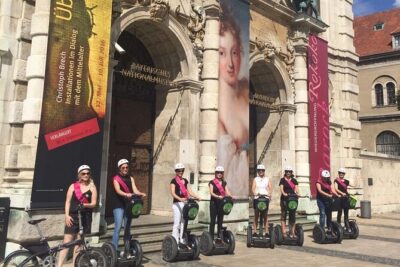
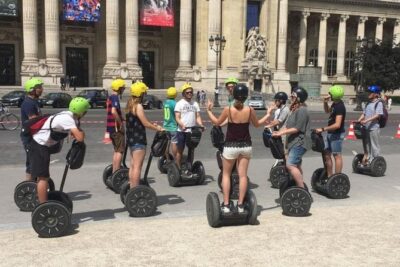
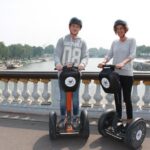
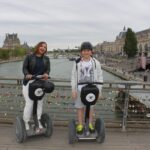
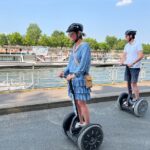
A Segway tour turns central Paris into a fast, easy photo walk with lots of story stops instead of a long day on foot. I like the mix of major monuments (Invalides, Louvre, Orsay, Eiffel area) plus quick pointers on what to notice and where to go next. The one thing to think about: you’re riding, so it’s not for everyone—if you’re not comfortable balancing, you’ll feel the time pressure of short stops (about 10 minutes each).
This is also genuinely built for a “first day in Paris” vibe: multiple departure times, a private guide who can tailor what you care about, and small-but-useful add-ons like helmets and weather gear when conditions get ugly. The overall pacing is tight on purpose, so if your dream day includes long museum time, you’ll want to pair this with separate ticketed visits later.
In This Review
- Quick hits before you go
- Why a Segway works so well in central Paris
- The best kind of first-day Paris plan (and who it fits)
- The meeting point: start in a convenient Paris pocket
- Stop-by-stop: what you’ll see and what’s worth your attention
- Stop 1: Musée de l’Armée des Invalides (Les Invalides)
- Stop 2: Pont Alexandre III
- Stop 3: Grand Palais
- Stop 4: Petit Palais
- Stop 5: Place de la Concorde
- Stop 6: Louvre Museum area
- Stop 7: Musée d’Orsay (Gare d’Orsay)
- Stop 8: Champs-Élysées
- Stop 9: Arc de Triomphe
- Stop 10: Eiffel Tower area (with Invalides in the mix)
- Guides, safety, and the private-tour feeling
- How to get the most from the short stops
- Price and value: does $138.78 make sense?
- A few realistic considerations before you book
- Should you book this Segway tour?
- FAQ
- How long is the private Segway tour?
- Where does the tour start and end?
- Is this tour private?
- What language is the tour guide?
- What’s included for the Segway ride?
- Are tickets to the sights included?
- Can I participate if I have no prior Segway experience?
- Can I cancel for a full refund?
Quick hits before you go
- Private guide, private experience: only your group, with undivided attention.
- Central sights, short photo stops: designed to cover a lot in about 3 hours.
- Weather-ready kit: raincoats plus gloves or warm clothes if needed.
- Segway efficiency: you can cover big distances between spots without feeling dragged on foot.
- No museum tickets baked in: most sights are outside/at photo stops unless you add tickets later.
Why a Segway works so well in central Paris
Paris can be slow. Not always on purpose—just because you’re walking, crossing streets, hunting for the next stop, and timing yourself around crowds. A Segway changes the math. In a 3-hour window, it lets you move between far-flung icons without arriving tired and cross-eyed.
The tradeoff is simple: the day is built around visibility, not lingering. Each stop is brief (often around 10 minutes), so the best use of this tour is to get your bearings and grab the “I’ll come back for that” moments. Your guide’s role is to point you toward the most worth-your-time details—so when you revisit later, you know what you’re looking for.
This is also a smart way to handle big-city logistics. One family shared that the team could adapt around road closures for major stadium areas, and their route still felt smooth. That’s the kind of practical value you only notice when you’re actually in Paris during event season.
You can also read our reviews of more tours and experiences in Paris.

The best kind of first-day Paris plan (and who it fits)
This tour fits best if you want to:
- See the big names fast: Invalides, Eiffel area, Louvre area, Orsay area, Arc de Triomphe corridor.
- Get photo angles with context: your guide fills in the why behind what you’re photographing.
- Leave with a hit list: where you’ll spend real time later.
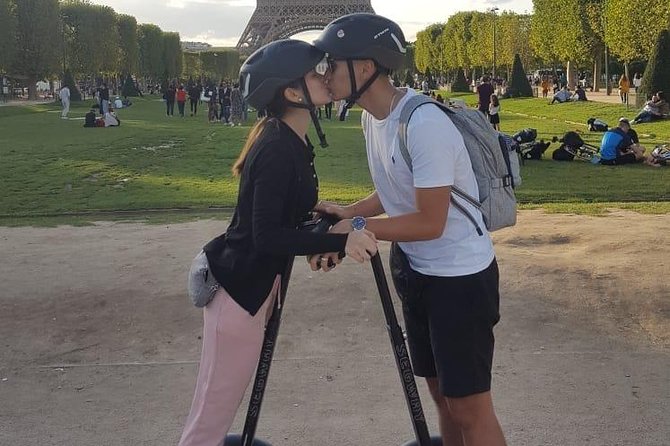
It’s also a good choice for groups that want shared energy without splitting off: one multi-generation party did this as a private group and reported it felt like friends by the end, with guides who kept a close eye on safety and flow.
On the other side, it’s not ideal if your priority is quiet, deep wandering. If you want to drift in and out of galleries for an hour at a time, you’ll probably feel rushed. And because you’re not allowed to ride if you’re drunk or under drugs, keep the vibe in the “clean and focused” zone.
The meeting point: start in a convenient Paris pocket
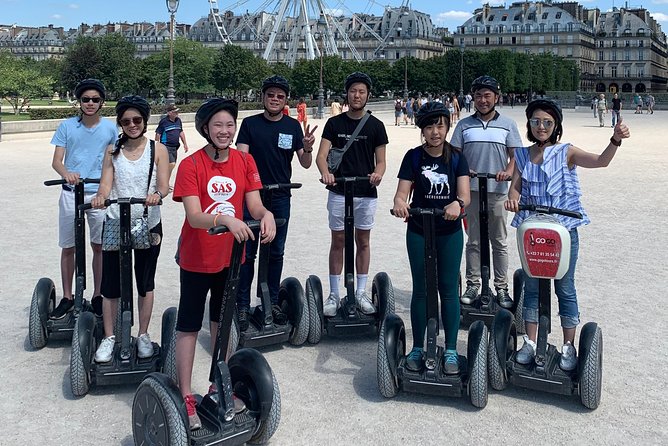
The tour starts and ends at 101 Av. de la Bourdonnais, 75007 Paris. That’s a practical location for central sightseeing because it keeps you close to the core of the action and avoids long dead travel before you even start riding.
They note it’s near public transportation, which matters in Paris where taxis can be slow and parking is its own puzzle. Ending back at the same meeting point also keeps the wrap-up simple: you don’t have to plan how to get across town after your tour.
Stop-by-stop: what you’ll see and what’s worth your attention
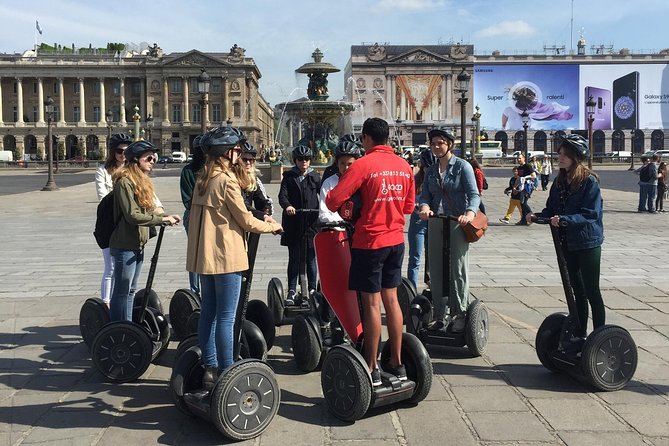
Here’s the heart of the itinerary: a line of Paris classics strung together with enough context to make them click. Most stops are made for pictures plus quick explanations, with admission tickets typically not included.
Stop 1: Musée de l’Armée des Invalides (Les Invalides)
You start at Les Invalides, home to the Military Museum and the Tomb of Napoleon. This complex was commissioned in 1670 by Louis XIV to house and care for wounded soldiers. That one sentence changes how you see the whole place. You’re not just looking at impressive architecture—you’re looking at a site built around care, power, and national memory.
What to do in your short time:
- Use the stop for exterior photos and a quick read of the setting.
- Notice the scale and how the buildings announce themselves even without entering.
A key note: admission is not included here, so if you want the Tomb of Napoleon or museum interiors, plan a separate ticketed visit.

Stop 2: Pont Alexandre III
Next up is Pont Alexandre III, one of those bridges that feels like a stage set. The practical reason for this stop: it gives you a clean moment to see the Eiffel Tower from the outside and get a view that feels postcard-ready without jumping into the crowds near the base.
Your guide’s job here is to connect the visuals to the city’s story—so even if you already know the Eiffel Tower is coming, you’ll notice the rhythm of the river crossing and the way the city frames it.
Again, admission tickets aren’t part of this stop. This is about perspective.
Stop 3: Grand Palais
The Grand Palais is the kind of building you don’t walk past—you read it. It was built for the 1900 Universal Exhibition and is dedicated to the glory of French art. Even in a short 10-minute stop, you’ll get a feel for why it became such an iconic symbol of Parisian culture.
What to watch for:
- The overall façade and how monumental it feels up close.
- The “event space” vibe—this is a building designed to host big moments.
Admission isn’t included. Think of it as a timed architecture break and a reminder that Paris loves spectacle.
Stop 4: Petit Palais
Right next door, the Petit Palais shares the 1900 Exhibition origin story with the Grand Palais. It later became a museum in 1902, which is a helpful detail if you like knowing what you’re looking at before you go inside somewhere else later.
In the short stop window, focus on:
- How the Petit Palais complements the Grand Palais rather than competing.
- Finding a photo angle that shows both “together but different.”
As with many stops, tickets aren’t included—this one’s about the exterior impression and getting your eyes trained for what matters.
Stop 5: Place de la Concorde
Place de la Concorde is one of Paris’ most evocative public spaces, and your guide will likely give you the historical “why” behind that feeling. It sits between the Champs-Élysées and the Tuileries Gardens, and it’s huge—described as the largest square in Paris (and the second largest after Place de Quinconces in Bordeaux).
This stop can be a breath moment. Your time here is mainly:
- Photos with strong geometry.
- Quick context so you understand why this open space has weight.
Admission isn’t included. No museum detour here—just a big Paris square with big atmosphere.
Stop 6: Louvre Museum area
You’ll pass the Louvre Museum—and the key detail to remember is that it wasn’t always a museum. It began as a fortress in 1190, and then it was reconstructed in the 16th century as a royal palace. Like many Paris buildings, it’s a layering story: old, rebuilt, repurposed.
Even if your real Louvre visit will be separate, this stop helps you understand why the building feels like both palace and stronghold at once.
Admission isn’t included, so don’t count on this stop for entry time.
Stop 7: Musée d’Orsay (Gare d’Orsay)
The Musée d’Orsay story starts with movement. It was originally built as a train station for the 1900 World’s Fair, using modern features for its time. Architect Victor Laloux shaped Gare d’Orsay into a functional station that still feels elegant today.
In 10 minutes, you won’t “do Orsay.” But you can get:
- A strong sense of the building’s shell.
- The mental trigger that the best old train stations don’t feel like transport hubs—they feel like stages.
Admission isn’t included for this stop.
Stop 8: Champs-Élysées
The Champs-Élysées stop is designed for two things: a quick walk-by view and the historical thread. Louis XIV commissioned the avenue, and later Napoleon ordered construction tied to the Arc de Triomphe after conquering Europe.
This is a good place to let your guide point out visual cues—like how the avenue pulls your eye toward the monument end points—because it sets up the next stop perfectly.
No admission here. Just the corridor of Paris.
Stop 9: Arc de Triomphe
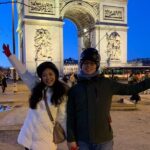
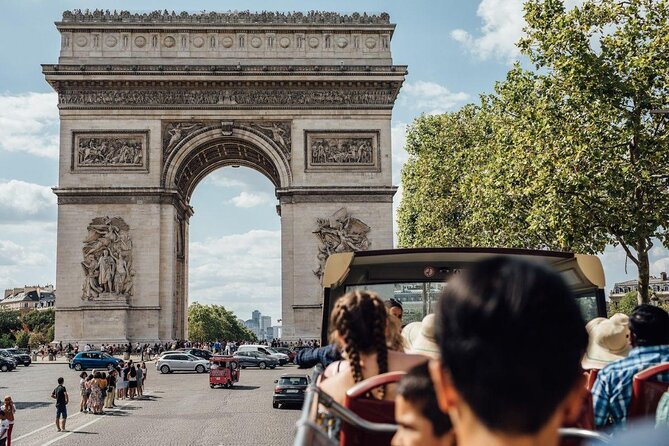
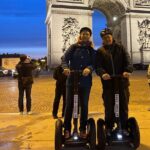
The Arc de Triomphe was built to perpetuate French military victories. The first stone was laid on August 15, 1806, and it finished about 30 years later. Those dates matter because they show the monument wasn’t an instant idea—it was a long national project.
In a brief stop, you want photos plus understanding of what the monument is doing emotionally. It’s not just a pretty arch. It’s a memorial statement.
Admission isn’t included.
Stop 10: Eiffel Tower area (with Invalides in the mix)
The last stop is described as Tour Eiffel / Invalides. You’ll get the Eiffel Tower history connection too: when Gustave Eiffel achieved the construction in 1889, it was intended as temporary in the Paris landscape and took time to become beloved.
This matters because it changes how you view the tower in your head. It’s not automatically “always been here.” Paris is like that: things that become symbols often weren’t loved on day one.
The Eiffel stop is marked as free for admission, which lines up with the idea that you’re viewing from outside rather than paying to enter.
Guides, safety, and the private-tour feeling
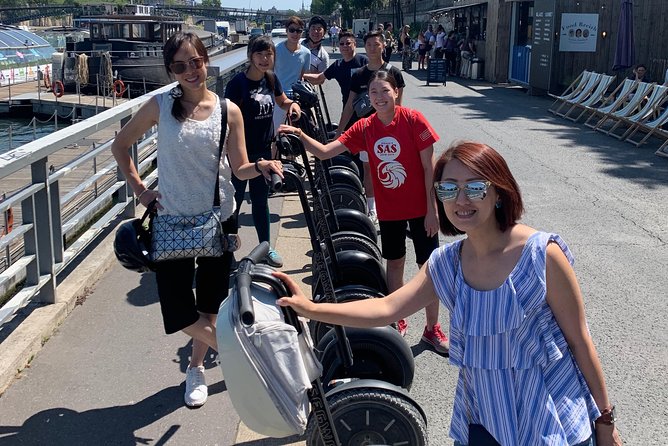
One of the biggest strengths here is the guide format. This is private, so you aren’t competing with a big group rhythm. The experience is built around your guide’s ability to check in and adjust the flow—people have specifically praised guides like Eli, Boris, Sebastian, and Ziggy.
That “check in” behavior matters on a Segway tour. If something doesn’t match what you care about—maybe you want the best photo angles, or you want extra context on a building—your guide can steer the focus. One birthday surprise shared that the guide kept conversations going about Parisian lifestyle, which is the kind of human touch that makes a quick stop feel meaningful.
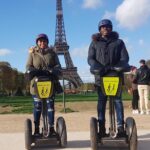
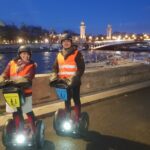
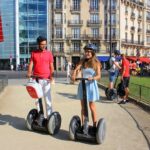
On safety and comfort: helmets are provided, and they include raincoats and warm gear if the weather is bad. You still should dress for real outdoor movement—Segway or not.
How to get the most from the short stops
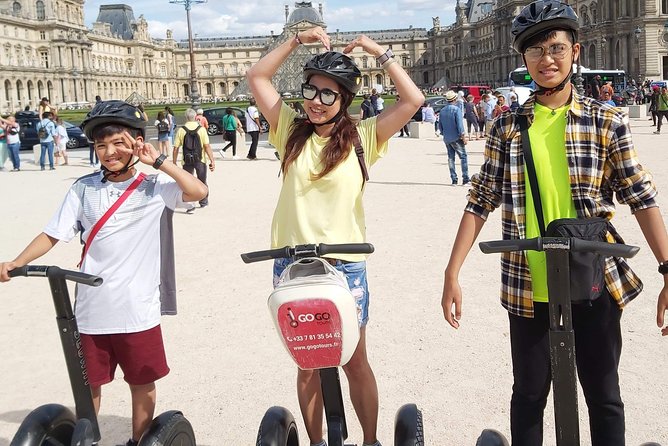
With short stops, your edge is preparation. Here are practical moves that fit how this tour runs:
- Pick your must-photo views before you start. If you have a certain angle in mind (Eiffel framed over the river, an arch corridor shot), tell your guide early.
- Ask for one specific recommendation at a stop you’re already seeing. For example: if you’re pausing by a major museum, ask what area to prioritize later when you have real time. (Keep it simple. You only have about 10 minutes.)
- Plan your real museum time separately. This tour is an orientation loop, not a ticketed museum sprint.
This is also a tour I’d book early in your trip. One guide-and-routes strategy is easy to feel: once you’ve seen the layout from this loop, you understand how to connect it to your next day plans.
Price and value: does $138.78 make sense?
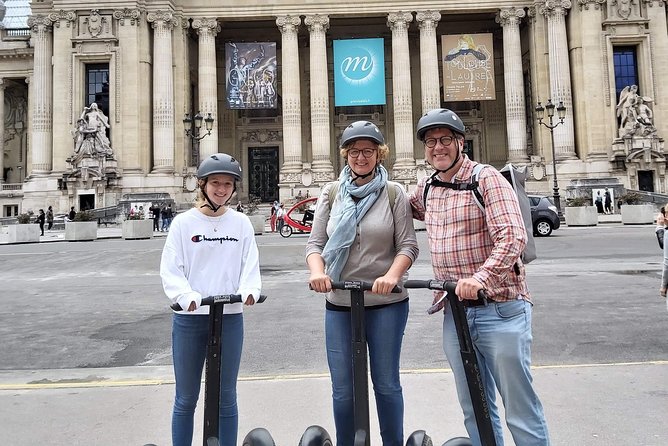
At $138.78 per person for about 3 hours, the value comes from three things:
- Private attention: you aren’t sharing guide time with a crowd.
- Segway transportation: you’re not paying as if you’re taking a car, but you get the speed of one for a short route.
- Tons of “first-day information”: the tour is designed for quick context at big sights, so you leave knowing where to focus later.
What you might be paying for here is not just the ride—it’s the guidance that turns famous buildings into a usable map in your head. If you’d rather wander alone with no structure, you can do it cheaper. But if you want to learn the city fast while still having fun on the move, this price is in the reasonable zone for a private, gear-included experience.
A few realistic considerations before you book
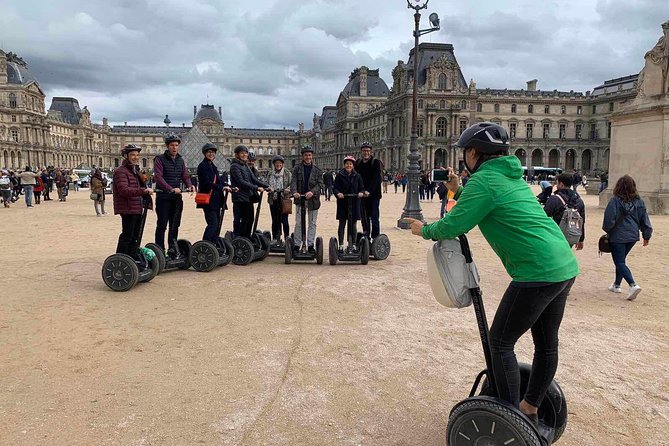
- Stops are short. You’ll get snapshots and stories, not long time inside.
- Tickets aren’t included. Most stops are photo stops; if you want interiors (Louvre, Invalides museum areas, etc.), you’ll need separate planning.
- You’ll be riding. If balance is an issue, or you’re going to the party mode heavy, skip this and pick a walking tour instead. They explicitly note restrictions around being drunk or under drugs.
Should you book this Segway tour?
Book it if you want a fast, guided “hits of central Paris” loop that helps you structure the rest of your trip. It’s especially worth it on day one because it gives you both the big sights and the meaning behind them, in a way that’s hard to recreate on your own without spending extra time researching and routing.
Skip it if your ideal Paris day is mostly indoor time, long museum hours, or slow neighborhood wandering. This tour is built for movement and photo stops, not deep ticketed experiences.
If you’re thinking about it, my practical advice is: do this early, then come back later with a focused plan—Louvre, Invalides, or Orsay as separate ticketed priorities.
FAQ
How long is the private Segway tour?
It runs for about 3 hours.
Where does the tour start and end?
It starts at 101 Av. de la Bourdonnais, 75007 Paris, and ends back at the same meeting point.
Is this tour private?
Yes. It’s a private tour, so only your group participates.
What language is the tour guide?
The tour is offered in English.
What’s included for the Segway ride?
You get use of the Segway and a helmet, plus the private guide. Raincoats and gloves/warm clothes are provided if weather is bad.
Are tickets to the sights included?
Admission tickets are not included for most stops. The Eiffel Tower stop is listed as free for admission, but you should plan on separate tickets if you want to enter museums.
Can I participate if I have no prior Segway experience?
The info says most travelers can participate, but it does not state any experience requirement. You should be comfortable with basic balance and safety expectations.
Can I cancel for a full refund?
Yes. Cancellation is free if you cancel at least 24 hours before the experience starts. If you cancel less than 24 hours before, the amount paid is not refunded.