REVIEW · PARIS
Paris City Sightseeing Half Day Guided Segway Tour with a Local Guide
Book on Viator →Operated by Go Go Tours - Privat Segway Tours In Paris · Bookable on Viator
Paris clicks into focus on a Segway. This half-day tour links major sights with an easy training setup and a guide who can tailor your route. I love the beginner-friendly instruction (you start confident, not stressed), and I love that it’s a private ride with a choice of tour length. One possible drawback: the photo stops can feel a bit short if you want extra time at the big hitters like the Eiffel Tower or Arc de Triomphe.
The route is built for first-time Paris orientation—history, architecture, and river views, all without burning your legs out. You’ll trade queues and long walks for controlled, helmeted motion plus quick picture moments. Just remember there are weight and pregnancy restrictions, and you’ll need to meet the minimum age and safety rules.
Bottom line: if you want to get your bearings fast and see the center in one go, this is a fun, efficient way to do it. And if you’re picky about lingering, pick your timing (or ask for a pacing tweak early).
In This Review
- Key highlights to know before you book
- Segway training, helmets, and safety rules that matter in Paris
- Starting point and the quick logistics that keep the day from unraveling
- Why this route is so good for first-timers with limited time
- Stop-by-stop: Invalides to the Seine bridges and exhibition-era Paris
- What to consider at this stage
- The museum belt: Louvre exterior views and a station-turned-museum story
- Grand avenues and the big monuments: Champs-Élysées to Arc de Triomphe to Eiffel
- A practical pacing note (from real-world experience)
- 45 minutes, 90 minutes, or 3 hours: choosing the right length
- Price and value: what $60.49 really buys you
- How the guides shape the ride (and why it matters)
- Comfort and weather tips that actually help in Paris
- Who should book this Segway tour (and who should skip it)
- Should you book this Paris Segway tour?
- FAQ
- How long is the Segway tour?
- Is this a private tour?
- Do beginners need experience?
- What sights will we see?
- Are museum admissions included?
- What meeting point is used?
- What weather support is provided?
- Are there age and weight limits?
- What cancellation options are available?
Key highlights to know before you book

- Full training for complete beginners so you’re not guessing with the controls
- Flexible tour length and private group (45, 90, or 3 hours)
- Helmet, rain gear, and route support keep the ride practical in real weather
- A tight Paris-center loop hitting monuments that usually eat time on foot
- Real guide personalities like George, Eli, Kensa, Arthur, Fatwa, and Arturas
- Major sights with no admission included (you’ll mainly stop for views and photos)
Segway training, helmets, and safety rules that matter in Paris
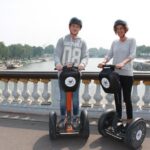
This tour is designed around the first-time Segway rider. You get full instruction before you really start cruising, and the vibe is calm and patient—exactly what you want when you’re trying not to look like a newborn giraffe on pavement.
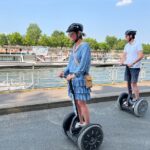
You’ll ride with a helmet, and the operator provides extra weather gear like raincoats and hats. That sounds small, but in Paris, comfort changes everything. Cold rain can turn a “great plan” into “let’s go home.” Here, you’re better set up for the day you get.
There are also clear safety constraints. The ride requires riders to be at least 40 kg and no more than 120 kg, and pregnant women aren’t allowed. Minimum age is 12, with minors needing an accompanying adult. If you (or your group) falls outside those limits, this just won’t be an option.
One other practical point: your tour is private. That means your guide can slow down for your group, stop for questions, and adjust pacing. It also means you won’t be “stuck” behind someone who moves slower—or rushed by someone who doesn’t care about stopping for photos.
You can also read our reviews of more tours and experiences in Paris.



Starting point and the quick logistics that keep the day from unraveling
You meet at 101 Av. de la Bourdonnais (75007 Paris). The tour ends back at the same meeting spot. It’s near public transportation, which matters because Paris schedules love surprises—traffic, police road closures, and the occasional detour.
If you’re trying to fit this into a tight itinerary, plan to arrive a little early. In one case, a guide team handled a late arrival due to road complications by adjusting the start time rather than cutting the tour short. That’s the kind of flexibility that keeps the experience from turning into stress.
You’ll also use a mobile ticket, and confirmation is provided after booking. If you like knowing what’s happening ahead of time, this setup is straightforward.
Why this route is so good for first-timers with limited time
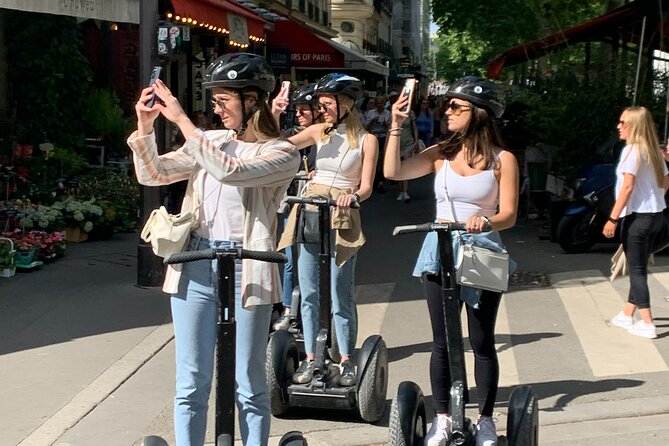
This isn’t a random wander. It’s a smart sequence through central Paris: river views, grand exhibition-era architecture, the classic squares, and then the museum belt and major monuments.
On foot, you can easily lose time crossing between these areas, and you might spend your day deciding whether you’re too tired to keep going. On a Segway, you cover ground quickly—then use short stops for pictures and context.
What makes this especially valuable for first-timers is the “orientation effect.” You start to recognize how the city lines up: the Seine bridges, the grand facades of early-1900s Paris, and the axis of major avenues toward the Arc and Eiffel area. After this ride, your next walk feels easier because your brain has a map.
Stop-by-stop: Invalides to the Seine bridges and exhibition-era Paris
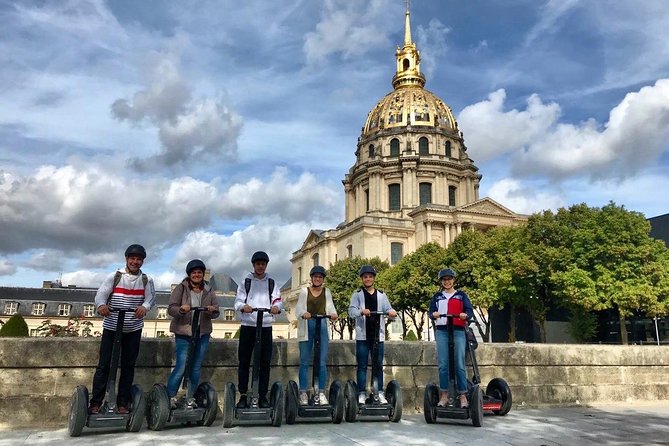
Your first stop is Musee de l’Armee des Invalides, at Les Invalides. This is where you get the military museum atmosphere plus the tomb of Napoleon. The site began in 1670 under Louis XIV, commissioned to house and care for wounded soldiers—so it’s not just “old buildings,” it’s built around a real purpose. You’ll get a chance for photos and a bit of historical context, but admission isn’t included.
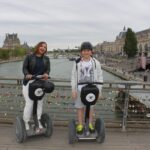
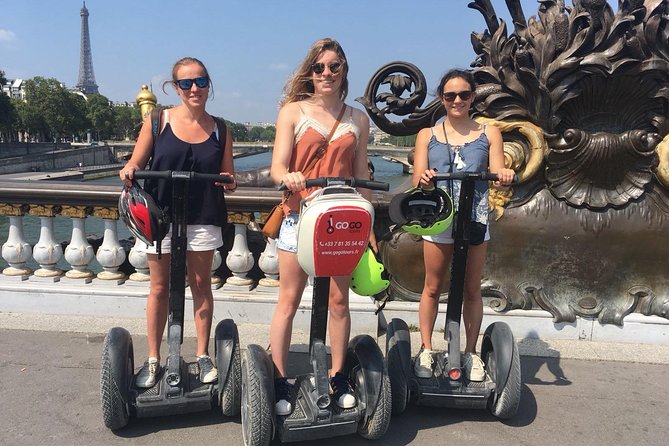
Next up is Pont Alexandre III, one of the Seine bridges that looks like it was designed for postcards. It was built for the World Fair in Paris and is widely treated as one of the prettiest bridges in the city. You’ll pause briefly for photos and the story behind the bridge—then move on before the stop becomes a time sink.
Then comes Grand Palais. This is the big, showy exhibition hall energy. It was built for the Universal Exhibition of 1900 and dedicated by the French Republic to the glory of French art. The stop is short, but it works because the building is instantly recognizable. You’re getting a sense of the city’s “confidence in scale.”
Right after, you’ll see Petit Palais, the smaller cousin on Avenue Winston Churchill. It also connects to the 1900 Universal Exhibition and later became a museum in 1902. Again: brief stop, quick context, good photos.
Finally in this first cluster, you reach Place de la Concorde, one of the city’s most evocative squares. It sits between the Champs-Élysées and the Tuileries Gardens. It’s the largest square in Paris. You’ll get a stop for pictures and history—without paying admissions.
What to consider at this stage
These early stops are intentionally timed. If you want deep museum time or long, inside-your-head reading, this tour won’t replace that. It’s meant to set the scene and point you toward where you’ll want to go next.



The museum belt: Louvre exterior views and a station-turned-museum story
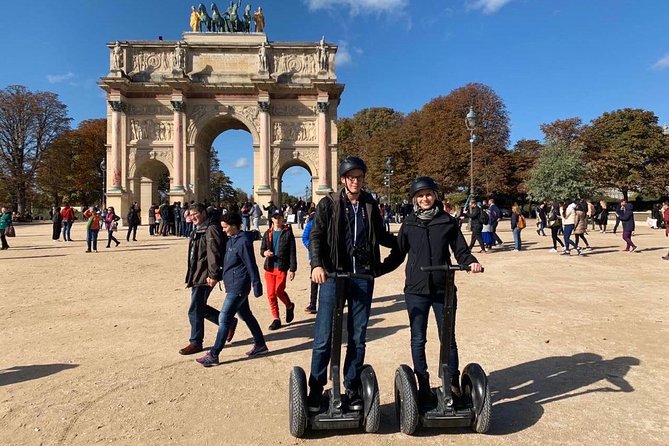
You’ll then head toward the Louvre Museum. The Louvre began as a fortress in 1190 and was reconstructed in the 16th century into a royal palace. That mix—fortress roots plus palace rebuilds—helps you understand why the building feels layered. Your stop is for pictures and orientation. Admission isn’t included.
Next is Musée d’Orsay. This one has a built-in story even if you don’t step inside: it began as a train station meant to bring visitors to the 1900 World’s Fair. The station was designed by architect Victor Laloux, and the “modern” approach was part of what made it stand out.
Why I like pairing Louvre and Orsay in one ride: it gives you two different “Paris eras” right next to each other—royal palace power on one side, and the 1900 exhibition-to-future transformation on the other. After the ride, you’ll have a better sense of what each place is really about, even if you don’t go inside that day.
Grand avenues and the big monuments: Champs-Élysées to Arc de Triomphe to Eiffel
After the museum belt, you’ll ride past Champs-Élysées, a broad avenue that started with Louis XIV and connects to Napoleon’s era. The Arc de Triomphe is also tied to Napoleon’s military victories. On this tour, it’s a pass-by and a picture stop—quick, visual, and perfect for getting the street’s scale in your brain.
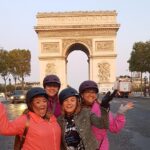
Then comes Arc de Triomphe. The arch was built to preserve the memory of French army victories. The first stone was laid August 15, 1806, and it finished about 30 years later. The stop is brief, so you’ll want to come ready for photos and a short moment to take in the details.
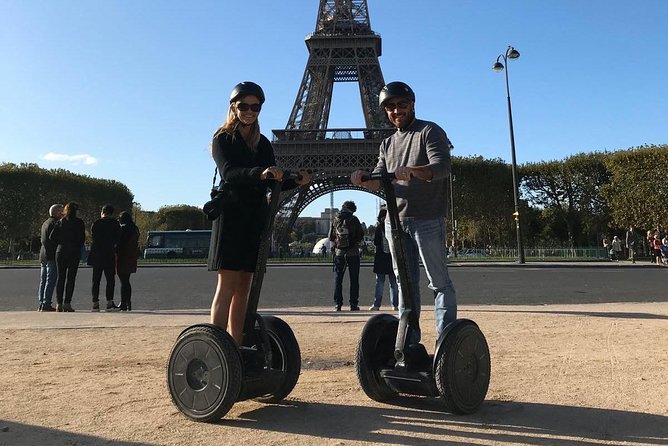
The final major sight is Eiffel Tower. You’ll get the story of how it was meant to be temporary—created after Gustave Eiffel’s 1889 achievement. It wasn’t an instant love match for everyone at the time; the tower was far from being everyone’s favorite idea when it first appeared. That makes it fun to revisit now, when it’s become the symbol of France and Paris.
A practical pacing note (from real-world experience)
The tour is built around short, frequent stops. That’s great for seeing a lot. The trade-off is that if you want lots of time at just one location, you may feel “cut short.” One rider reported feeling rushed at the Arc and Eiffel during their session. If those are must-see for you, consider choosing the longer option and ask the guide to protect your photo time early.
45 minutes, 90 minutes, or 3 hours: choosing the right length
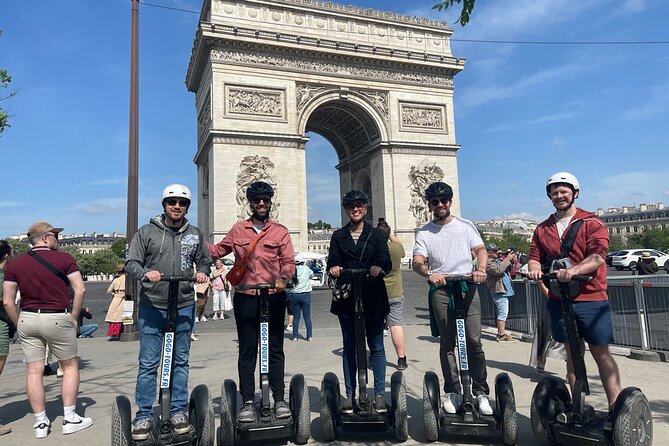
The tour offers 45-min, 90-min, or 3-hour private Segway options. Choosing the right length is really about what you want the tour to do.
- 45 minutes is best when you mainly want a quick orientation and a couple of photo stops.
- 90 minutes works when you want more sights but still need flexibility for later plans.
- 3 hours is the sweet spot for most first-timers. You get enough time for training, multiple key stops, and short breaks so the day doesn’t feel like a sprint.
A common theme in the ride experience is that 3 hours ends up feeling “just right.” Short breaks help. And because it’s private, you can usually ask for a small adjustment without the whole schedule collapsing.
Price and value: what $60.49 really buys you
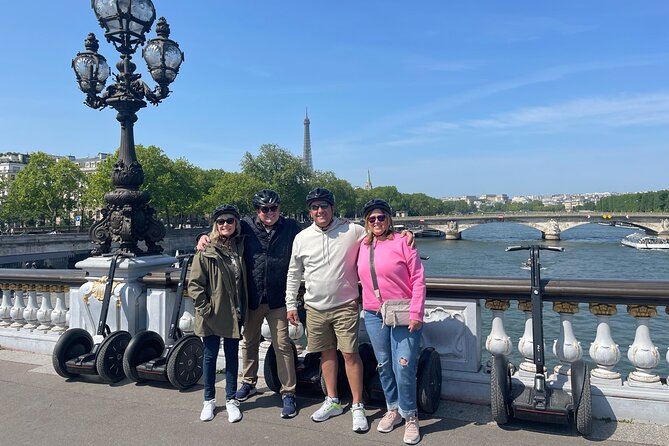
At $60.49 per person for about 3 hours, this isn’t cheap in the “just walk” sense. But it’s good value in the “I want to see the center efficiently” sense.
Here’s what you’re paying for that you don’t get with a self-guided Segway adventure:
- Local guide time to connect the dots between sites
- Instruction for beginners, including safety basics
- Helmet and weather gear (raincoats and hats)
- Private group handling, so pacing can match your comfort
Also, admission to museums is not included. The tour is designed for stops and context, not a full museum day. That’s important for budgeting. But if you plan at least one or two return visits later, you’ll likely be more selective with your time—and spend smarter money.
How the guides shape the ride (and why it matters)
The biggest quality difference in any guided activity is the guide. Here, you’ll find guides who bring the history down to human scale and keep you moving safely.
In practice, the ride often feels like: learn the basics, then get rolling with a guide who tells stories and answers questions. Names like George, Eli, Kensa, Arthur, Fatwa, and Arturas show up in the guide roster, and riders specifically highlighted guides for being patient with new riders, friendly, and able to explain the sites in an engaging way.
One fun detail: some guides also help with taking photos and videos, which removes a lot of the hassle of trying to balance your phone while learning a new vehicle.
Comfort and weather tips that actually help in Paris
Paris weather can change mid-afternoon. This tour runs in all weather conditions and provides raincoats and hats, plus advice to wear warm clothes. Riders have specifically mentioned enjoying the experience even when it was cold, largely because the guide kept things organized and the gear helped.
So pack for the day you get, not the day you hope for:
- Wear warm layers.
- Bring gloves if you’re prone to cold.
- Comfortable footwear helps your balance during the training phase.
You’ll also want to be ready for the brief stops outdoors. The cold can sneak up on you while you’re waiting for the group to take photos.
Who should book this Segway tour (and who should skip it)
This tour is a strong fit for:
- First-time Paris visitors who want a fast overview
- People who want fewer long walks and a more efficient route
- Families with older kids (minimum age is 12) who can handle the training and safety rules
- Anyone who likes the idea of learning the city’s layout while moving through it
It’s less of a fit if:
- You’re looking for long museum visits or ticketed entry time (admission isn’t included at stops)
- You want to spend extended time inside fewer places rather than seeing many exteriors
- You can’t meet the safety rules (weight limits, pregnancy restrictions, or age requirements)
If mobility is an issue, the Segway option can make a big difference—one reason this kind of tour appeals to people who want to see more without exhausting themselves on foot.
Should you book this Paris Segway tour?
If your goal is to see a high concentration of Paris icons in one morning/afternoon, I’d book it. The mix of major sights, beginner training, helmeted safety, and real guide storytelling is a solid value for $60.49, especially when you’re short on time.
I would hesitate only if your plan depends on long, lingering stops at a couple of specific monuments. This ride is paced for coverage. If Arc and Eiffel are your top priorities, choose the longer duration and talk to your guide right away about how you want your photo time handled.
Overall: this is the kind of Paris activity that helps you feel oriented fast. You leave with the city in your head in the order it actually exists.
FAQ
How long is the Segway tour?
The tour runs for about 3 hours, and there are also 45-minute and 90-minute private tour options.
Is this a private tour?
Yes. It’s private, so only your group participates.
Do beginners need experience?
No. Full instruction is included, and the tour is suitable for complete beginners.
What sights will we see?
The route includes stops at Les Invalides, Pont Alexandre III, Grand Palais, Petit Palais, Place de la Concorde, the Louvre, Musée d’Orsay, the Champs-Élysées, Arc de Triomphe, and the Eiffel Tower.
Are museum admissions included?
No. Admission tickets are not included, so your stops are for pictures and history rather than entry.
What meeting point is used?
The tour starts at 101 Av. de la Bourdonnais, 75007 Paris and ends back at the same location.
What weather support is provided?
The tour provides raincoats and hats in bad weather, and it operates in all weather conditions with a recommendation to wear warm clothes.
Are there age and weight limits?
Yes. Minimum age is 12, and minors must be accompanied by an adult. Rider weight must be at least 40 kg and not more than 120 kg. Pregnant women are not allowed.
What cancellation options are available?
Free cancellation is available. You can cancel up to 24 hours in advance for a full refund, and cancellations within 24 hours aren’t refundable.