REVIEW · BARCELONA
Intro Segway Tour Barcelona 1h
Book on GetYourGuide →Operated by Barcelona Segwayday · Bookable on GetYourGuide
Barcelona by Segway makes you smile fast.
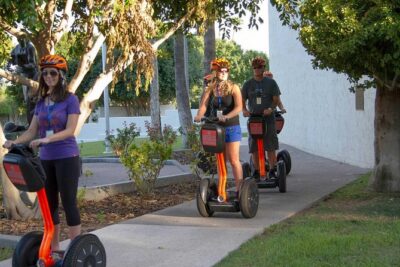
This 1-hour Segway tour is a fun, eco-friendly way to get oriented in Barcelona, with highlights like the waterfront, Barceloneta area, and a ride toward Montjuïc Hill. I like that the start focuses on comfort and control (so you’re not just thrown onto a machine), and I like the quick hit of major sights—Christopher Columbus, Port Vell, and the Head of Barcelona—without burning your legs. The main drawback is that 1 hour goes quickly, so if you want slow looking and lots of photo stops, you’ll probably wish you booked longer.
The guide is a big part of the experience. You’ll get free training time and then a guided loop through places that feel like Barcelona’s greatest hits—Barri Gòtic, Parc de la Ciutadella, and the Fountain Cascada Monumental. Names that show up again and again in guides for this company include Natasha and Carlos, and the tone is consistently patient and confidence-building (even if you’re a first-timer).
Just keep the practical limits in mind before you show up. The minimum age to ride a Segway is 16, and it isn’t suitable for pregnant women, people under 40 kg (88 lbs), or people over 120 kg (264 lbs).
In This Review
- Key things to know before you ride a Segway in Barcelona
- Getting oriented fast: why a 1-hour Segway tour works
- Meeting point at Carrer d’En Rull: arrive ready to learn
- The training moment: how you get comfortable quickly
- Christopher Columbus to Port Vell: the waterfront kickoff
- Barri Gòtic and the Head of Barcelona: short stops with big context
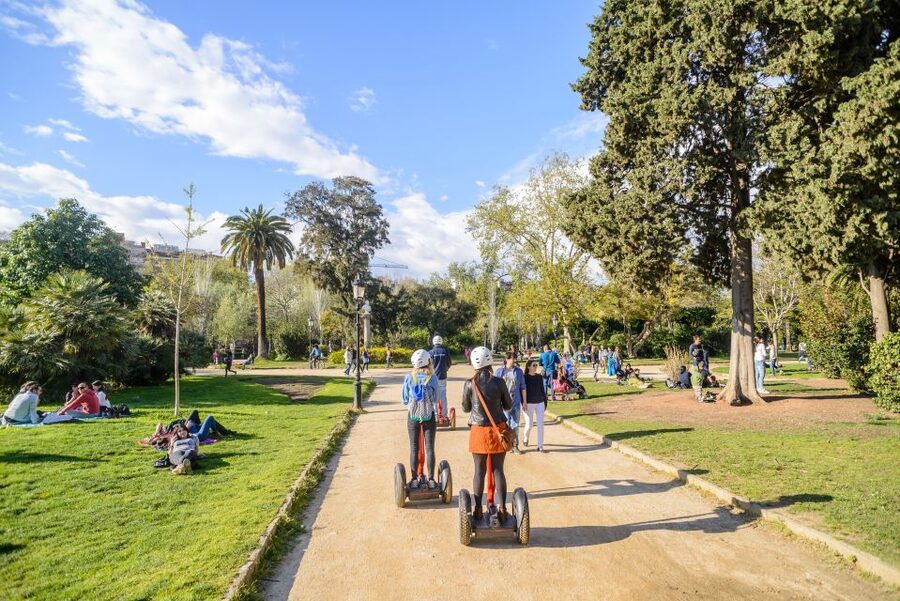
- Parc de la Ciutadella: where the ride gets calmer
- Montjuïc Hill side trip: views without the whole climb
- What the included gear and insurance means for you
- The guide makes the difference: Natasha, Carlos, Phil, and more
- Who should book this Segway tour (and who should skip)
- Price and value: $34 for 1 hour, with training included
- Quick practical tips so your ride feels smooth
- Should you book this 1-hour Segway tour in Barcelona?
Key things to know before you ride a Segway in Barcelona
- Training first, then sightseeing: you get time to learn the Segway and feel steady before the tour really starts
- Small group, max 6: easier pace, more attention, and less waiting around
- Your route covers both city and park: from the harbor side (Port Vell) to Parc de la Ciutadella
- You’ll see specific landmarks: Columbus sculpture, Port Vell, Barceloneta Beach area, and the Head of Barcelona
- It’s built for first-time orientation: a short loop to help you plan the rest of your days
- Closed-toe shoes are smart: you’ll be more comfortable and stable on outdoor paths
Getting oriented fast: why a 1-hour Segway tour works
Barcelona is huge in variety. One street feels Mediterranean; the next feels Roman or medieval; then you’re at a park designed for a late-1800s exhibition. A Segway tour is a practical shortcut through that mix, especially if it’s your first day.
This is not the kind of tour where you park yourself at one monument for ages. Instead, it’s built for motion and memory: you glide past big landmarks, get a guided narrative, and leave with a mental map. That matters because it helps you choose where to walk later. I love that the tour acts like orientation with momentum.
At $34 per person for 1 hour, you’re paying for convenience and guide-led efficiency. You’re also paying for the included gear: Segway rental, helmet, insurance, and storage for your stuff. For a short stay, that bundle can be better value than trying to figure out routes and rentals on your own.
The pacing is also friendly to “I’m nervous” first-timers. The tour includes a training period before the sightseeing ride, and the guides seem to keep that calm and methodical. If you’ve never tried one, the biggest relief is that you practice first—rather than learning while traffic and pedestrians are around.
You can also read our reviews of more tours and experiences in Barcelona.
Meeting point at Carrer d’En Rull: arrive ready to learn
The meeting point is Carrer d’En Rull 2, 08002 Barcelona. Plan to arrive a little early, because you’ll want that first moment to settle in before the helmet-on, training-start rhythm.
What to bring is simple and practical:
- Comfortable shoes
- Comfortable clothes for being outdoors
Closed-toe flat shoes are strongly recommended, since you’ll feel more stable. If you’re the type who brings fancy sandals for photos—save them for later. You’ll enjoy the ride more with shoes that grip.
Also, think about what you’ll carry. You do get storage for your personal belongings, which helps if you brought a day bag or small camera gear. You won’t want loose items bouncing around while you’re learning the Segway’s balance.
The training moment: how you get comfortable quickly
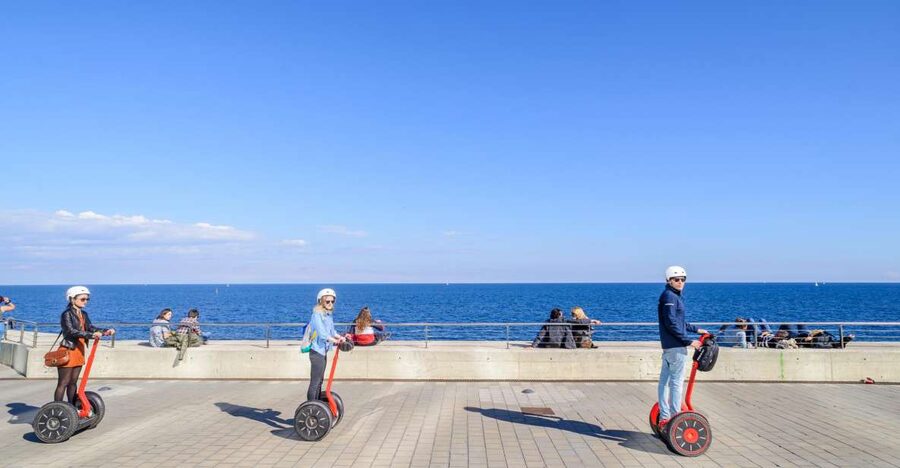
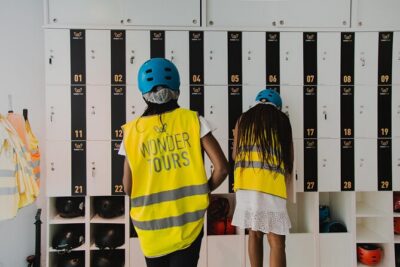
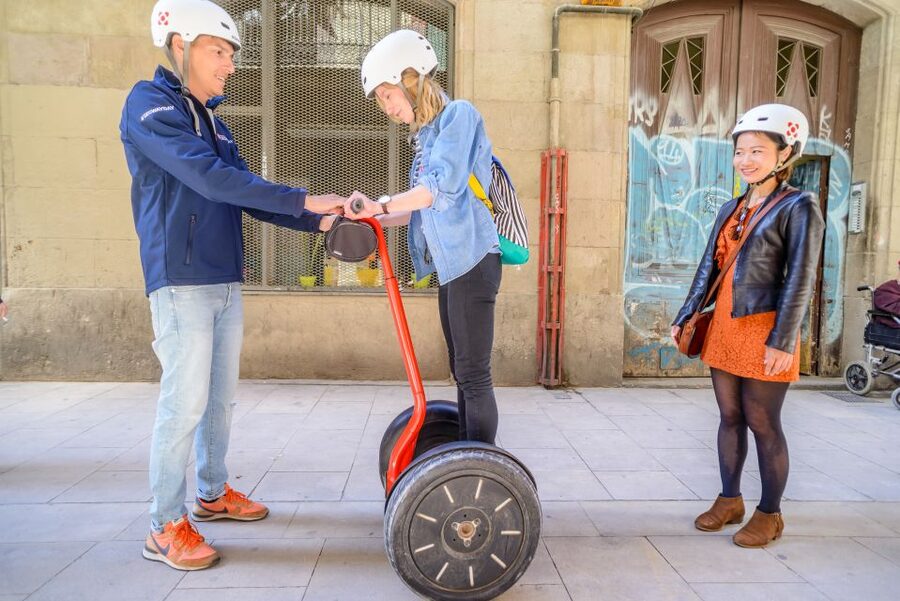
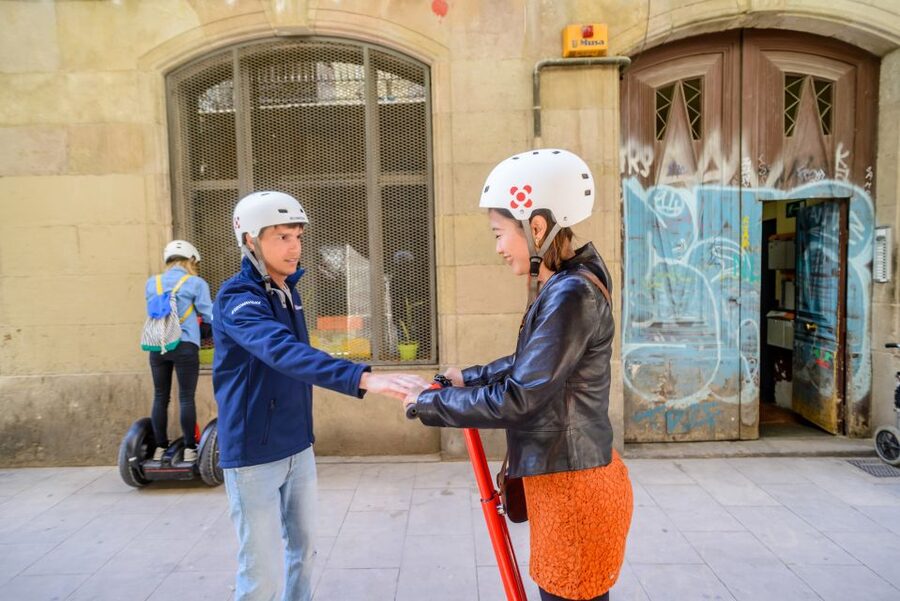
Every good Segway tour lives or dies on how the guide teaches control. Here, the tour includes free training time before you head out. That’s the time when you learn the basics in a lower-stress setting, so you’re not white-knuckling the next stop.
In the feedback you can see a pattern: guides are patient, and they adjust to nervous riders. Names that come up with that supportive style include Natasha and Carlos, but you’ll also see consistent mentions of other guides like Phil, Victor, and Ilary. The common theme is confidence-building. You’re not expected to be fearless from minute one.
What you’ll likely do during training:
- learn how to mount and dismount safely
- practice starting, turning, and slowing
- get coached on posture and balance
Then the tour begins, and the real fun starts. For first-timers, this is where the experience becomes either “a cool idea” or “I actually want to keep going.” The training sets you up for the second one.
Christopher Columbus to Port Vell: the waterfront kickoff
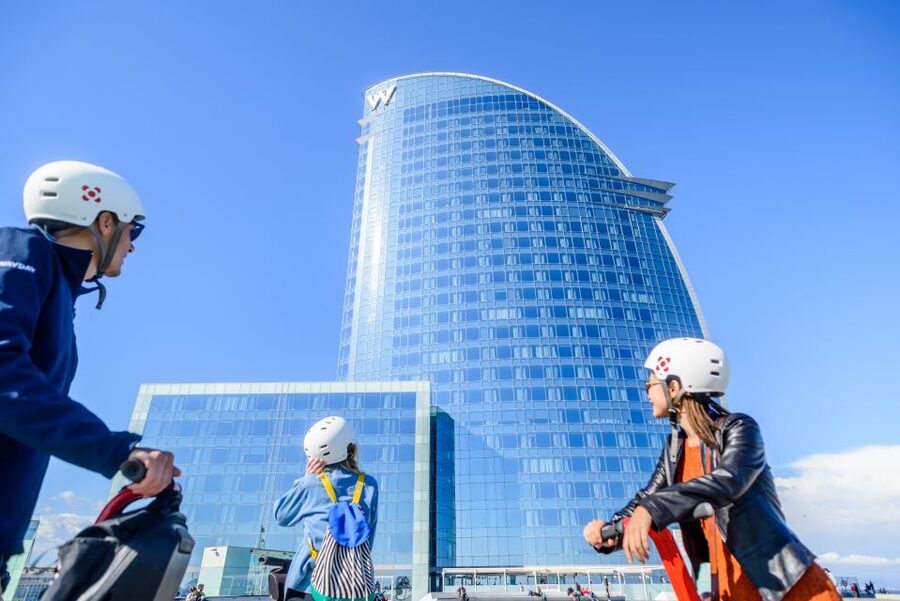
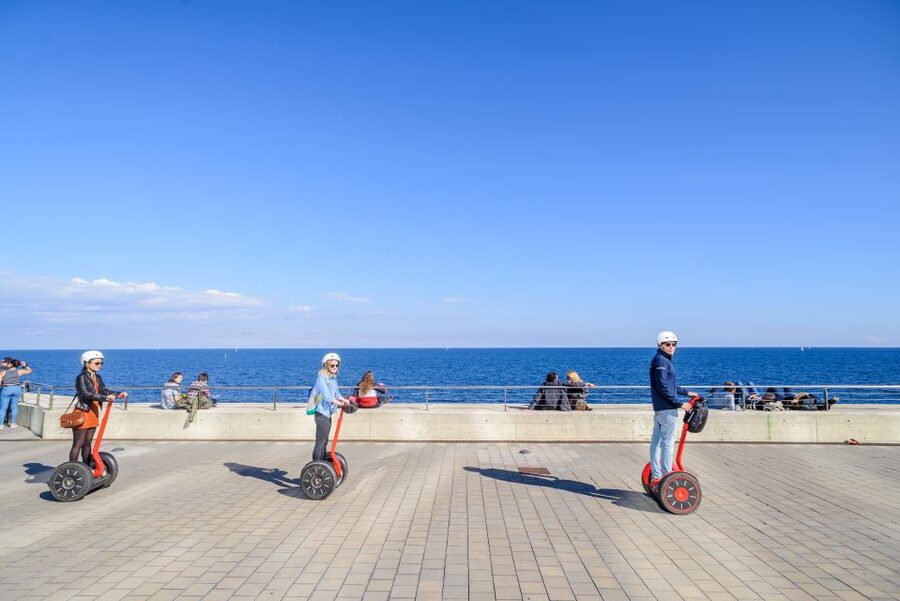
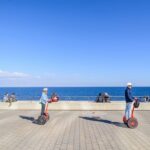
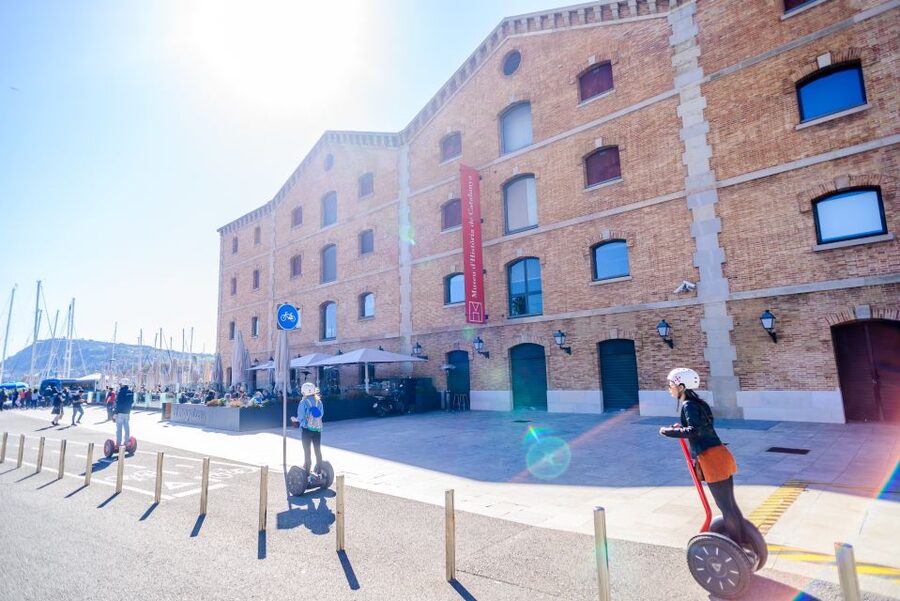
The tour starts feeding you views right away. You’ll glide past the Christopher Columbus sculpture and then head toward the harbor area, including Port Vell and the Barceloneta Beach zone.
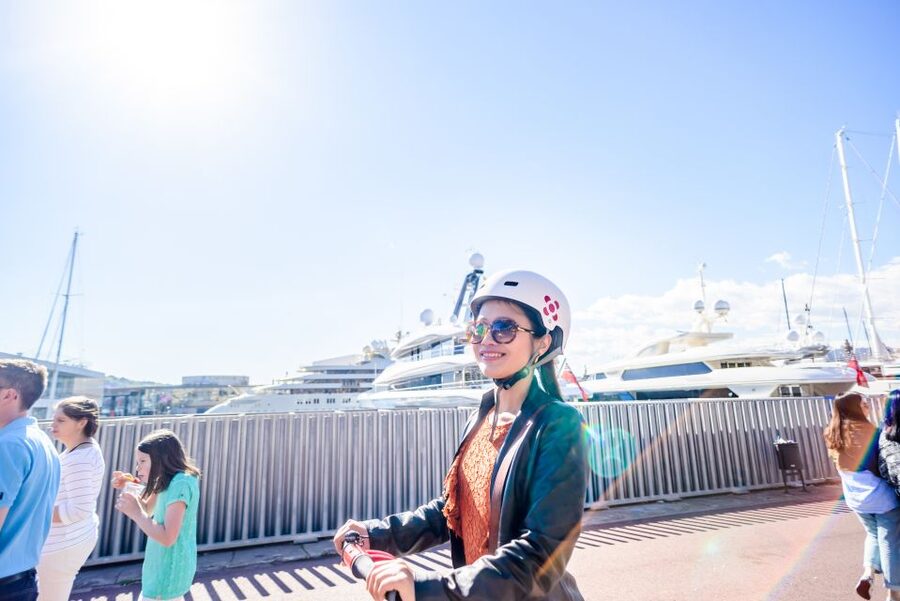
Why this segment works: Port Vell is a fast way to understand Barcelona’s relationship with water. You see the city’s scale, you get that open-sky feeling, and you learn what the waterfront looks like when you’re not stuck between viewpoints and bus lines.
This part of the route is also great for photos, but in a realistic way. You’ll stop periodically, and the guide can help you position yourself so you’re not trying to balance a camera while standing in pedestrian chaos. If you’re traveling with someone who dislikes big group photo lines, this tour’s stop rhythm usually feels calmer.
You’ll also get context along the way. The guide will explain what you’re seeing and why it matters—so Port Vell isn’t just pretty scenery; it becomes part of the Barcelona story.
Barri Gòtic and the Head of Barcelona: short stops with big context
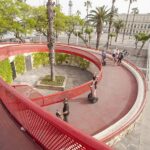
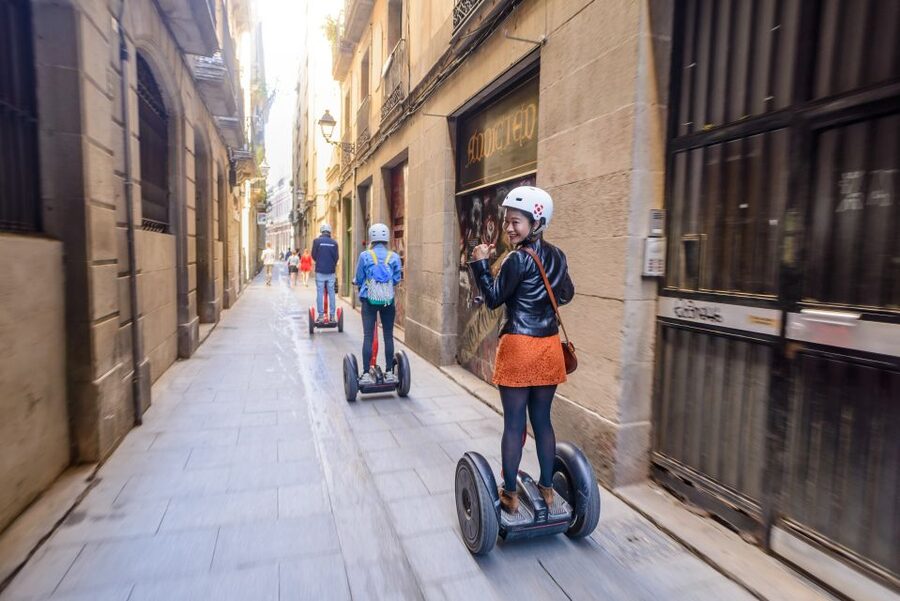
Once you move away from the harbor and into the older areas, the tour turns more interpretive. Expect a pass through the Barri Gòtic (Gothic Quarter) and the Head of Barcelona (also referred to as La Cara de Barcelona).
This is a smart move for first-timers. If you’ve never walked the Gothic Quarter, it can feel like a maze. From a Segway perspective, you still get the visual density, but you’re guided so you understand what you’re looking at. That turns “cool streets” into “I get it.”
The Head of Barcelona is a great example of how a short landmark stop can anchor the imagination. It’s memorable and weird in the best way—so when you later walk that neighborhood, you’ll remember exactly where it sits in the bigger grid.
If you’re picky about history, don’t worry: the guide’s job here is to connect the dots quickly without forcing you into long lectures. In a short 1-hour experience, that’s the right balance.

Parc de la Ciutadella: where the ride gets calmer
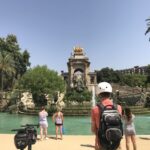
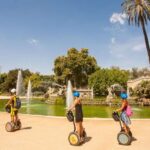
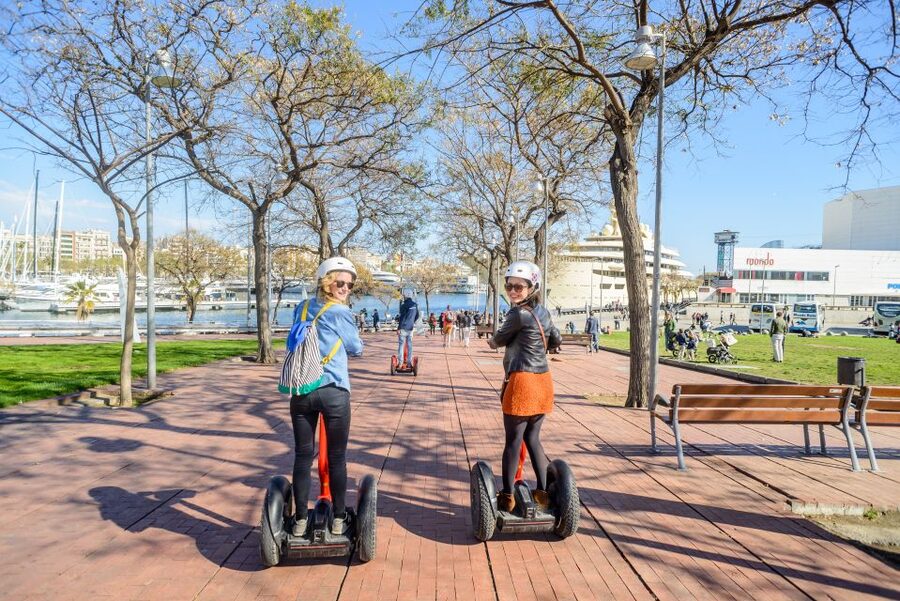
Then the tour shifts into Parc de la Ciutadella, which is the oldest park in the city. The park was built in 1872 by architect Josep Fontserè I Mestre.
This stop is more than a breather. It gives you a different Barcelona texture: less stone lanes, more open space and classic park design. It also shows how the city developed beyond medieval blocks—how Barcelona planned for public space and major events.
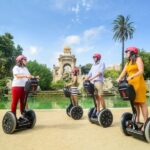
One highlight here is the Fountain Cascada Monumental, designed by Josep Fontserè in 1875, created specifically for the universal exhibition in 1888. That detail matters. It turns the fountain from a pretty photo spot into something with purpose and time behind it.
If you like architecture and public works, you’ll appreciate that the guide points out features you might miss if you were just walking through. You get structure without losing the fun.
Montjuïc Hill side trip: views without the whole climb
The tour also includes a ride toward Montjuïc Hill. You won’t be doing a full hike or a long ascent here—this is a sightseeing loop designed to cover ground without exhausting you.
Why that’s valuable: Montjuïc is one of Barcelona’s biggest “mind places.” People talk about it, but it can be hard to fit into a first-week plan if you’re already walking the city center. This Segway segment gives you a taste of the hill’s geography and a sense of where it fits into the wider city.
Even if your day later includes museums or viewpoints, the Segway ride helps you recognize the big picture. You’ll understand how the waterfront and the hill connect, and that makes your later walking routes feel less random.
What the included gear and insurance means for you
This tour includes Segway rental, a helmet, insurance, and storage, plus the guide’s time and the training period. That’s not just “nice to have”—it affects your mental load.
No helmet means most people would worry. No rental means you’d need to coordinate logistics. No insurance means you’d be thinking about liability the whole time instead of enjoying the ride.
The storage part also helps. If you’re traveling light, you might bring a small bag. Having a place for it means you can focus on balance and direction, not where your phone or camera is going.
And because it’s designed as a small group limited to 6, you’re less likely to feel rushed or blocked. The guide can keep track of everyone, and you can ask questions without being one voice in a crowd of 30.
The guide makes the difference: Natasha, Carlos, Phil, and more
I can’t stress enough: on a Segway tour, the guide isn’t just a history professor. They’re the instructor, safety manager, and pace-setter.
From the guide names tied to this experience—Natasha, Carlos, Phil, Victor, Ilary, Elisa, Nathalia, Ilaria, and Vik—you can see a consistent pattern: people get help with confidence, and the guide keeps the ride fun.
A few examples of what that looks like in practice:
- Patient teaching for first-timers who feel nervous
- Regular stops for photos and short explanations
- A sense of humor that keeps the experience relaxed
If you’re traveling with teens or adults who are hesitant, that teaching style matters. You don’t need the group to be “advanced.” You need the guide to notice when someone is anxious and slow down.
It also helps if you’re the kind of traveler who likes asking questions. The small group format makes it easier to get answers instead of just hearing facts thrown forward like a lecture.
Who should book this Segway tour (and who should skip)
This is a good fit if:
- it’s your first time in Barcelona and you want fast orientation
- you want to cover the harbor, Gothic Quarter, and park areas without long walking stretches
- you’re curious about architecture and city planning details (Fontserè is a real name you’ll remember)
- you like guided structure, especially if you don’t want to plan routes on day one
It may not be a good fit if:
- you want to linger at a single neighborhood for hours
- you’re unsure about riding and need more time than a 1-hour tour offers
- you fall outside the limits: under 16 for Segway riding, under 40 kg, over 120 kg, or pregnant women
There are also options mentioned for younger riders: children under 16 may join on an e-bike instead, and kids under 22 kg can be accommodated on an eScooter with a child seat. If that’s relevant for you, it’s worth checking what vehicle option works for your group before you commit.
Price and value: $34 for 1 hour, with training included
Let’s talk money in plain terms. $34 per person for a 1-hour guided Segway tour is paying for:
- equipment rental (Segway + helmet)
- instructor time (training + guiding)
- insurance
- access to multiple landmarks in a short window
If you’re visiting on a tight schedule, that can be good value. You’re essentially buying time-saving, and you’re buying the comfort of learning with coaching. In Barcelona, where walking is easy but distances add up fast, being able to cover more ground with less effort can feel worth it quickly.
If you already know the city well and you don’t need an intro, you might choose other experiences that go deeper into one area. But for first-timers, or for anyone who wants a playful orientation day, this is a solid use of money.
Quick practical tips so your ride feels smooth
A few things that help you get the most out of the experience:
- Wear closed-toe flat shoes and clothes that are comfortable outdoors
- If you’re nervous, tell the guide during training—then practice until you feel in control
- Bring minimal loose items so the storage option can do its job
- Think of it as a snapshot tour: use it to plan the walking you’ll do afterward
And yes, expect that 1 hour can feel short. That’s normal. If you know you’ll want more time in the city center or more photo stops, consider booking a longer option next time you visit.
Should you book this 1-hour Segway tour in Barcelona?
Yes, you should book it if you want a fast, friendly introduction to Barcelona that covers the harbor, Gothic Quarter vibes, and Parc de la Ciutadella without turning your legs into jelly.
I’d skip it if you’re hoping for a slow, deep dive into one neighborhood, or if you’re not sure the riding limits fit you. Also skip if you’re pregnant, under the minimum age, or outside the weight guidance.
If you’re a first-timer with limited time, this tour is one of the best ways to get your bearings fast—then go back later on foot to the places that grabbed you most.