REVIEW · BARCELONA
Barcelona: 2.5-Hour Gaudí Segway Tour
Book on GetYourGuide →Operated by City Tours on Bike-eBike-Segway · Bookable on GetYourGuide
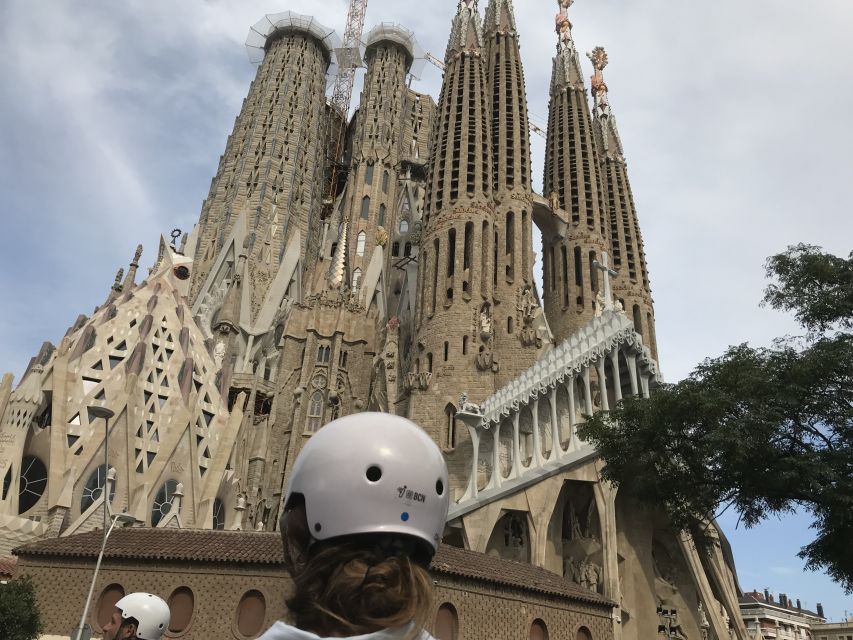
Segway + Gaudí is a smart shortcut through Barcelona. I love how this route strings together the big ticket sights in a way that feels smooth, not rushed, especially along Passeig de Gracia. I also love the chance to get up close to Sagrada Família, even though the church is still unfinished, and still absorb the scale and weird-beautiful design choices.
Before you book, one real consideration: this is a Segway ride, so it has physical rules. You’ll need at least 110 cm tall, and the tour isn’t suitable for pregnant women or anyone with mobility impairments, so check that fit first.
In This Review
- Key things that make this tour worth your time
- Why this Gaudí Segway route beats a straight sightseeing day
- Getting set up at Passeig de Lluís Companys 10 (and learning the Segway fast)
- Arc de Triomf to Casa Mila: the modern city feeling you get first
- Casa Batlló: the best kind of stop for photo-happy eyes
- Casa Amatller and Casa de les Punxes: the modernism nerd detour that’s worth it
- Sagrada Família neighborhood: what unfinished construction teaches you
- La Monumental: the quick history detour most people skip
- Gràcia and Plaza de la Vila de Gràcia: where the city gets local-feeling
- How long is the day, really? Pace, group size, and comfort
- Price and value: why $42 can work if you’re optimizing time
- Language, guides, and what the experience feels like in practice
- Who should book this Segway Gaudí tour, and who should skip it
- Should you book? My call
- FAQ
- Where does the tour start?
- How long is the Barcelona Gaudí Segway tour?
- How much does it cost?
- What’s included with the Segway experience?
- Do I need experience to ride a Segway?
- What are the minimum requirements to join in Barcelona?
- Is this tour available in multiple languages?
- Can I bring mobility or accessibility needs?
- What key sights are part of the route?
Key things that make this tour worth your time
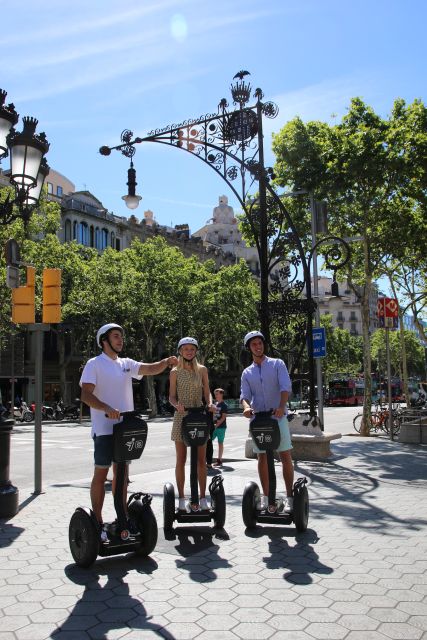
- A Segway route through two districts: Eixample and Gràcia, not just a single street-and-photo loop
- Big Gaudí hits, plus Catalan Modernism extras like Casa Amatller and Casa de les Punxes
- Two Segway immersion moments: training early, then longer rides with real time to look around
- Sagrada Família with guided context and a chance to pause on the streets nearby
- Helpful guides with practical add-ons, from route pacing to where to eat next (I’ve seen this credited to guides like Alex, Daniel, Edwin, and Maria)
Why this Gaudí Segway route beats a straight sightseeing day
Barcelona is great on foot, but time gets eaten fast. This tour gives you a clean way to cover a tight cluster of highlights with less backtracking. The value isn’t just speed. It’s the sequence: you start at the grand Arc de Triomf area, then roll into the modernist architecture corridor, then switch gears to the more local-feeling Gràcia district.
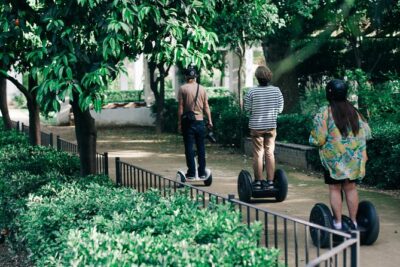
You also get a built-in rhythm. You’re not constantly stopping and starting like a bus tour, and you’re not stuck doing the “look up, trip, repeat” thing with a crowd. Segways help you move at a steady pace while you focus on facades, streets, and sightlines.
And yes, it’s classic Barcelona: you’ll spend time with Gaudí’s most famous buildings, but you’ll also see why Catalan Modernism is a whole movement, not just one architect.
You can also read our reviews of more tours and experiences in Barcelona.

Getting set up at Passeig de Lluís Companys 10 (and learning the Segway fast)
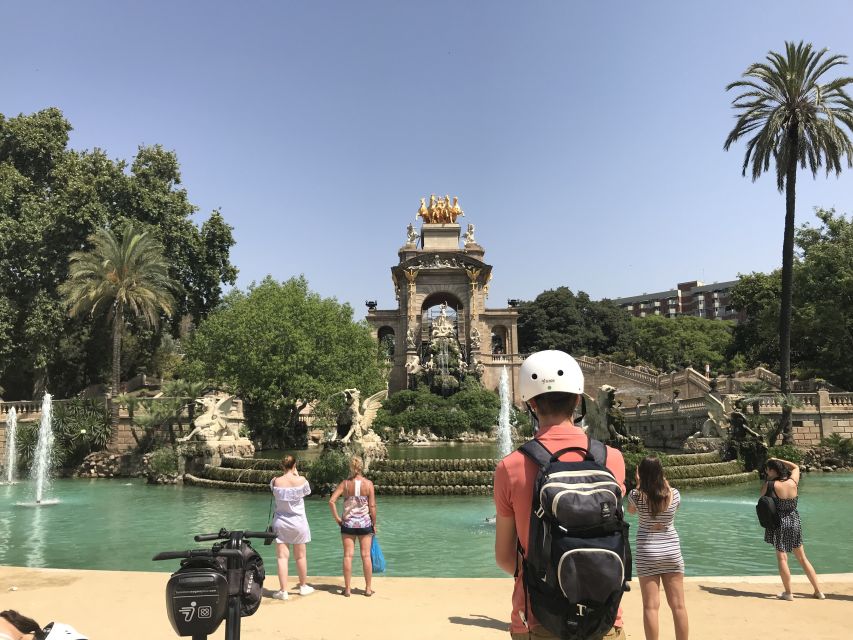
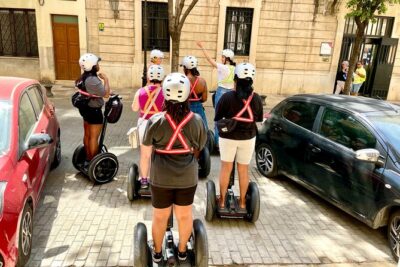
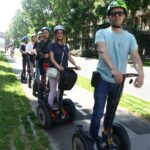
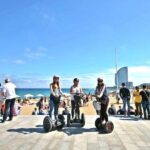
The meeting point is Passeig de Lluís Companys, 10. Expect a short safety and ride setup right away. You get Segway i2, a helmet, and training, plus safety equipment and insurance. That matters because a good Segway tour doesn’t just throw you onto a machine. It teaches you how to control it around pedestrians and city movement.
The guide then keeps things practical as you ride. In the best tours, the guide’s job is half instruction and half traffic sense. In past experiences on similar routes, the tone is usually patient and focused, and this one specifically keeps groups small (typically 2–6 people per guide). If the group is bigger, it’s split into sections with multiple guides, which helps you avoid that awkward “we’re all waiting for one person” energy.
Practical tip: wear comfortable shoes. You’ll be making body movements similar to climbing and descending stairs without assistance, and that’s a weirdly important detail for stability.
Arc de Triomf to Casa Mila: the modern city feeling you get first
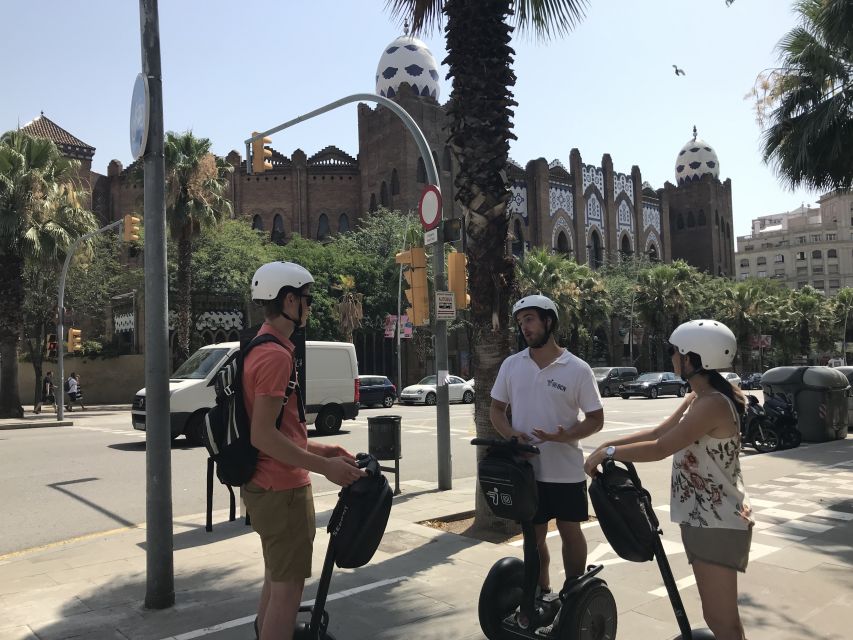
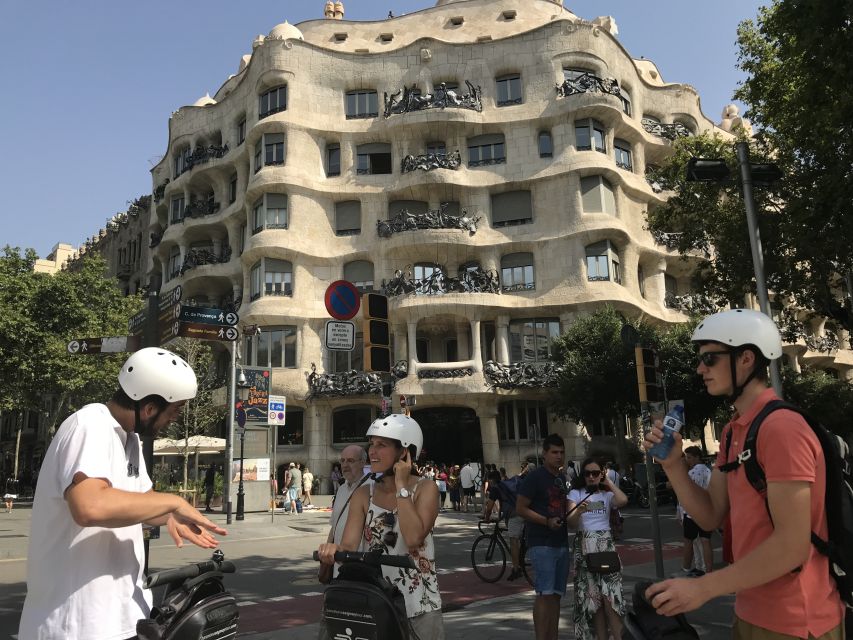
Your ride begins with an Arc de Triomf photo stop and guided orientation. This is a smart opening. It gets you oriented in a part of the city where the streets feel wide enough to settle in, which is exactly what you want right after training.
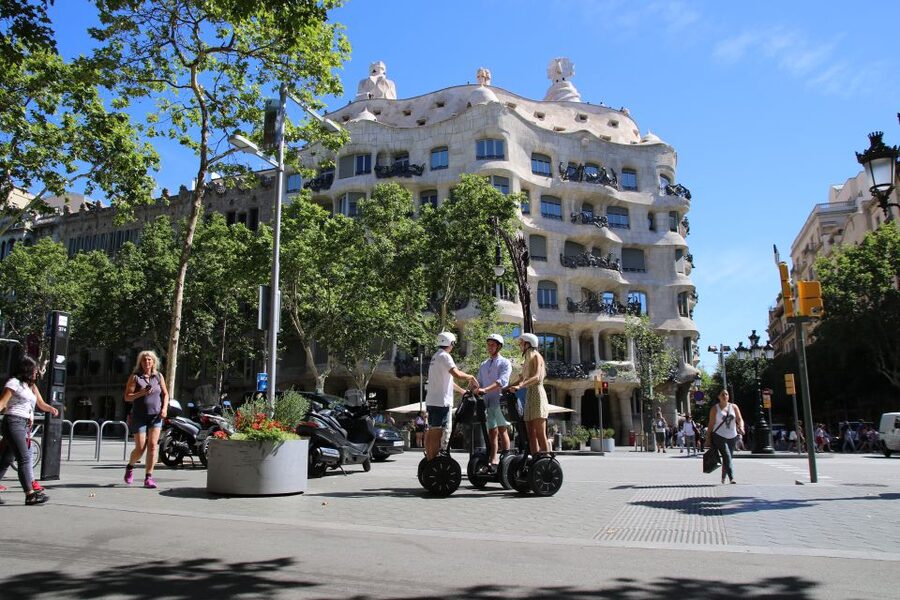
Then you head toward Casa Milà (La Pedrera). You’ll have time for a photo stop and a short guided look. Casa Milà is famous, sure, but what I like is how it teaches your eye to read a building. You start noticing textures and forms, not just a silhouette. From the Segway, you can also see how the building sits in its street setting, especially when you’re rolling along the boulevard rather than standing in one spot.
There’s a 10-minute Segway ride time buffer associated with this stop, which is enough to actually glide, regroup, and keep your attention on the architecture.
Casa Batlló: the best kind of stop for photo-happy eyes
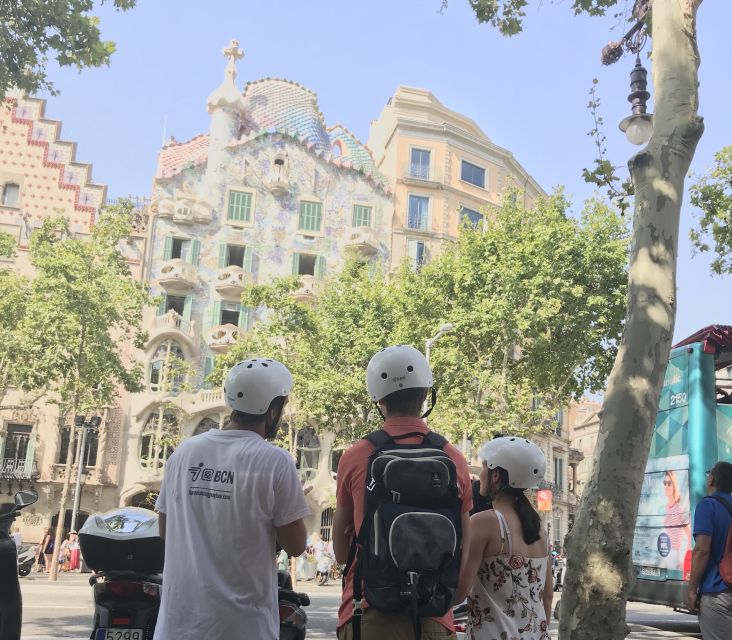
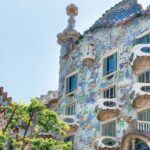
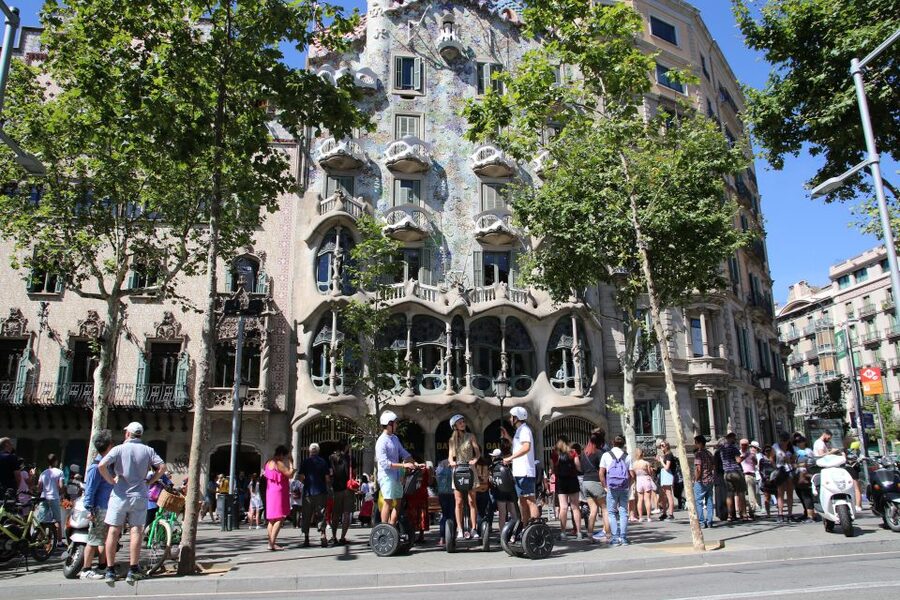
Next comes Casa Batlló, with guided viewing and sightseeing drive time. Casa Batlló is one of those places where the design feels like a sculpture that learned architecture. The Segway format helps because you can take in the building from more than one angle as you move through the corridor.
You get another 10-minute riding segment tied to this stop, so it doesn’t feel like you’re sprinting from one facade to the next. It feels more like: look, listen, ride, repeat.
If you’re the type who loves detail, watch how the guide ties the weird forms back to Catalan Modernism style and symbolism. That’s usually where the “wow” shifts from surface decoration to something that clicks.
Casa Amatller and Casa de les Punxes: the modernism nerd detour that’s worth it
This is where the tour earns its “Gaudí-inspired” promise. You see the famous names, but you also get stops that broaden your understanding.
Casa Amatller (often spelled Amatller in tour descriptions) is one of the modernist buildings tied to the Eixample fabric, and it’s connected to wealth and ambition from the late 1800s era. You’ll have a photo stop and guided look here, plus scenic drive and viewing time as you approach Casa de les Punxes.
Casa de les Punxes is a favorite for people who like buildings that look like they have personalities. The facades are peculiar in the best way, and the segmentation matters: you’re not just passing by at high speed. You get enough time to register the shapes and then roll on.
This part is also a reminder that Barcelona’s architectural story isn’t a straight line from one genius to another. It’s a whole conversation among architects and patrons.
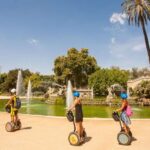

Sagrada Família neighborhood: what unfinished construction teaches you
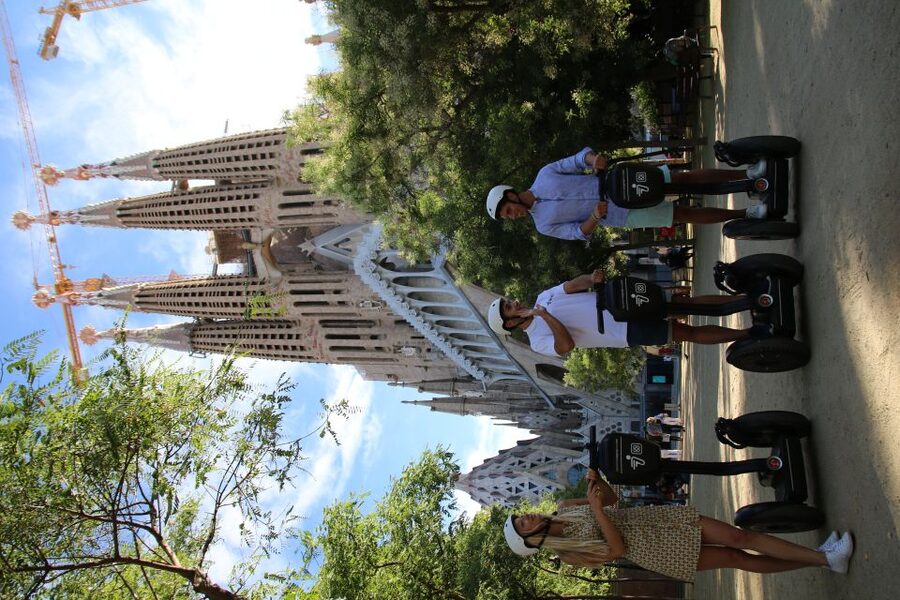
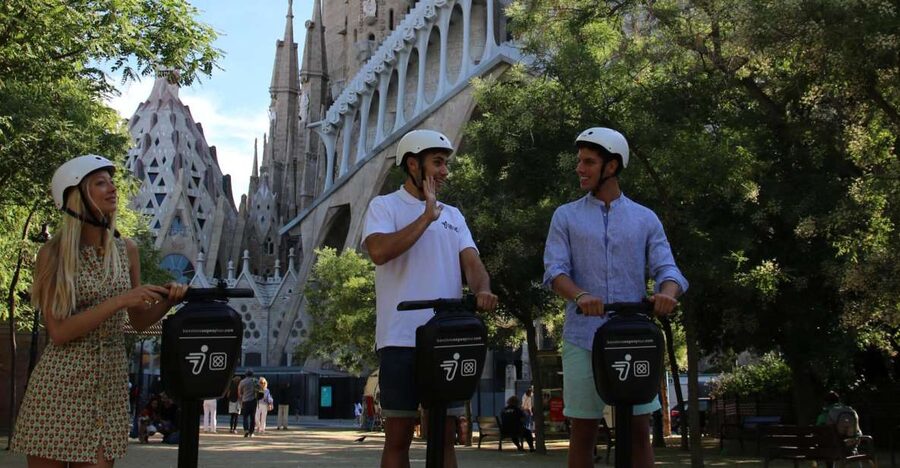
You’ll spend time in the Sagrada Família neighborhood with a photo stop and guided tour, plus free time (about 15 minutes) to look around on your own.
Here’s the thing about Sagrada Família: the unfinished status isn’t a flaw in your experience. It’s part of what you’re seeing. From the street level, the scale reads differently. You understand how big the vision is and why it keeps pulling the eye upward.
A guided stop helps because your brain needs a framework. You can walk past a building and just think impressive, but a guide can point out why the design choices are the way they are and how the ongoing work fits into the bigger story.
Practical note: this is a busy area. Keep your “look and move” mindset. You’ll have time to stop and breathe, but you should also be ready to ride forward when the group does.
La Monumental: the quick history detour most people skip
After the Gaudí-heavy stretch, you get a different kind of Barcelona moment at La Monumental. You’ll pass it, stop for photos, and get a guided explanation.
This bullfighting arena is described as the last where bullfights were held before they were banned by the Catalonian parliament. That’s a striking contrast to all the church and house facades you’ve been seeing. It’s also why I like this tour: it doesn’t pretend Barcelona is only architecture. It includes how social life and laws shaped what happens in public spaces.
Even if bullfighting isn’t your thing, the building itself can be visually satisfying, and the historical context gives you something to think about as you move toward Gràcia.
Gràcia and Plaza de la Vila de Gràcia: where the city gets local-feeling
The tour includes a quick escape to Gràcia, with time tied to the Plaza de la Vila de Gràcia and guided street viewing.
This district has a different personality from Eixample. It was established in the 17th century and remained independent until it was annexed by Barcelona in 1897. That background explains why it feels more self-contained than the “grid” parts of town.
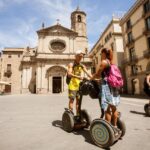
On the square you’ll see the bell tower and the former city hall, La casa de la Vila de Gràcia. Then you’ll keep moving through the neighborhood’s smaller streets, low buildings, and local shops and restaurants feel.
If you want one “not just postcards” moment from the day, Gràcia is often where it clicks. You’re not only seeing landmarks; you’re watching the city’s daily texture.
How long is the day, really? Pace, group size, and comfort
The total duration is 2.5 hours. That’s a sweet spot for a Segway tour: long enough to get multiple architecture stops, short enough that you’re not exhausted by time.
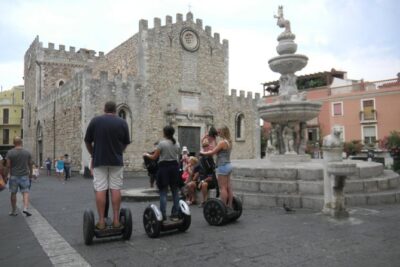
Group size is typically 2–6 people per guide, with larger groups split and accompanied by several guides. That matters for safety and for how often you can stop for photos. You want a guide who can keep you moving without forcing you into a traffic dance.
One more honest practical note from how these tours feel: Segways are easy to learn, but they can still be demanding on the knees and legs. I’ve seen people flag that in experiences like this, so if you have any joint sensitivity, don’t ignore it. Comfortable pants and supportive shoes help.
Also, you’ll be riding through pedestrian-heavy areas, so keep your posture steady and follow guide cues. The best tours keep the pace calm and predictable.
Price and value: why $42 can work if you’re optimizing time
The price is $42 per person for about 2.5 hours. For Barcelona, that’s not pocket-change, but it’s not just for the novelty of riding a machine.
You’re getting:
- Segway i2 and helmet
- A live guide
- Training
- One drink
- Safety equipment and insurance
That’s a decent package if your goal is to cover major modernist architecture without spending your whole day walking between far-apart points. If you’re staying for a short visit and you want the key Gaudí sights plus the surrounding context, the time saved can be the real value.
It’s also a strong pick if you’re traveling with mixed interests. The “architecture people” get guided details. The “I just want to see the city” people get movement, views, and time to explore.
If you’re the type who hates structured stops, you might not love the photo-stop rhythm. But if you’re happy with guided timing, it’s good value.
Language, guides, and what the experience feels like in practice
You can get the tour with a live guide in Dutch, English, French, German, Italian, Portuguese, Russian, or Spanish.
And the guide personality can really shape the day. In the experiences shared with this tour format, guides like Alex have been praised for recommendations on where to eat and where to go next. Daniel and Edwin have been credited with keeping the pace right and taking time to explain buildings. Maria has been singled out for cultural knowledge, and Stephan/Stephan(e) for being fun and easygoing. Those aren’t small details. When a guide talks in a way you can actually use, you end up with more than photos. You end up with a clearer sense of what you just saw.
Even if the language fits you, also listen for how the guide links styles across stops: Gaudí’s signature approach, then the surrounding modernist neighbors who make the city feel cohesive instead of random.
Who should book this Segway Gaudí tour, and who should skip it
This tour fits best if:
- you want Gaudí highlights plus more modernism beyond the headline buildings
- you’re comfortable learning a ride quickly and following safety rules
- you like guided context and short windows for photos and personal looking time
Skip it (or choose an alternative mode) if:
- you’re pregnant
- you have mobility impairments
- you don’t meet the Segway requirements (at least 110 cm tall, 35–120 kg, and not above 120 kg)
- you might not handle the required motion similar to climbing and descending stairs
Weather matters too. Comfortable clothing and shoes help year-round, and in winter you’ll be happier with warm, water-resistant layers and gloves.
Should you book? My call
If your Barcelona days are short and you want a high-yield architecture route with built-in pacing, I’d book this. You get the big names like Sagrada Família, Casa Milà, and Casa Batlló, plus extra modernist stops that make the architecture story feel broader than one famous man.
It’s also a great option if you’re curious about Catalan Modernism and want to connect the dots between districts. Eixample gives you the grand facade corridor. Gràcia gives you the more local, lived-in streets.
Just make sure you fit the Segway rules and you’re okay with the structured stop-and-ride rhythm. If that’s you, this is a smart, fun way to see a lot without turning your vacation into a marathon.
FAQ
Where does the tour start?
You meet your guide at Passeig de Lluís Companys, 10.
How long is the Barcelona Gaudí Segway tour?
The tour duration is 2.5 hours.
How much does it cost?
The price is $42 per person.
What’s included with the Segway experience?
It includes Segway i2, a helmet, guide, training, 1 drink, safety equipment, and insurance.
Do I need experience to ride a Segway?
No prior experience is required, because training is provided, along with a safety briefing.
What are the minimum requirements to join in Barcelona?
Participants must be at least 16 years old, at least 110 cm tall, and between 35–120 kg (and not exceed 120 kg).
Is this tour available in multiple languages?
Yes. The live guide can operate in Dutch, English, French, German, Italian, Portuguese, Russian, and Spanish.
Can I bring mobility or accessibility needs?
This tour is listed as not suitable for people with mobility impairments.
What key sights are part of the route?
The tour includes stops and guided viewing around Sagrada Família, Casa Milà, Casa Batlló, Casa Amatller, Casa de les Punxes, La Monumental, and Plaza de la Vila de Gràcia.