REVIEW · BARCELONA
Barcelona: 2,5hr Art of Gaudí Segway Tour
Book on GetYourGuide →Operated by Sun & Segway Barcelona · Bookable on GetYourGuide
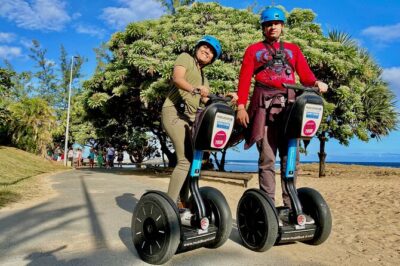
A Segway makes Gaudí feel close-up. In 2.5 hours, you glide through key streets tied to Catalan Modernisme instead of getting stuck in bus timing.
What I like most is the mix of major sights plus neighborhood context, and the way the live guide ties buildings to style while you’re moving.
The one thing to keep in mind: this is a Segway experience with real rules. You’ll need to meet the age/weight/height limits, and you can’t bring the focus-heavy stops inside unless you buy separate tickets, since attraction entry isn’t included.
In This Review
- Key highlights at a glance
- Why a Gaudí Segway Tour Works in Barcelona’s Streets
- Before You Ride: Safety Briefing, Weight Limits, and the Training Session
- Gothic Quarter to Born: Old Barcelona Stops That Set Up Gaudí’s Style
- Ciutadella Park and Arc de Triomf: The City’s Big Backdrop
- Eixample to Passeig de Gràcia: Where Modernisme Feels Like a Street-Level Event
- Casa Batlló and Casa Milà: Two Iconic Facades, Two Different Gaudí Moods
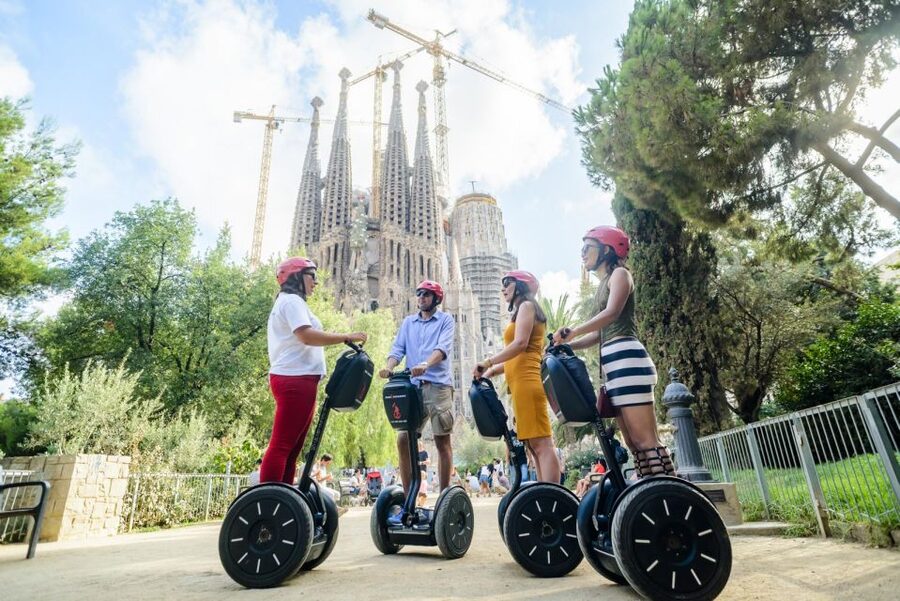
- Sagrada Família: A Short Stop That Still Feels Like the Point
- Ending With La Monumental and More City Texture
- Price and Value: What $42 Gets You (and Why Entry Changes the Math)
- Who Should Book This Gaudí Segway Tour—and Who Should Skip It
- Should You Book This Gaudí Segway Tour?
- FAQ
- How long is the Barcelona Art of Gaudí Segway Tour?
- How much does it cost?
- Where is the meeting point, and where do you get dropped off?
- What’s included in the $42 price?
- Is entry to Casa Batlló, Casa Milà, or Sagrada Família included?
- What are the age, weight, and height requirements?
- Can I cancel for a full refund?
Key highlights at a glance
- Segway training first: a safety briefing gets you comfortable fast, even if you’ve never ridden.
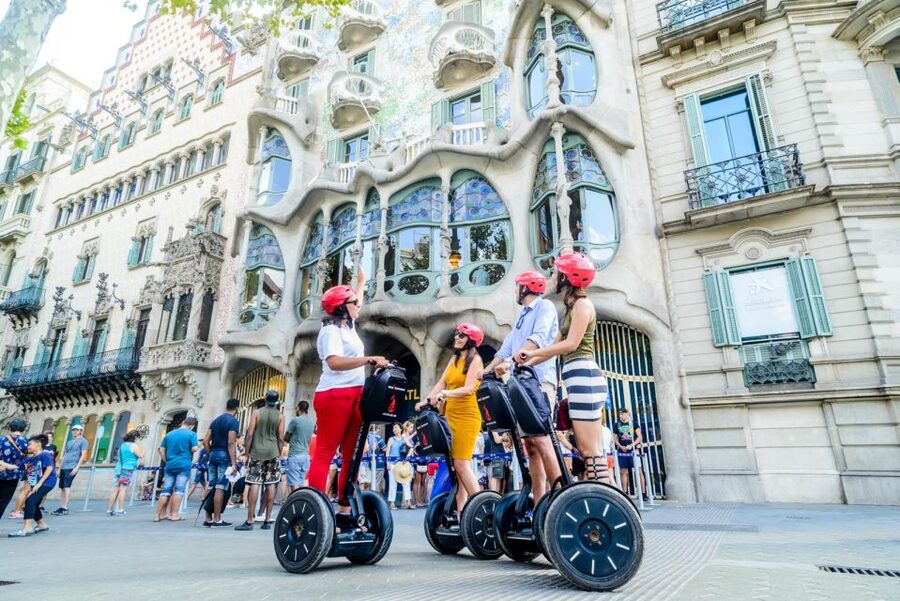
- Casa Batlló + Casa Milà coverage: two of Gaudí’s most recognizable façades along Passeig de Gràcia.
- Ciutadella Park context: you’ll connect Catalan landmarks like the Parliament of Catalonia to Gaudí’s early career.
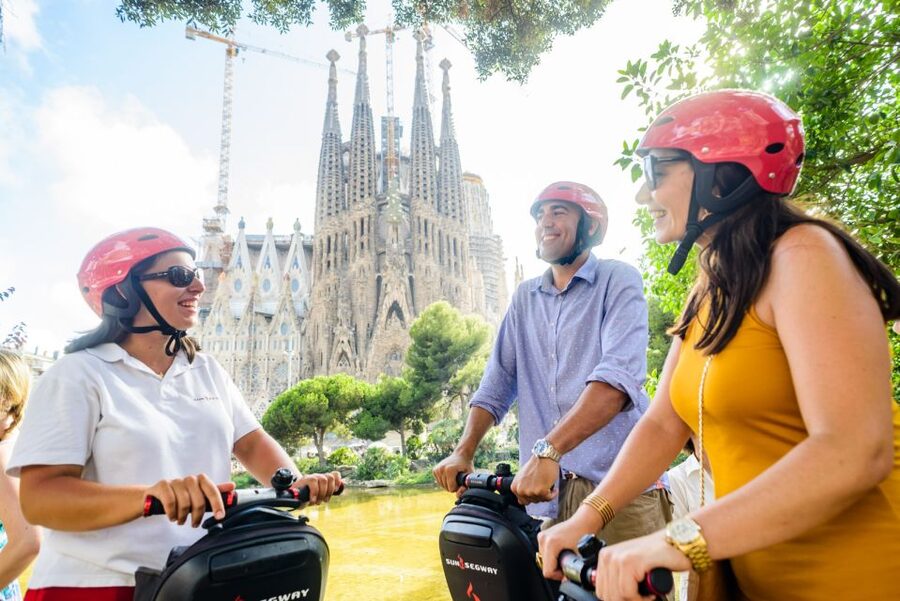
- Sagrada Família stop: a quick but meaningful viewing moment at Barcelona’s most visited work-in-progress.
- Expert guidance names you might hear: guides such as Dani, Maxime, Alberto, and Oscar have led groups in multiple languages.
Why a Gaudí Segway Tour Works in Barcelona’s Streets
Barcelona is made for walking, but that can turn into a full-day grind. This tour is smart because it uses a Segway to cover ground while you still get a guided explanation at each stop. You move at a relaxed pace, so you can actually look up at the architecture instead of scanning down at sidewalks for navigation.
I also like that you’re not just hopping between famous façades. You get a route that strings together older neighborhoods and the Eixample grid, so Gaudí’s world doesn’t feel like random postcards. The guide’s job is to translate style into something you can spot: how Modernisme thinking shows up in forms, ornament, and the overall mood of a building.
That said, it’s not a slow, photo-only sightseeing loop. Expect short stops (often around five minutes) where the guide gives the essentials, points out what matters, and keeps the group moving. If you want long interior time or deep-on-the-ground study at one site, you’ll need to plan separate tickets and time on your own.
You can also read our reviews of more tours and experiences in Barcelona.
Before You Ride: Safety Briefing, Weight Limits, and the Training Session
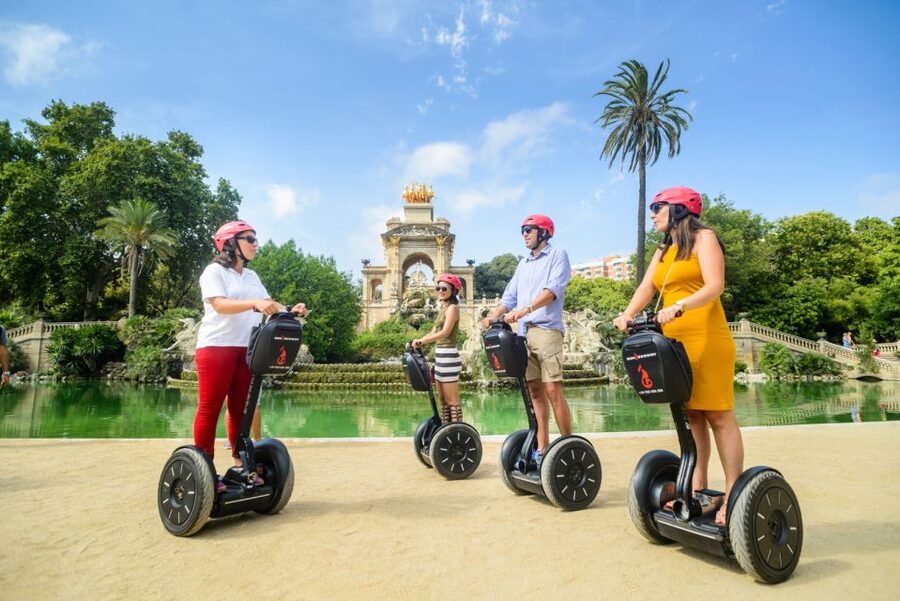
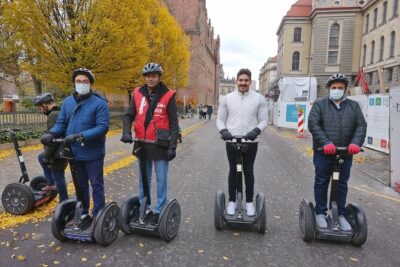
This is where the tour earns trust. Before you roll, you get a safety briefing (about 10 minutes) plus a training session. The goal is simple: get you comfortable controlling speed, steering, and stopping. Even if you’ve never used a Segway, the tour is set up so you aren’t dropped into traffic chaos.
Here are the key rules you should take seriously:
- Minimum age is 14 years. If you’re under that, you ride e-bikes instead.
- You must be between 45 and 130 kg (99 to 286 lbs).
- You must be at least 150 cm tall.
- Pregnant women can’t join for safety reasons.
- People with back problems aren’t suitable.
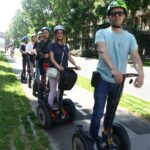
You’ll wear a helmet, and you should bring comfortable shoes and weather-appropriate clothing. Sunglasses help too, since you’ll be looking toward façades and bright façade details while cruising.
The practical upside: once you learn the basics, you get your “legs-free” version of sightseeing. Your body gets a break, and you can stay attentive to the architecture instead of negotiating every curb.
Gothic Quarter to Born: Old Barcelona Stops That Set Up Gaudí’s Style

The ride starts near the city center and begins steering you toward the oldest layers of Barcelona. Along the way, you’ll pass through areas like the Gothic Quarter and the Born district, two neighborhoods with deep roots and a tight street feel.
What I like about this opening section is the contrast. You see the city’s older street fabric early, which helps you understand why Modernisme didn’t appear in a vacuum. The guide points out landmarks that anchor the story, including Roman ruins and the Basilica of Santa Maria del Mar. Even though you’re on a Segway (so you’re not lingering forever at one corner), these stops give you a sense of timeline.
You also get a photo stop at the Mirador de Colom and views tied to El Cap de Barcelona. These are quick moments, but they’re useful because they reset your perspective: you’re not only chasing buildings; you’re learning how the city’s viewpoints connect to where Gaudí’s later work took over the conversation.
If you prefer big moments over small context, you might find these earlier stops a bit “introductory.” But I think that’s the point: you’re setting up what you’ll see later along Passeig de Gràcia.
Ciutadella Park and Arc de Triomf: The City’s Big Backdrop
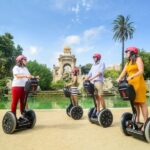
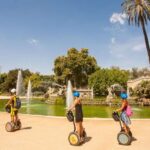
Once you’re moving through central Barcelona, you glide into Parc de la Ciutadella, one of the city’s largest parks. This is a great breather between architectural heavy hitters. Instead of only staring at stone, you get space, trees, and wider lines of sight.
The guide highlights places in the park such as the Parliament of Catalonia and Castell del 3 Dragons. The tour also connects this setting to Gaudí’s early career by pointing you toward his first collaboration with an architect who was still inexperienced at the time. Even without a museum ticket, this is the kind of detail that makes the city feel like a living map rather than a list of sites.
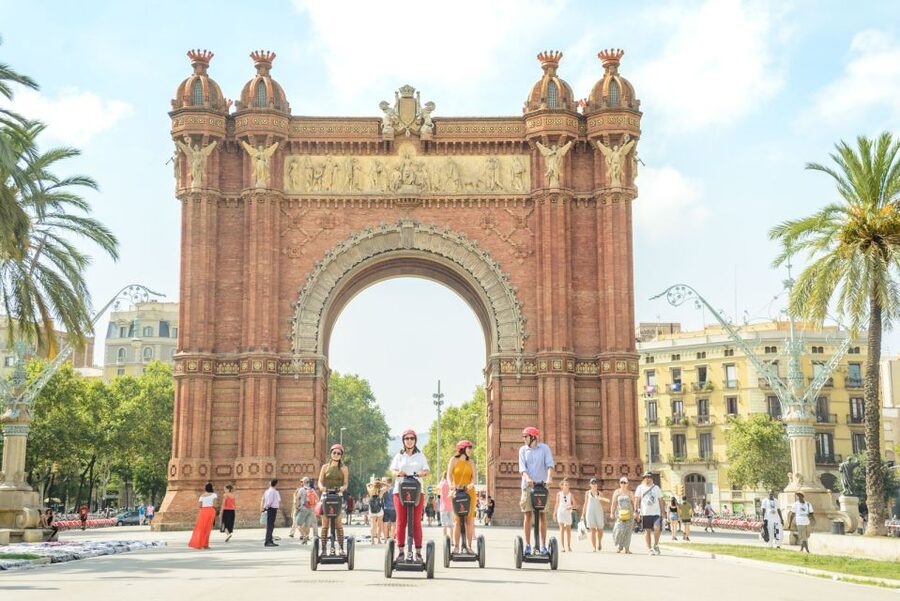
Then you cross Arc de Triomf, tied to the Universal Exhibition of 1888. This matters because it transitions you toward Eixample—Barcelona’s more regular, ambitious expansion zone—where a lot of Modernisme and Gaudí’s masterpieces live.
In plain terms: this section helps you understand why Eixample looks the way it does, and why Gaudí’s style fits the city’s growth energy.
Eixample to Passeig de Gràcia: Where Modernisme Feels Like a Street-Level Event
The heart of the tour is when you move into Eixample district and then slide along Passeig de Gràcia. This stretch is famous for a reason: it’s where you can see Modernisme competing with luxury and commerce on the same boulevard.
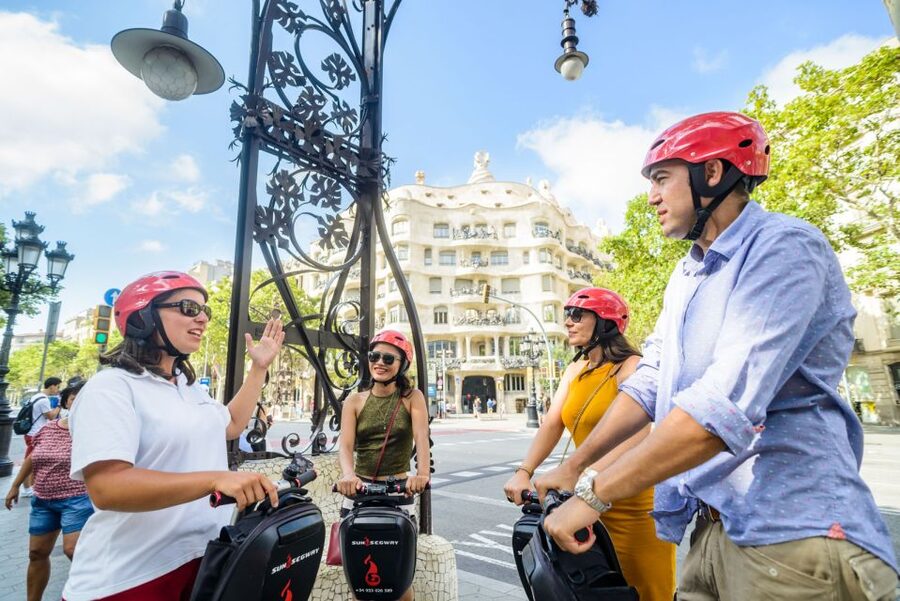
You’ll also pass Pla de Palau lampposts linked to Antoni Gaudí. It’s a small detail stop, but it’s a good reminder: Gaudí’s thinking wasn’t only reserved for iconic buildings. The guide uses moments like these to train your eye.
As you zip along (at a pace designed for group control), you’ll get guided commentary on other Modernisme buildings in the area too, not only the headline names. The tour references works like Casa Calvet, Casa Amatller, and Casa de les Punxes, which helps you see that Gaudí wasn’t alone in changing Barcelona’s visual language.
Then comes the main boulevard moment: Passeig de Gràcia itself. Expect photo stops and focused explanations that point out shapes, fantasy elements, and how the façades communicate identity.

Casa Batlló and Casa Milà: Two Iconic Facades, Two Different Gaudí Moods
Here’s where this tour really pays off: the stops at Casa Batlló and Casa Milà (La Pedrera). These are among the most recognizable Gaudí buildings in the city, but the best part is not the recognition—it’s learning what to look for.
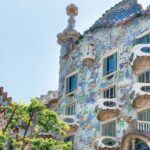
At Casa Batlló, the guide frames it as an icon of Catalan Modernisme, with the kind of fantasy shapes and color that make it hard to forget. Even if you’ve seen photos before, standing in the right spot (even for a short viewing) helps you register how the façade behaves like a design object rather than a simple building front.
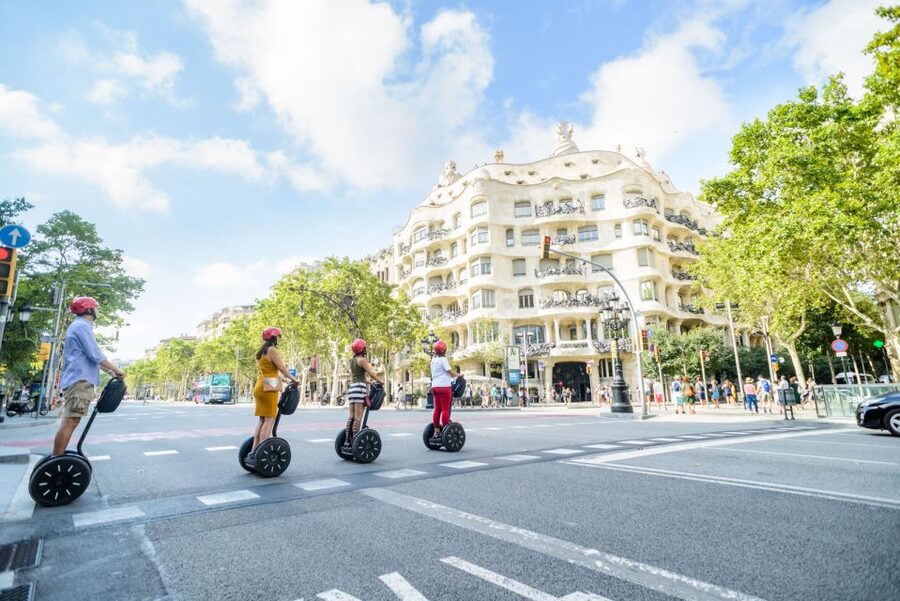
Then you move to Casa Milà, popularly known as La Pedrera because of its construction style and rustic appearance. The tour also gives helpful location context: it was built in 1906 at a time when it marked a boundary between Barcelona and the neighboring area of Vila de Gràcia before annexation.
A practical note: the tour does not include entry to the attractions. So you’ll appreciate what you can see from the outside, and the guide will point out what makes the architecture distinctive. If you want the interior experience (and many people do), you’ll need separate tickets and time.
Sagrada Família: A Short Stop That Still Feels Like the Point
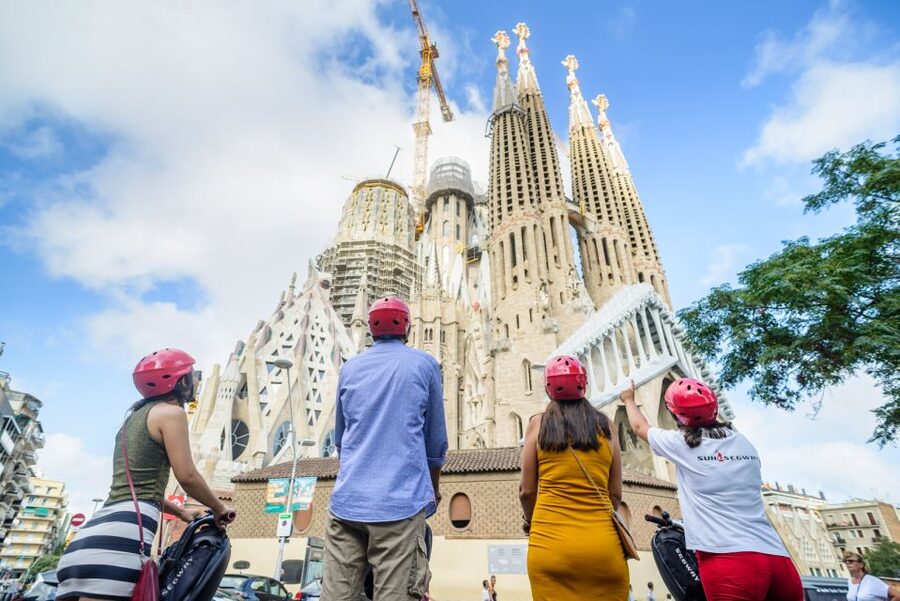
Even without entry, Sagrada Família is the emotional center of Barcelona’s Gaudí story. The tour stop includes a guided viewing at what is described as the most visited monument in the city, and you’ll get the big-picture context: construction began in 1882 and it remains unfinished, which is part of why it feels so alive.
The value here is timing and pacing. You see the scale and the specific design language while the rest of the tour has trained you to notice it. Early on, you learn to connect Modernisme ideas to what you’re seeing; at Sagrada Família, you get to watch those ideas concentrate into one massive project.
Drawback to accept: the stop is short. If you want long time to inspect façades or take your time with photos, you’ll likely want to schedule a separate visit for deeper viewing.
Still, if this is your first trip to Barcelona, this kind of stop helps you understand why Sagrada Família isn’t just a building. It’s a decades-long design argument in stone.
Ending With La Monumental and More City Texture
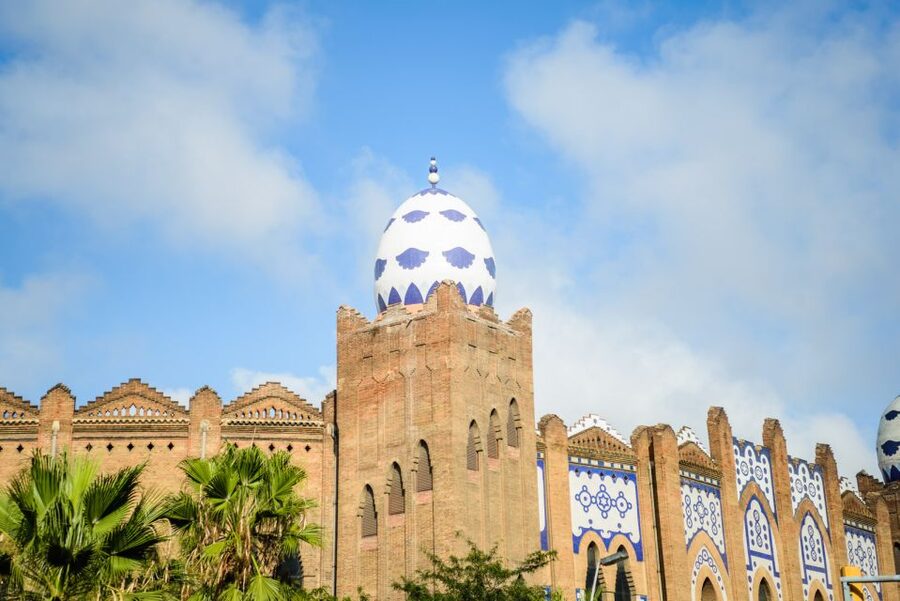
Not every stop is about the biggest name in Barcelona. You also pass by La Monumental, an old bullring where bullfighting took place. The tour notes that bullfighting has been prohibited in Catalonia since 2012, which gives you some social context beyond architecture.
You’ll also see El Born Centre Cultural and a stop at the Basilica of Our Lady of Mercy. On the way back, you get views from Parc del Mirador del Poble-sec. These final touches matter because they show you Barcelona beyond the “top 10 postcard” script.
This is a Segway tour, so you don’t get hours in any one place. But the sequencing helps: major façades first, then a return route that shows you how the city changes neighborhood by neighborhood.
Price and Value: What $42 Gets You (and Why Entry Changes the Math)
At $42 per person for a 2.5-hour experience, the value depends on what you want your Barcelona day to include.
Here’s what your price covers:
- Segway rental
- Helmet
- Training session
- A live guide
Not included:
- Entry to attractions
- Hotel pickup and drop-off
- Food and drinks
So you’re paying for motion plus interpretation. That’s actually a good deal when you consider how tiring it can be to do the same route on foot with frequent rest breaks. You also gain guided context, which helps the architecture stick in your memory rather than sliding by as scenery.
If you plan to enter major sites (especially if you want interiors), add separate ticket costs. But if your goal is to get oriented quickly—Gaudí style, city layout, and the meaning behind the façades—this price can feel like a smart way to get momentum early in your trip.
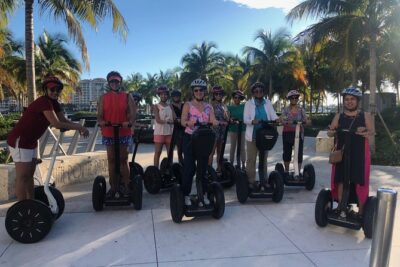
One more detail that affects value: the tour can handle up to 30 participants, but larger groups are split into smaller groups of six or fewer, each with a professional guide. That’s important. Smaller groups usually mean clearer guidance and easier control on the Segway.
Who Should Book This Gaudí Segway Tour—and Who Should Skip It
This tour fits you best if:
- You want a first-pass Gaudí education with real city context in a short time.
- You’re comfortable riding a Segway after training and want to reduce walking time.
- You value a live guide who gives explanations while you’re moving.
It’s not for you if:
- You don’t meet the age/weight/height requirements.
- You’re pregnant (not allowed for safety).
- You have back problems that make it unsuitable to ride.
- You expect long interior visits at major landmarks.
One more practical tip: since the route includes multiple photo stops, plan your day around it. Wear shoes you can stand in and bring layers. Barcelona weather can change quickly, and you’ll be outdoors most of the time.
Guides on this route have shown up with strong communication skills in multiple languages, and names like Dani, Maxime, Alberto, and Oscar have been associated with excellent guiding. That pattern matters because it suggests the experience is built around adapting explanations to what your group already knows and what you want to focus on.
Should You Book This Gaudí Segway Tour?
I’d book it if you want a fast, guided overview of Barcelona’s Modernisme and Gaudí landmarks without turning your day into a marathon. The combination of Segway ease, live guidance, and big-name stops like Casa Batlló, Casa Milà, and Sagrada Família is exactly what makes this worth considering.
I’d skip it if your priority is deep interior time at one attraction, or if your body won’t enjoy a Segway experience even after training. In that case, you’ll be happier with a standard walking route plus tickets.
If you’re traveling in a group and want everyone to keep moving at the same pace, this tour design—small guided groups inside a larger capacity—helps you stay together without chaos.
FAQ
How long is the Barcelona Art of Gaudí Segway Tour?
The tour duration is 2.5 hours.
How much does it cost?
The price is $42 per person.
Where is the meeting point, and where do you get dropped off?
The meeting point may vary depending on the option booked, but Passatge de la Canadenca, 6 is listed as a starting location option. The tour also lists drop-off at Passatge de la Canadenca, 6.
What’s included in the $42 price?
The tour includes Segway rental, a helmet, a training session, and a live guide.
Is entry to Casa Batlló, Casa Milà, or Sagrada Família included?
No. Entry to any attractions is not included.
What are the age, weight, and height requirements?
Minimum age is 14. You must weigh between 45 and 130 kg, and you must be at least 150 cm tall.
Can I cancel for a full refund?
Yes. You can cancel up to 24 hours in advance for a full refund.