REVIEW · BARCELONA
Barcelona: Montjuïc Guided Segway Tour
Book on GetYourGuide →Operated by Euro Segway · Bookable on GetYourGuide
Few hills in Barcelona feel this easy. This Montjuïc Segway tour mixes sea-and-city panoramas with a real ride up the mountain, plus stops tied to Barcelona’s history and 21st-century changes. I especially like the way you cover a lot of ground without sweating through it, and the photo stops hit both classic landmarks and modern viewpoints. One thing to consider: it’s not for everyone—this tour isn’t suitable for people under 16, pregnant travelers, or those outside the stated weight range.
You also get built-in comfort. You’ll start with a Segway lesson and test drive, wear a helmet, and carry a small bottle of water, with raincoats provided if the weather turns. The possible drawback is that you’ll be on the Segway for most of the experience, so if you’re uncomfortable on two wheels (even with training), it may not feel like your pace.
In This Review
- Key things to know before you go
- Why Montjuïc by Segway feels like a smart way to tour Barcelona
- Your Segway training and safety briefing (before the views)
- From the Gothic Quarter down to the Old Port viewpoints
- Parc de Montjuïc and the miradors: parks, fountains, and photo-worthy angles
- Montjuïc Castle: the 17th-century fortress moment with big skyline payoff
- Olympic-era Montjuïc: stadiums, arenas, and modern Barcelona geometry
- MNAC and the center-city perspective: where the story tightens
- Timing on Montjuïc: what 2–3 hours really means for your day
- What to wear and bring for a Segway day on the hill
- Price and value: is $76 per person worth it?
- Who should book this, and who might skip it
- Should you book the Barcelona Montjuïc Guided Segway Tour?
- FAQ
- How long is the Barcelona Montjuïc Guided Segway Tour?
- Where do I meet for the Segway tour?
- What’s included in the price?
- What languages are the guides available in?
- Who isn’t suitable for this tour?
- What should I bring, and are there rules during the tour?
Key things to know before you go
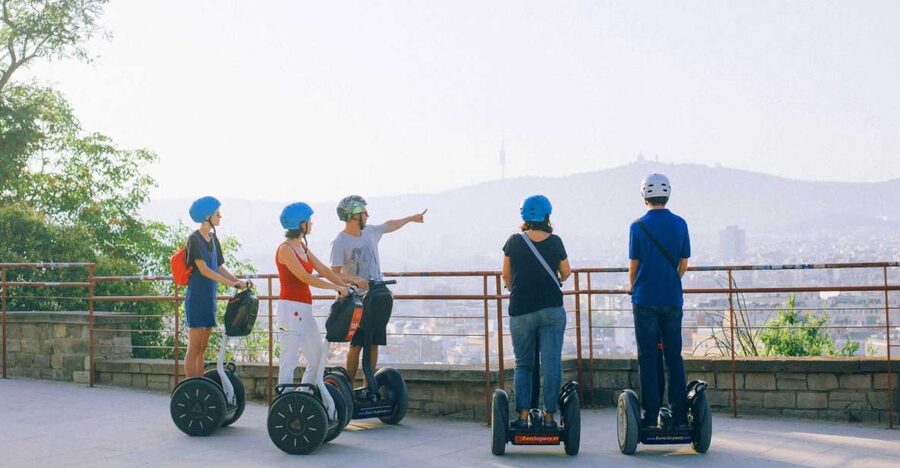
- Segway lesson first: you get instruction and a test drive before the viewpoints start.
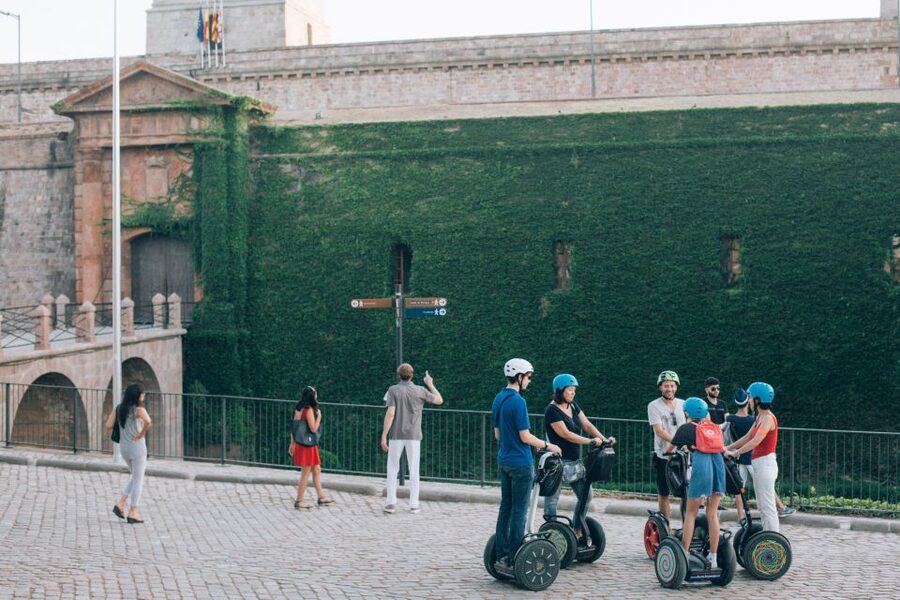
- Fortress on the hill: Montjuïc Castle is a main stop with guided context and big views.
- Parks and miradors: you’ll move through green areas and photo-friendly lookouts all along the ridge.
- Old Port to modern city sights: the route links the seafront feel of downtown to the mountain’s sights.
- Olympic-era architecture: Olympic Stadium, Palau Sant Jordi, and Olympic sites show up on the ride.
- MNAC museum stop: you get a look at the center of the city while visiting the National Art Museum of Catalonia (MNAC).
Why Montjuïc by Segway feels like a smart way to tour Barcelona
Montjuïc is one of those places that looks simple on a map and then proves to be steep once you’re actually there. That’s exactly why this tour works. With a Segway, you can spend your energy on looking, listening, and taking photos instead of constantly recalculating every uphill step.
What I like is the balance. You start in the more historic parts of the city—think Gothic Quarter mood and the Old Port area—then climb into parks, miradors, and monuments. It doesn’t just scream sightseeing; it feels like you’re watching Barcelona change as you go higher and wider. You’ll also cover both the older fortress layer of the hill and the later Olympic-era layer, which gives the ride a clear story arc.
If you’re short on time, this is a strong use of it. In around 2–3 hours, you can get panoramic views of the coastline, the port area, and the Gothic Quarter from above, which is hard to assemble by bus and walking alone.
You can also read our reviews of more tours and experiences in Barcelona.
Your Segway training and safety briefing (before the views)
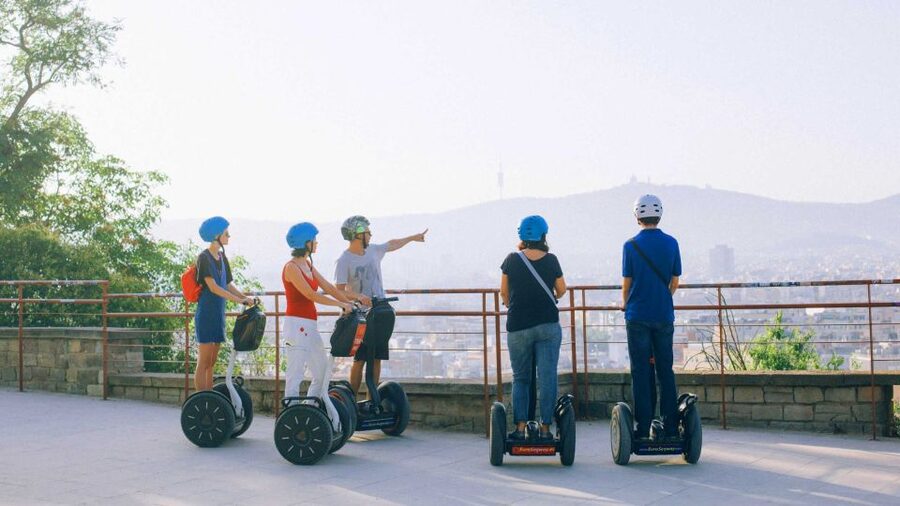
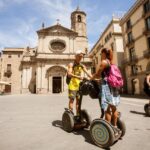
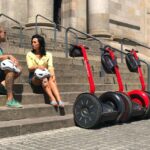
Plan on a short start-up moment. You meet at Carrer del Correu Vell, 6 (08002 Barcelona), and the tour begins with a safety briefing and Segway driving lesson plus a test drive. That first chunk matters, because the rest of the experience depends on you being comfortable with smooth starts, gentle turns, and stopping on command.
The good news is the basics are covered for you: you get helmets and a guide who runs the training, not just a vague “good luck.” A small bottle of water is included, and raincoats are provided if it’s wet. (Barcelona weather can change fast, even when the morning looks calm.)
Also, you’re guided in multiple languages—Spanish, English, French, and Russian—so the instruction and explanations should be clear, not like a scavenger hunt with pantomime.
One practical tip: wear comfortable shoes. You’re on and off the Segway at photo stops, and you’ll want stable footing for quick checks and quick pictures.
From the Gothic Quarter down to the Old Port viewpoints
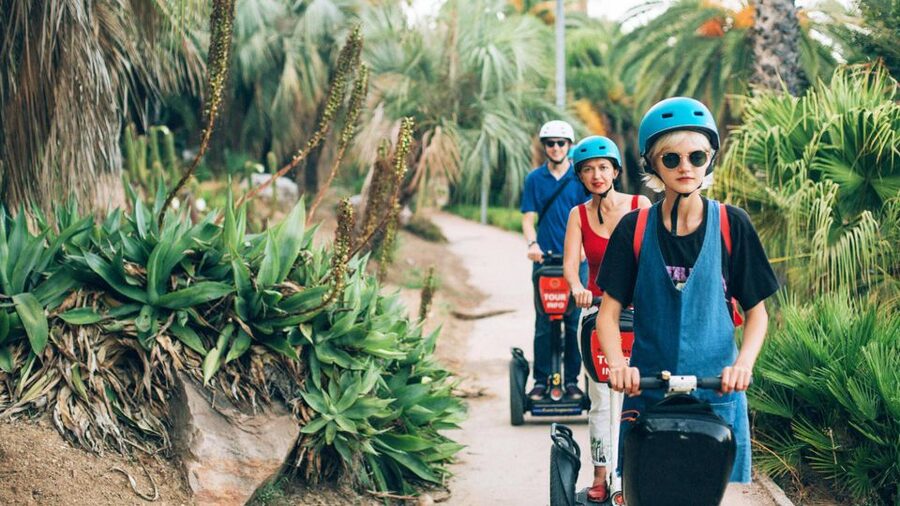
The route begins in the heart of the action, not out in the suburbs. After meeting at Carrer del Correu Vell, you move through the downtown area and out toward the seaside feel of Barcelona’s Old Port. Even before you climb, you’re already setting up the contrast that Montjuïc is famous for: city streets at sea level, then hilltop views above the water.
There’s a photo stop at Plaça dels Traginers, where the safety briefing also happens, then the first wave of sight stops starts. You’ll see the Roman Wall up close as a quick guided stop and photo moment. It’s one of those reminders that Barcelona’s layers stack over time—so even when you’re on a Segway, you’re still getting the city’s past threaded into the ride.
Next you’ll hit El Cap de Barcelona and then Mirador de Colom. These are classic viewpoint-style pauses: short, guided context, then enough time to frame the shot and look outward. In real terms, these moments help you orient yourself before the mountain takes over.
If you like “fast understanding,” this part is good. You learn where things are—port, coastline, older city streets—so the later hilltop views don’t feel random.
Parc de Montjuïc and the miradors: parks, fountains, and photo-worthy angles
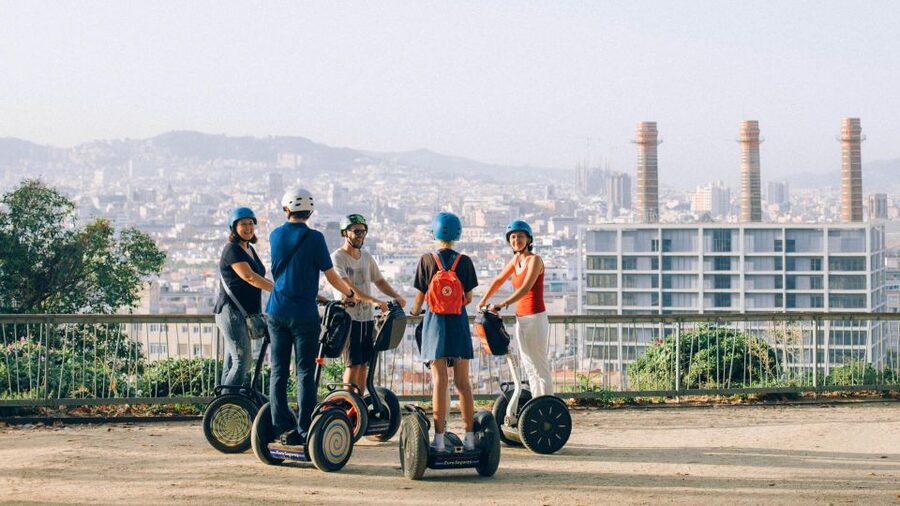
Once you start climbing, the scenery shifts in a way that feels physical. The tour takes you into Parc de Montjuïc and across multiple park areas, where the city noise fades and you get wider visual lines. This is where the Segway earns its keep: Montjuïc’s paths and slopes would be exhausting on foot for most people, but on the Segway you can stay focused on the view.
A highlight area is Mirador de Miramar. You’ll also pass through a zone near Hotel Miramar and reach the area connected to the cable car station built especially for the Universale EXPO 1929. That’s a unique angle to Barcelona’s identity: the city’s modern image wasn’t created overnight. You’re seeing how big-event infrastructure has become part of today’s visitor experience.
Along the way, there are more short guided photo stops that still feel meaningful, not just “look at that.” You’ll pause at a municipal pool area (Piscina Municipal de Montjuïc), then at a reflector parabòlic, and later at Monument a la Sardana. Even if you don’t know the details in advance, the guide’s explanations help connect these markers to the hill’s wider role as a stage for culture, events, and public life.
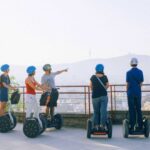
By the time you reach Mirador Montjuïc and another Mirador de Montjuïc stop, you’ll start noticing how the coastline curves and how the port area sits in relation to the old city. That’s the big payoff of doing these stops in sequence instead of as separate bus drop-offs.
Montjuïc Castle: the 17th-century fortress moment with big skyline payoff
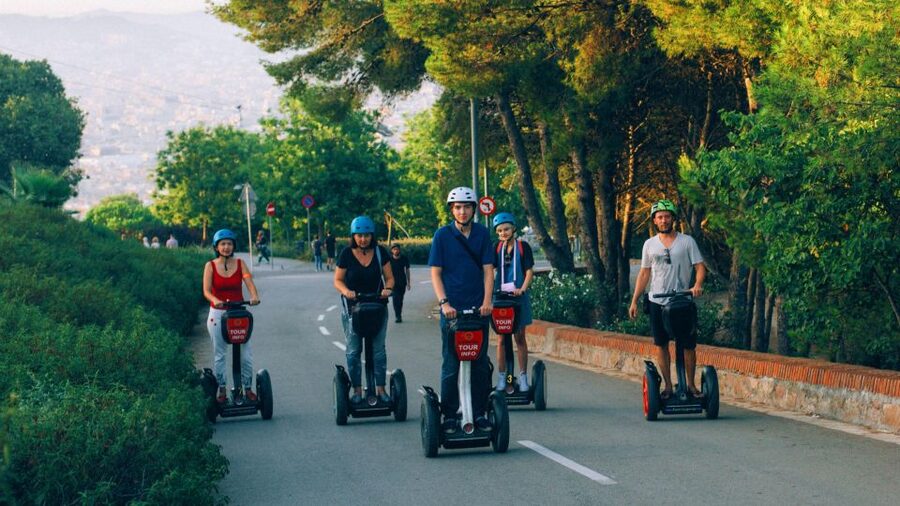
When the tour reaches Montjuïc Castle, you’re at the “why this place is worth it” point. The castle sits high above the sea, and the tour gives it the attention it deserves: photo stop plus guided context.
This isn’t just a quick viewpoint. A fortress on a hill changes how you see a city, because it forces you to look outward in a strategic way. You can spot the port, follow the coastline, and take in how the city spreads away from the hill. The height matters, but so does the shape—castle positions were made for watching, not wandering.
One practical consideration: because it’s a fortress setting, you’ll want to move carefully and be ready for short walking segments around viewpoints. The tour format keeps it manageable, but comfortable shoes still matter here.
If you care about architecture and urban planning, this stop is a clear anchor. It ties the natural hill and city views to a specific time period and purpose.
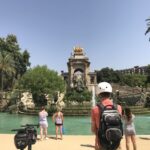
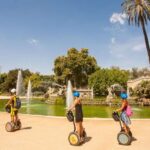
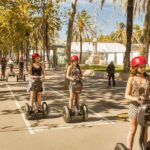
Olympic-era Montjuïc: stadiums, arenas, and modern Barcelona geometry
On the descent and the later phase, Montjuïc shifts again—from fortress views to Barcelona’s modern spectacle. You’ll stop at Lluís Companys Olympic Stadium and then at Palau Sant Jordi. These aren’t just “checkpoints.” They show how Barcelona used the hill and its access to shape a public identity that extends beyond the old core of the city.
The route also includes Montjuïc Communications Tower, Anella Olimpica, and a stop called Canvi. Even when each stop is brief, the guided context helps you connect the dots: how design, venues, and major events have influenced how the hill looks and how people move through it today.
This part of the tour is especially good if you like modern landmarks. You get a sense of scale—stadiums you can actually imagine in use—and you see how those structures sit within the broader hilltop landscape.
It’s also a nice rhythm change. Earlier, you chased views and historic markers. Here, the focus turns to public architecture and the “new Barcelona” look.
MNAC and the center-city perspective: where the story tightens
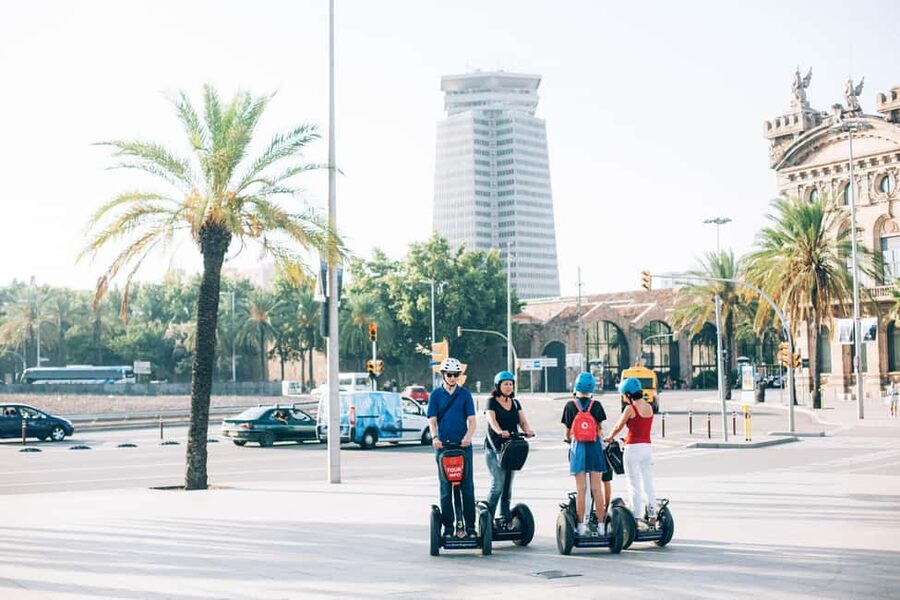
You’ll also make time for the Museu Nacional d’Art de Catalunya (MNAC). The tour is designed so you don’t just arrive at a museum and disappear into galleries. It includes a photo stop with guided context that helps you read the city from this vantage point.
MNAC matters because it’s one of the best ways to connect Montjuïc to Barcelona’s center. From here, the city looks like it’s laid out in layers—roads, neighborhoods, and the way the hill overlooks the urban grid.
This is where the tour’s big theme shows up: Barcelona changing in the 21st century. You get historic anchors earlier, then modern venues and museum territory later. The effect is that you don’t just see sights; you see transitions.
If you’re the type who likes to understand where a city is headed, this stop gives that mental “map.” Even a short museum visit or viewpoint-oriented stop can make the rest of your trip make more sense.
Timing on Montjuïc: what 2–3 hours really means for your day
The duration is listed as 2–3 hours, with starting times you check for availability. That time window is ideal for a half-day plan because it’s long enough to hit a lot of key viewpoints, yet short enough that you’re not locked in until late afternoon.
Because you’re riding and stopping, your pace is controlled. The structure helps: lesson first, then a sequence of photo stops, then the castle and Olympic sites. You’re not doing a “walk until your legs revolt” schedule.
I’d plan to keep your next activity flexible. You’ll likely want a little buffer for restroom breaks, quick snacks, and the natural urge to return to one of the miradors for a second look after you’ve seen the rest of the route.
Also, bring ID or passport. You’ll want it with you, and it’s required for the tour.
What to wear and bring for a Segway day on the hill
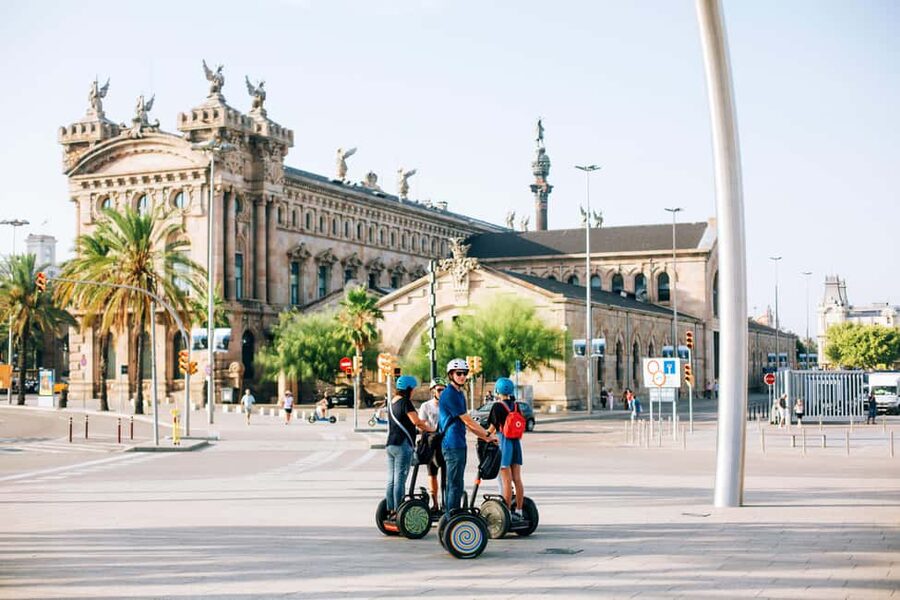
You don’t need special gear, but you do need sensible basics. Comfortable shoes are the big one. A helmet is provided, but your feet still handle all the stepping and balancing at stops.
If weather is questionable, count on raincoats being available. Still, dress in layers. Hill weather can feel different from the streets, especially as you go up and down.
The tour also has clear boundaries. It’s not suitable for people under 16, pregnant women, and anyone over 275 lbs (125 kg) or under 77 lbs (35 kg). There’s also a no-intoxication rule. If you fit those limits, you’ll likely find the ride manageable and fun.
Price and value: is $76 per person worth it?
At $76 per person, this sits in the “reasonable for a guided, gear-included experience” category. The main reason it’s good value is what’s included. You’re not paying only for the guide—you also get the Segway driving lesson and test drive, helmets, raincoats, and a small bottle of water.
You’re also paying for access to viewpoints that would take serious effort to stitch together yourself. If you tried to do the same hilltop sequence on foot, you’d burn time and energy. A Segway changes the math. You can focus on enjoying the views of the port, the Gothic Quarter, and the coastline without spending half your day climbing stairs.
Group style can affect your experience too. A private group is available, which can reduce stop-and-wait moments and help the guide tailor the rhythm more to your group.
Bottom line: if you want Montjuïc highlights without turning your legs into a souvenir, $76 can be a fair deal.
Who should book this, and who might skip it
This tour is ideal for you if you want Montjuïc’s viewpoints and landmarks in a compact time frame. It’s also a good fit if you’d rather spend your time with a guide explaining how the hill connects to Barcelona—historic walls, fortress architecture, Olympic venues, and MNAC perspectives.
If you’re traveling with kids under 16, this won’t work. If you’re pregnant, it won’t work. If you’re outside the weight range, it won’t work either. Those are deal-breakers because the Segway setup and safety requirements depend on them.
You might also consider skipping if you already know you hate balance-based activities. The training helps, but it still stays a Segway tour first and a walking tour second.
Should you book the Barcelona Montjuïc Guided Segway Tour?
If your goal is big views with minimal pain, I’d book it. The route connects the Old Port and Gothic Quarter perspective to parks, miradors, Montjuïc Castle, and the Olympic architecture, all in one guided flow. The included lesson, helmets, and rain-ready gear reduce the “unknowns,” so you can focus on enjoying the hill.
If you’re unsure, pick the private option if it’s available for your dates, especially if you prefer fewer delays at photo stops. And go in wearing comfortable shoes and expecting a mix of city sightseeing plus hilltop scenery.
You’ll leave with a mental map of Barcelona that’s harder to get from a single museum visit or a single lookout. That’s the real value here: you see how the city looks at sea level and how it changes when the hill takes over.
FAQ
How long is the Barcelona Montjuïc Guided Segway Tour?
The tour lasts about 2–3 hours. Starting times vary, so check availability for the schedule.
Where do I meet for the Segway tour?
You meet at Carrer del Correu Vell, 6, 08002 Barcelona, Spain. The tour ends back at the same meeting point.
What’s included in the price?
The price includes a Segway driving lesson and test drive, a live guide, helmets, raincoats if needed, and a small bottle of water.
What languages are the guides available in?
The live guide is available in Spanish, English, French, and Russian.
Who isn’t suitable for this tour?
It’s not suitable for children under 16, pregnant women, or people under 77 lbs (35 kg) or over 275 lbs (125 kg).
What should I bring, and are there rules during the tour?
Bring your passport or ID card and wear comfortable shoes. Intoxication isn’t allowed.