REVIEW · BARCELONA
Barcelona: 2,5h Gaudí Segway Tour
Book on GetYourGuide →Operated by Sun & Segway Barcelona · Bookable on GetYourGuide
A Segway turns big Barcelona sights into a smooth, doable circuit, all tied together by Gaudí and Catalan Modernisme. I like that the first-time experience is made practical with training and a safety briefing, so you’re not fumbling in traffic. I also like that the route hits major icons fast, with picture stops for places like Casa Batlló, Casa Milà, and the Sagrada Família. One drawback: entry to monuments isn’t included, so you’ll mostly see the outside (plus guided context), not do a full inside visit.
The guides I’m drawn to here are the ones who keep the vibe friendly and the ride controlled. People rave about guides like Freddy and Danny for being kind, accommodating, and helpful, and you’ll benefit from small-group handling when you’re split into groups of six or fewer. Just keep in mind that because the timing is tight at each stop, you’ll get a smart overview more than a long, slow deep study.
In This Review
- Key things that make this Gaudí Segway tour worth your time
- Why this Gaudí Segway tour works in Barcelona
- Price and value: what $45 gets you (and what it doesn’t)
- Starting point at Passatge de la Canadenca: arrive ready to move
- The ride plan: 2.5 hours, lots of stops, mostly outside views
- Stop-by-stop: from Colom views to La Pedrera to Sagrada Família
- 1) Jardins de les Tres Xemeneies: training and safety briefing
- 2) Mirador de Colom: photo stop with big-city perspective
- 3) El Cap de Barcelona: landmarks and quick views
- 4) Pla de Palau lampposts (Antoni Gaudí): a small Gaudí detail with meaning
- 5) Parc de la Ciutadella: Gaudí in the park zone
- 6) Arc de Triomf: Universal Exhibition 1888 entry feel
- 7) Passeig de Gràcia: luxury street, famous facades, strong comparisons
- 8) Casa Batlló: Modernisme fantasy in one facade
- 9) Casa Milà (La Pedrera): the rustic-looking masterpiece
- 10) Sagrada Família: the long-running work of art
- 11) La Monumental: an old bullring stop with a modern detail
- 12) El Born Centre Cultural: old streets, cultural texture
- 13) Roman ruins and Santa Maria del Mar area: older Barcelona layers
- 14) Basilica of Our Lady of Mercy: quick look, guided context
- 15) Parc del Mirador del Poble-sec: a final scenic angle
- 16) Return to Passatge de la Canadenca
- What I think you’ll enjoy most (based on how people describe it)
- Who this tour is best for (and who should skip it)
- Practical tips so you don’t waste time during the ride
- Should you book the Barcelona 2.5h Gaudí Segway Tour?
- FAQ
- How long is the Barcelona Gaudí Segway tour?
- What’s included in the price?
- Are attraction entry tickets included?
- Where do I meet the guide?
- What are the age and physical requirements to ride a Segway?
- Can pregnant women join the tour?
- How large are the groups?
- What languages are available for the live guide?
Key things that make this Gaudí Segway tour worth your time
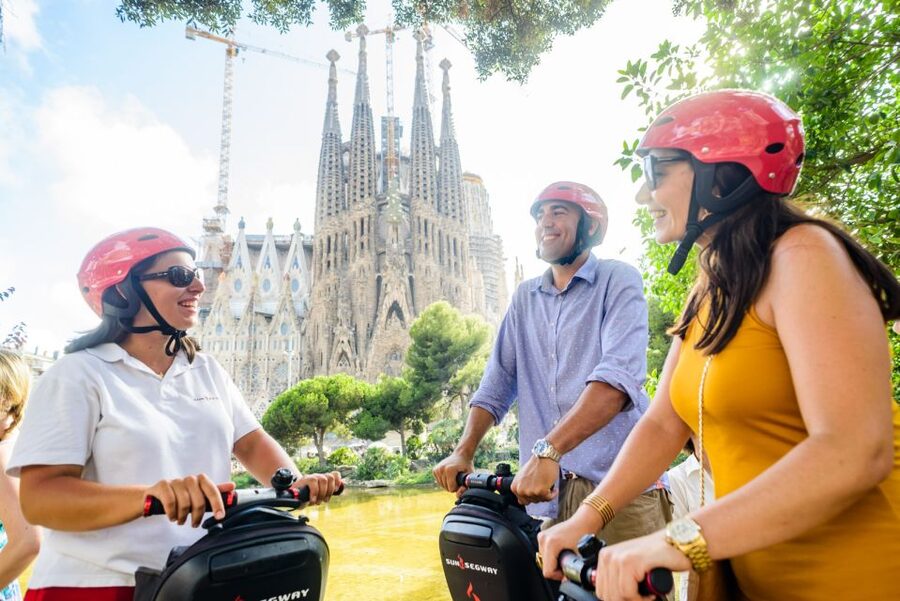
- Real training first, then you’re rolling through the city (not just standing around)
- Small groups of up to six mean you get more attention and less waiting
- Passeig de Gràcia to the Sagrada Família in one smooth 2.5-hour sweep
- City texture between monuments, including Gothic Quarter/Born vibes and Ciutadella Park
- Gaudí details you might miss on your own, like the Antoni Gaudí lampposts at Pla de Palau
Why this Gaudí Segway tour works in Barcelona
Barcelona is one of those cities where you can spend a whole day walking and still feel like you barely scratched the surface. This tour solves that problem with a simple idea: trade long transfers for a Segway glide, while a live guide points out what to look for.
What you’re really buying is efficiency plus context. You get to move between the Gothic/Born side of the old city and the Eixample modernism zone without turning your feet into sandpaper. And because the guide is talking the whole time, the buildings don’t just look pretty from a distance—you start to understand what Gaudí was doing, and why Catalan Modernisme feels so different from plain-vanilla “pretty architecture.”
You can also read our reviews of more tours and experiences in Barcelona.
Price and value: what $45 gets you (and what it doesn’t)
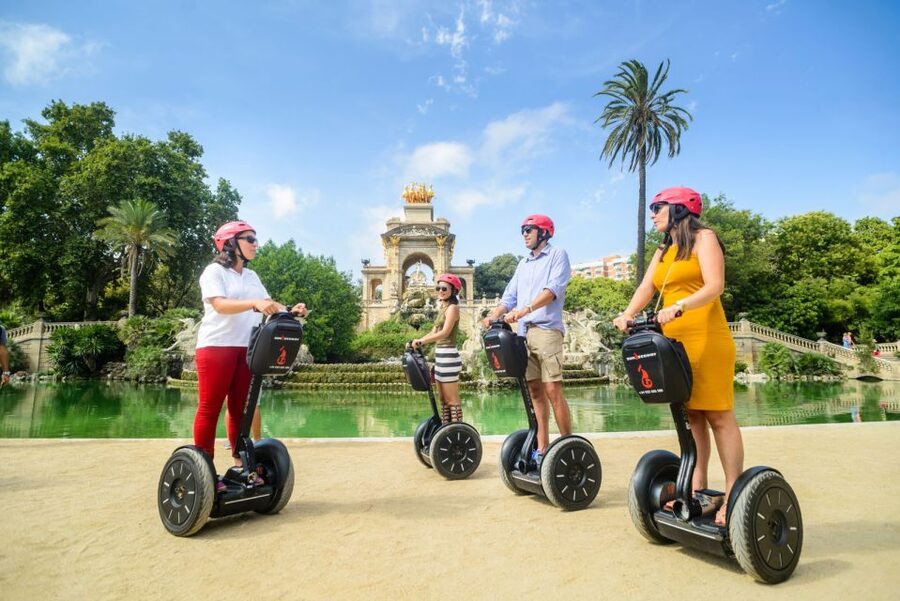
At about $45 per person for a 2.5-hour tour, the value is in what’s included:
- Segway rental
- Helmet
- Training session
- Live guide
The big catch is that tickets/entry are not included for attractions. So if your goal is to go inside Sagrada Família, Casa Batlló, or Casa Milà for a long visit, plan to book those separately. On this Segway tour you’re getting the fast, guided “see it and understand it” version.
Still, for many first-timers, that can be the best buy in Barcelona. Paying for this tour can save you time and hassle, and then you can spend money later for the one place you truly want to go deep on.
Starting point at Passatge de la Canadenca: arrive ready to move

You meet at Passatge de la Canadenca, 6, inside Jardins de Les Tres Xemeneies. Your guide and Segways are waiting about 5 minutes before your booked time, and the info is clear: don’t hunt for a storefront. Meet in the training square.
This matters because the tour starts with getting you comfortable. Before any sightseeing, you’ll get:
- a briefing on safe Segway operation
- the initial training session
If you show up late, you lose training time—and that can make the whole experience less fun. Aim to arrive a few minutes early, wear comfortable shoes, and bring sunglasses if the weather is bright.
The ride plan: 2.5 hours, lots of stops, mostly outside views
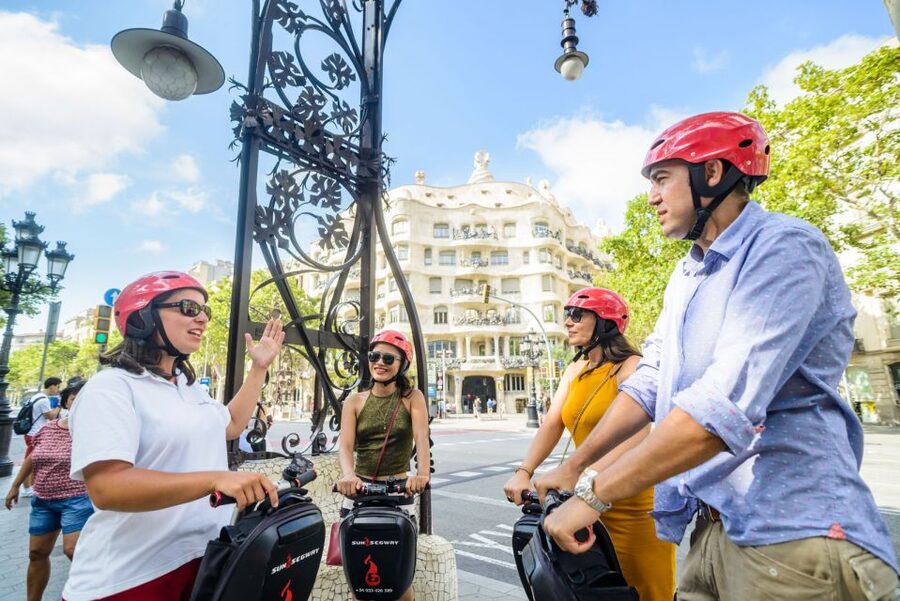
The pacing is very stop-and-go: several photo stops with guided commentary. That’s a plus if you want orientation and structure, and a minus if you expect long interior time at each monument.
As a rule, think of this tour as:
- guided “what you’re seeing”
- quick angles for photos
- a mental map of where each Gaudí landmark sits in the city
You’ll also get a reality check fast: Barcelona streets can be busy and the Segway is practical on the route, but you should still keep your focus on balance and safety.
Stop-by-stop: from Colom views to La Pedrera to Sagrada Família
Here’s how the sightseeing comes together, in a logical flow through several neighborhoods.
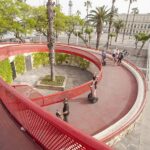
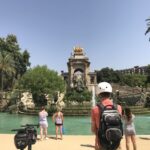
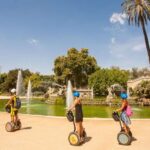

1) Jardins de les Tres Xemeneies: training and safety briefing
You begin at the Jardins de les Tres Xemeneies area, where the tour starts with the safety briefing and your instruction. This is where first-timers usually decide if they’ll relax or stress. The good news is that the whole format is designed to help you get control quickly, so you’re not stuck learning while everyone waits.
2) Mirador de Colom: photo stop with big-city perspective
Next you head to the Mirador de Colom viewpoint. This is a short stop, but it’s a smart one: it gives you a broad look over the city, so the rest of the modernism stops feel more grounded. It’s also a great spot for photos before you zoom into Gaudí territory.
3) El Cap de Barcelona: landmarks and quick views
Then it’s El Cap de Barcelona, another brief guided photo moment. Think of it as part of the “get your bearings fast” phase. You’re learning the city’s geometry quickly—where you are and how Barcelona’s modern city layers onto the old core.
4) Pla de Palau lampposts (Antoni Gaudí): a small Gaudí detail with meaning
At Pla de Palau, you’ll see Antoni Gaudí lampposts. This is the kind of detail that can feel random if you don’t know what it is. Here, you get the context that links Gaudí’s style to the public spaces of the city, not just the famous facades.
5) Parc de la Ciutadella: Gaudí in the park zone
Now you glide into Parc de la Ciutadella, which is the city’s biggest park. You’ll get guidance around key highlights like the Parliament of Catalonia and Castell del 3 Dragons. The guide also connects this area to Gaudí’s early work—described here as a first collaboration while he was still less experienced.
Even if you’re not a “parks person,” this stop is useful. It breaks the urban intensity and gives you a breather before the architectural spectacle starts in earnest.
6) Arc de Triomf: Universal Exhibition 1888 entry feel
Across Arc de Triomf, you move into the Eixample district. The guide ties this gate to the Universal Exhibition of 1888, which helps explain why this part of town feels so planned and grand. This matters because Gaudí’s work (and other Modernisme buildings) often make more sense when you see how Eixample is laid out.
7) Passeig de Gràcia: luxury street, famous facades, strong comparisons
On Passeig de Gràcia, you’ll roll alongside luxury shops and the street that hosts some of Barcelona’s most recognizable Modernisme fronts. This stop works best if you pay attention to contrasts—shapes, color, and how each building pushes materials and structure in its own direction.
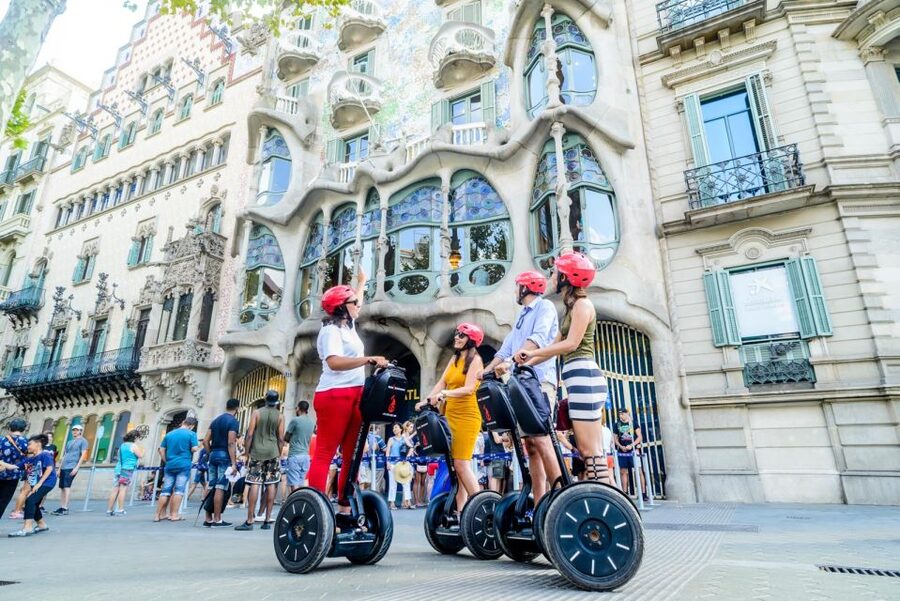
8) Casa Batlló: Modernisme fantasy in one facade
Then you reach Casa Batlló. You’ll get a guided look at why this building is such a signature of Catalan modernism—shapes, colors, and an almost theatrical feel to the design. The key value here is the explanation: Gaudí isn’t decorating randomly. He’s building meaning through form.
9) Casa Milà (La Pedrera): the rustic-looking masterpiece
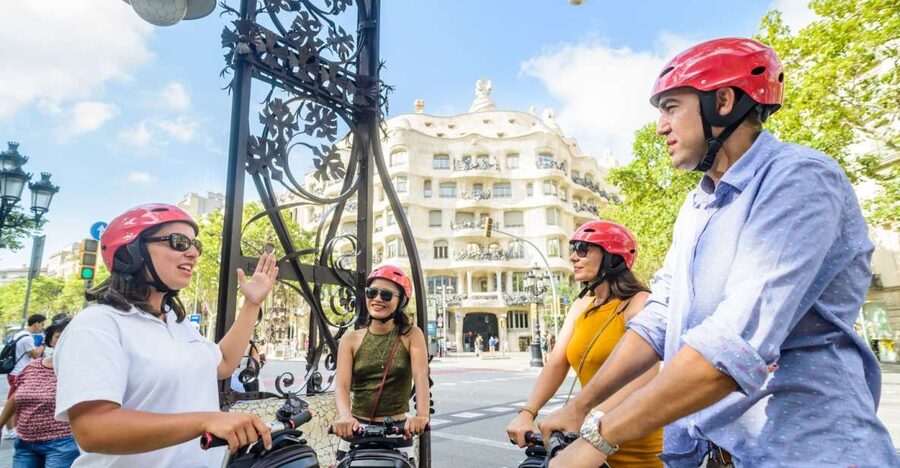
A short ride later it’s Casa Milà, popularly called La Pedrera due to its rustic construction style and appearance. You’ll see why it’s considered one of Gaudí’s last major works and why the building has a distinct texture compared to his earlier, more playful styles. The route frames it historically too, noting its construction period (built in 1906) and its role before the neighborhoods were fully annexed.
10) Sagrada Família: the long-running work of art
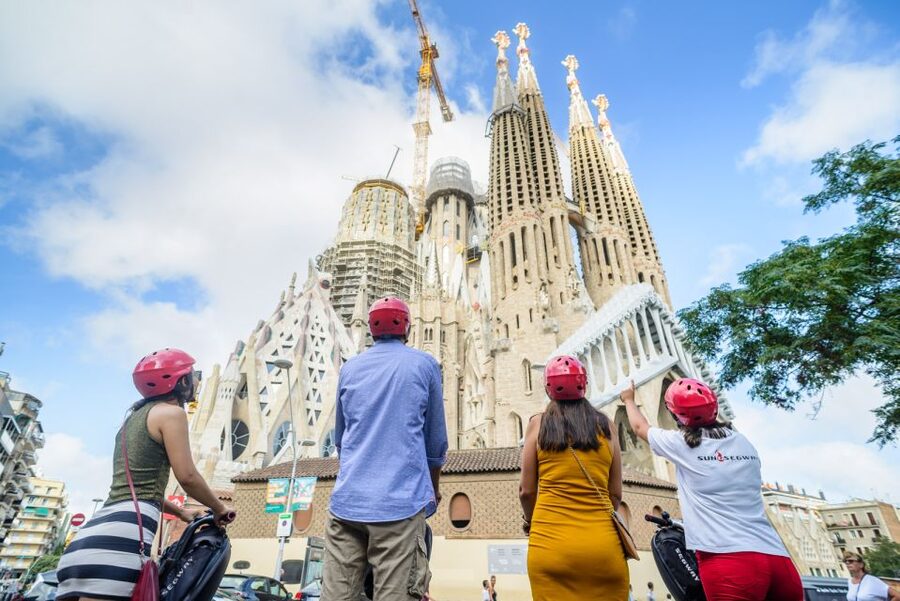
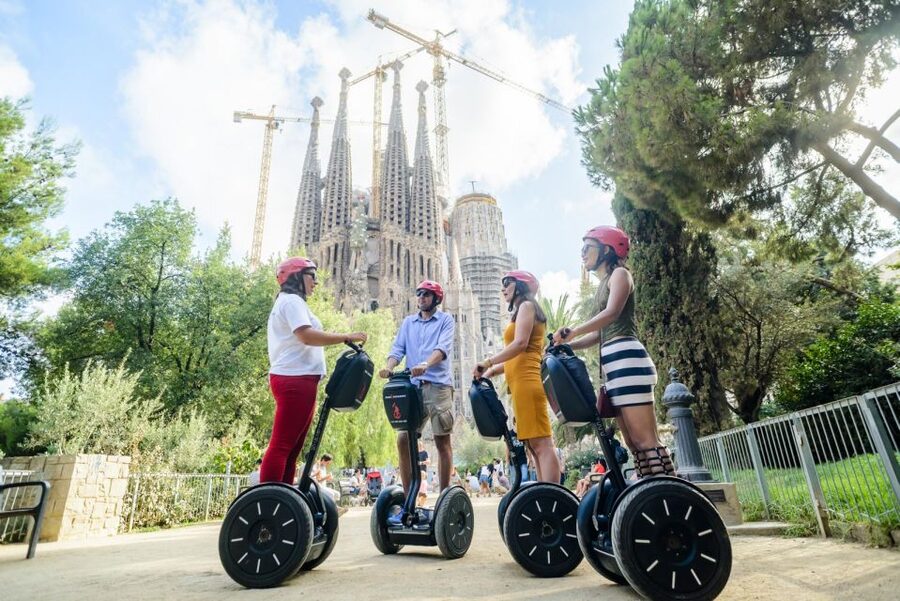
Next comes Sagrada Família, Barcelona’s most visited monument. You’ll see it from outside, with a guide explaining that construction began in 1882 and it’s still not finished. Even without going inside, it’s hard not to feel the scale and ambition from the street.
Because you’ll only have a limited stop time, focus your attention on one thing: don’t try to memorize everything. Instead, use the guide’s pointers to notice how the design communicates movement, faith, and structure all at once.
11) La Monumental: an old bullring stop with a modern detail
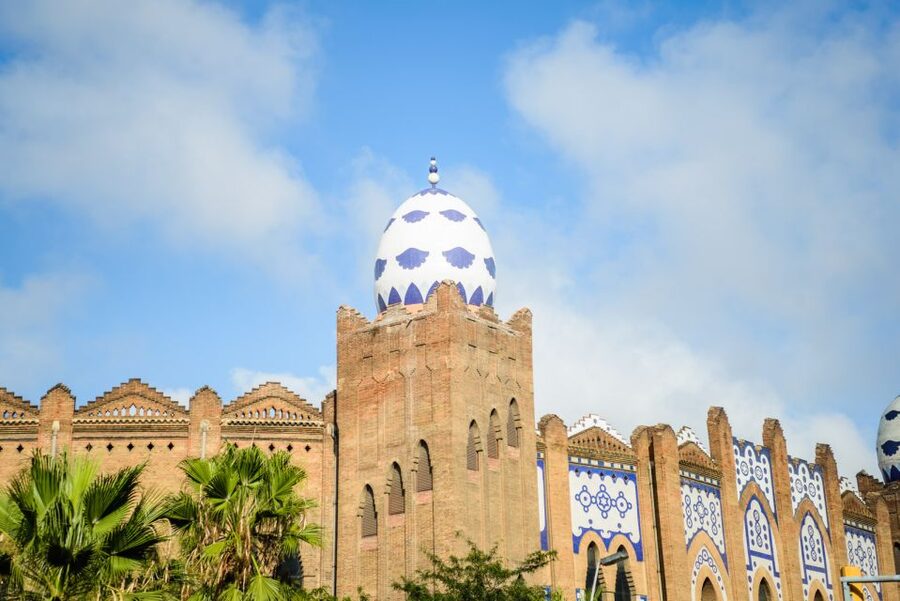
The tour then takes a turn to a different side of local Barcelona at La Monumental, an old bullring. It’s notable for how bullfighting was handled in Catalonia—here, it’s referenced as prohibited since 2012. This stop adds texture. Modernism is the headline, but Barcelona isn’t only art and design.
12) El Born Centre Cultural: old streets, cultural texture
At El Born Centre Cultural, you shift further toward the old-city atmosphere. This is where you get more than just architectural photos—you start feeling the layered neighborhoods.
13) Roman ruins and Santa Maria del Mar area: older Barcelona layers
The tour format also includes the old-city story in the Gothic Quarter and Born district, including Roman ruins and the Basilica of Santa Maria del Mar. These stops are valuable because they remind you that Gaudí’s Barcelona sits on top of earlier eras. It’s not a museum bubble—it’s a living city with deep roots.
14) Basilica of Our Lady of Mercy: quick look, guided context
You’ll also stop near the Basilica of Our Lady of Mercy. Expect a short photo moment with guided explanation. It’s the kind of stop that you’d probably walk past on your own without realizing why it’s worth a stop.
15) Parc del Mirador del Poble-sec: a final scenic angle
To close the loop, you reach Parc del Mirador del Poble-sec for a photo stop. This ending point is a helpful way to decompress after the architecture sprint. You’ll get one last view angle, and it helps your brain file everything you saw.
16) Return to Passatge de la Canadenca
Then you roll back to the meeting point at Passatge de la Canadenca, 6. Ending where you started makes the logistics simple.
What I think you’ll enjoy most (based on how people describe it)
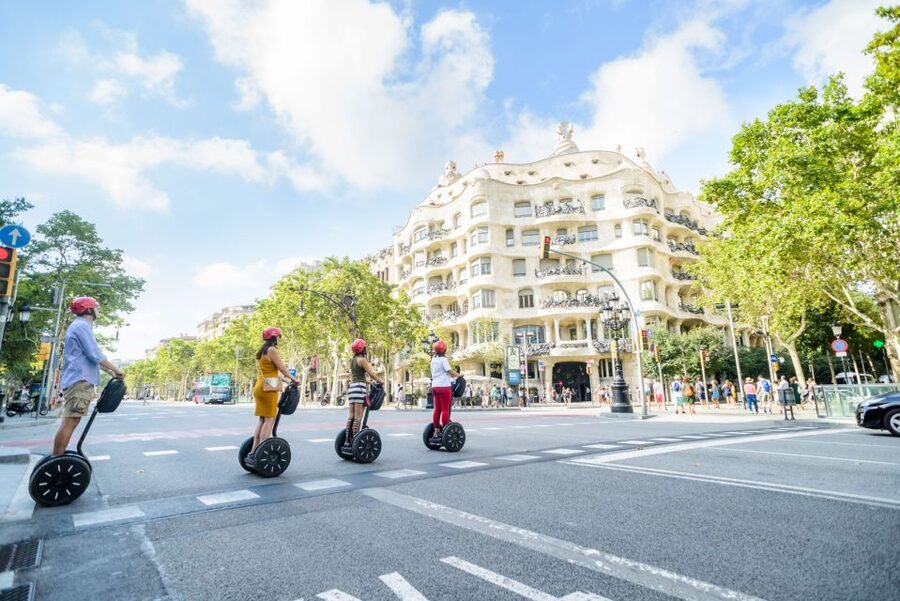
The strongest praise here centers on three things.
First: ease and control. The experience is set up for first-timers, and you get training before you’re out seeing monuments. That’s why people who try Segway for the first time tend to leave smiling instead of stressed.
Second: guides who are actually helpful. Names like Freddy and Danny show up for a reason—people describe them as kind, accommodating, and supportive. That human touch matters on a Segway, because a good guide keeps the rhythm calm and the instructions clear.
Third: small groups. While the tour can handle up to 30 participants, it’s organized into smaller groups of six or fewer for each guide. That typically means less waiting around, and more attention when you need it.
Who this tour is best for (and who should skip it)
This tour is a great fit if you:
- want a fast, structured orientation to Barcelona’s Gaudí modernism
- enjoy moving through different neighborhoods without long walking breaks
- like photo stops with guided explanations
- are comfortable with a short instruction session before you ride
It’s not the right fit if you:
- need long inside access to major attractions (entry tickets aren’t included)
- have back problems (explicitly listed as not suitable)
- are pregnant (not allowed for safety)
- don’t meet basic height/weight rules (you must be at least 150 cm and between 45 and 130 kg)
- are under 14 (you can’t join on a Segway; the info says under-14 participants join on e-bikes)
Practical tips so you don’t waste time during the ride
A few details will make the whole thing smoother:
- Wear comfortable shoes you can walk in, even if most movement is on the Segway.
- Bring sunglasses and weather-appropriate clothing; in winter, warm and water-resistant clothing plus gloves are suggested.
- Keep your ID with you since the tour requires passport or ID card.
- If you’re booking for a first-time Segway day, don’t schedule it right when you’re exhausted. This is fun, but it’s also a new skill.
Also: tips for guides are not included in the tour price, so if you enjoyed the ride and explanations, plan to tip separately.
Should you book the Barcelona 2.5h Gaudí Segway Tour?
Yes—if you want a smart introduction to Gaudí and Catalan Modernisme in one efficient package. The training-first approach, friendly guides, and small-group size make it feel manageable, even if you’ve never ridden a Segway.
Skip it if your top priority is interior access and long museum-style time at Sagrada Família or the houses. In that case, use this tour as your orientation, then spend your ticket time where you want deeper experience.
If you’re on the fence, pick your goal: do you want to see a lot and understand the patterns quickly? This is built for that. Do you want slow and detailed inside visits? You’ll need additional bookings.
FAQ
How long is the Barcelona Gaudí Segway tour?
The tour lasts 2.5 hours.
What’s included in the price?
It includes Segway rental, a helmet, a training session, and a live guide.
Are attraction entry tickets included?
No. Entry to any attractions is not included, so you’ll need separate tickets if you want to go inside.
Where do I meet the guide?
You meet at Passatge de la Canadenca, 6, inside Jardins de Les Tres Xemeneies. Your guide and Segways are there about 5 minutes before your booked time in the training square.
What are the age and physical requirements to ride a Segway?
You must be at least 14 years old to ride a Segway. You also need to be between 45 and 130 kg and at least 150 cm tall.
Can pregnant women join the tour?
No. Pregnant women can not join for safety reasons.
How large are the groups?
Each tour can accommodate up to 30 participants, but large groups are split into smaller groups of six individuals or fewer, each with a professional guide.
What languages are available for the live guide?
The guide can speak Spanish, English, French, Italian, Portuguese, and Arabic.