REVIEW · ULURU
Best of Uluru & Segway
Book on Viator →Operated by Uluru Segway Tours · Bookable on Viator
Uluru gets a whole new scale on a Segway. This small-group ride lets you move quietly along the base, stop at culturally important places, and learn what you’re seeing as you go, with guides like Lisa and Harley calling out the details you’d miss on your own. Small-group touring plus safety gear is built in from the start.
Two things I love are the guided stops at Mutitjulu Waterhole and Mala Walk, where you can get close to ancient rock art and the Anangu stories tied to the sites. I also like how the plan balances “learn to ride” with “actually see Uluru,” without rushing. One possible drawback: the Segway portion covers only about a quarter of Uluru’s base, and there’s a real chunk of time for safety instruction and practice before you go.
In This Review
- Key things to know before you go
- Why a Segway tour is a smart match for seeing Uluru
- Price check: what $142.73 gets you, and what costs extra
- Training, helmets, and how the 4–5 hours really feel
- Stop 1 at Uluru: learning fast and riding the scenic base
- Mutitjulu Waterhole: where you get close to rock art stories
- Mala Walk: caves, rock art, and Anangu connections
- Sunset option at Uluru: sparkling wine, picnic nibbles, and real glow
- Heat, flies, and what to pack so you’re comfortable
- Who this tour fits best (and who should rethink it)
- Should you book this Uluru Segway tour or skip it?
- FAQ
- How long is the Uluru Segway tour?
- Is the Uluru National Park entry fee included?
- Are hotel transfers included?
- Do I need prior Segway experience?
- What are the age and weight limits?
- What’s included with the sunset option?
Key things to know before you go
- Hotel pickup and drop-off included, so you’re not juggling buses and timing
- Helmet and safety equipment plus hands-on coaching before you ride
- Mutitjulu Waterhole walk with rock art and cultural context
- Mala Walk stop including cave access and guided Aboriginal storytelling
- Optional sunset viewing finishing with sparkling wine and picnic nibbles
- Maximum 10 travelers for more personal attention and calmer pacing
Why a Segway tour is a smart match for seeing Uluru
Uluru is massive, sacred, and easy to underestimate. Walking it all is a big ask in the Red Centre heat, and driving gives you views but not always the sense of being right there at the rock’s scale. That’s where the Segway approach works: it’s hands-on and close-up, while still keeping the pace manageable.
What I like most is the way the tour is designed around meaning, not just photos. You don’t just ride around the base and move on. You stop for guided cultural and natural context at key points, including areas tied to Anangu knowledge. That turns the experience from scenery into understanding.
And yes, the Segways are also quieter and more environmentally friendly than typical motorized options, which matters around a place like Uluru. You get the feeling of exploration instead of the feeling of speed.
You can also read our reviews of more tours and experiences in Uluru.
Price check: what $142.73 gets you, and what costs extra
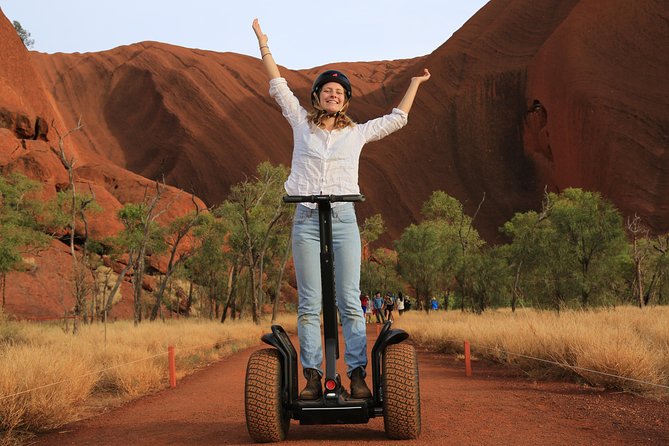
At $142.73 per person, you’re paying for more than “a ride.” In this price you get hotel pickup and drop-off, professional guiding, live commentary during the activity, and the full set of helmet and safety equipment. You’re also getting guided time at Mutitjulu Waterhole and Mala Walk, not just time on the Segway.
There is one catch: the Uluru National Park entry fee is not included. That means your real total will be a bit higher once you add park access. It’s worth budgeting for that up front so the price feels straightforward when you arrive.
Value-wise, the tour also caps at 10 travelers, so you’re not stuck in a huge group where questions go unanswered. For a first Segway experience, the included practice and instruction can be a big part of what you’re actually buying: confidence.
Training, helmets, and how the 4–5 hours really feel
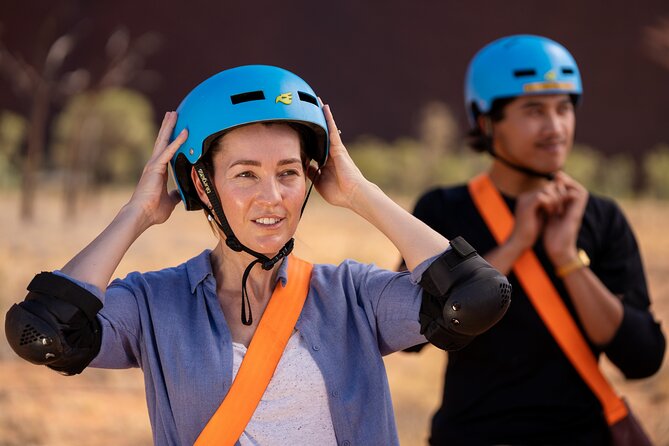
Expect a structured start. You’ll get a lesson on riding, plus safety equipment and instruction tailored to helping you feel steady before you roll out. You should have moderate physical fitness and be fit enough to ride a bicycle, since the motion and balance demands are similar.
The training is usually a good thing, not a waste. But if you’re imagining that your whole first segment is nonstop gliding, plan for a bit of “classroom plus practice” time. Some riders feel the safety briefing and practice take longer than the actual ride time, and that’s a valid consideration if you’re purely chasing maximum Segway minutes.
Also, the tour includes some walking at the cultural stops. It’s not extreme trekking, but you should be ready for sun, uneven rock-adjacent paths, and a steady effort level.
If you’re a first-timer, this is the kind of tour where that nervous feeling can fade quickly. Guides are repeatedly praised for being patient during the coaching phase, including instructors named Nick, Sye/Si, and Lisa.
Stop 1 at Uluru: learning fast and riding the scenic base
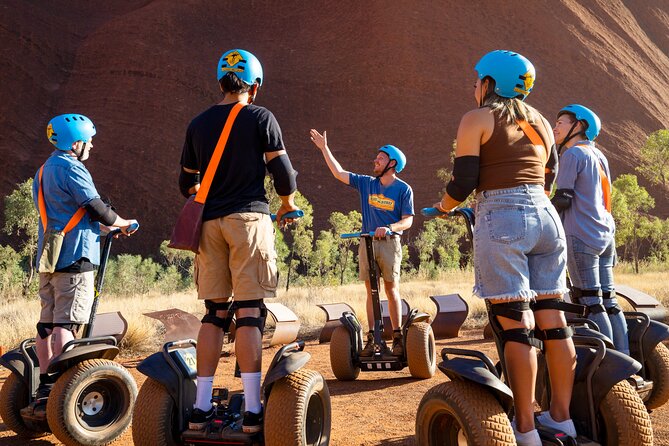
This is where you get your Segway legs. You’ll start with training, then ride along the most scenic section of Uluru’s base, roughly one quarter of the rock. That “only a quarter” detail is important. You get close and you cover ground efficiently, but it’s not the whole perimeter.
The upside is focus. Because the ride time is limited, the guiding can concentrate on the spots that make the most sense for storytelling and viewpoints. You’ll also get a mix of cultural history and natural observations during this opening segment, which helps you understand what you’re seeing before you move to the waterhole and walks.
Drawback-wise, if you’re expecting a long, continuous Segway loop, you might feel the pace changes after training. The good news is that the stops after this are part of what makes the experience feel complete, so you’re not just spending your time practicing.
Timing is another factor. The tour runs about 4 to 5 hours, so you’ll likely be riding and walking during the day’s warmer stretch. I’d treat sun protection as non-negotiable.
Mutitjulu Waterhole: where you get close to rock art stories
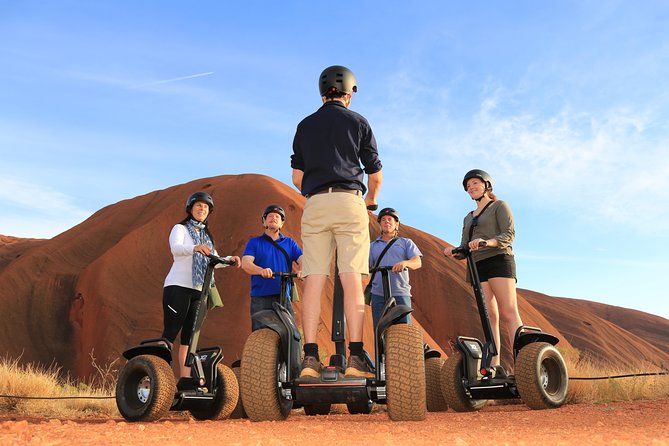
Mutitjulu Waterhole is one of the emotionally compelling stops on this tour. It’s Uluru’s largest waterhole, and you spend time here on a guided walk that brings you close enough to interact with the setting in a very direct way.
You’ll also be introduced to ancient Aboriginal rock art and the cultural stories tied to the waterhole. This is the sort of stop where the guide’s voice really matters. Uluru isn’t just a single “thing” to look at; it’s connected places, and the waterhole is part of that network.
One practical note: this stop includes walking, even if it’s not long. Wear shoes that can handle sandy, hot ground and a bit of uneven footing. Bring water and take shade breaks when you get the chance.
And if you’re sensitive to insects, plan ahead. Multiple riders mention the reality of persistent flies during hot conditions, and it can affect how comfortable your stops feel.
Mala Walk: caves, rock art, and Anangu connections
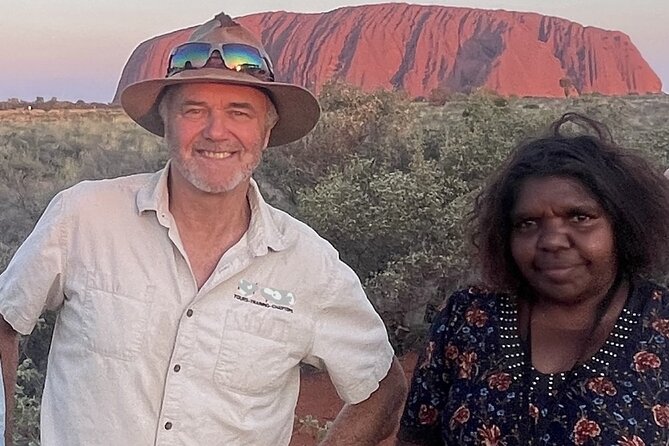
Next up is Mala Walk, a guided walk that continues the cultural and natural interpretation. You’ll learn about caves and see more rock art, with the guide explaining what the sites mean to the Anangu people.
Some parts are designed for a “slow down and look” pace. Even if you’re on a Segway earlier, this stop shifts into walking mode, and that change helps you absorb details. The cave access (when available as part of the guided walk) is a standout element because it connects you to Uluru’s stories beyond the open-air viewpoints.
The main tradeoff is time and energy. You’ll be warm, you’ll walk a bit, and you’ll want to stay present to get the most out of what you’re hearing. If you prefer tours that are mostly driving-and-snapping-photos, this one still has guided walking, and the guide-led context is a core part of the value.
I also appreciate that the tour’s flow keeps context coming in layers: first the Segway overview, then the waterhole, then Mala Walk. It reduces the chance that Uluru feels like a checklist.
Sunset option at Uluru: sparkling wine, picnic nibbles, and real glow
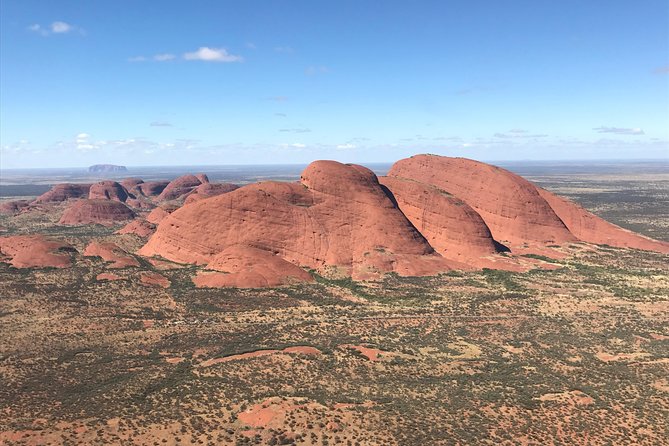
If you choose the sunset option, the tour ends with sunset viewing at the base of Uluru. This finish includes a glass of sparkling wine and picnic nibbles right there on location, plus time to look and take photos as the light changes.
Sunset at Uluru is famous for a reason. The color shifts can make the rock’s texture and shadows look dramatically different from midday. On a photo-heavy trip, this final segment can be the moment that ties everything together.
The practical downside is that “nibbles” can mean different expectations. Some riders love the moment, while others wish the food felt more substantial for the overall time spent. If you’re the type who needs a real meal before an evening out, pack your own extra snack and treat the picnic items as a bonus rather than the main event.
Heat, flies, and what to pack so you’re comfortable
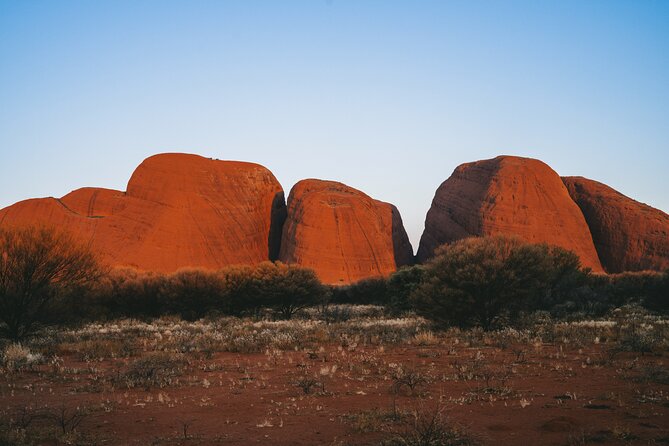
Uluru can be intense. Even if your pace is controlled, the sun and insects don’t care.
Here’s what I’d do before you go:
- Wear sun protection (hat and sunscreen). One rider recommends using a ball cap under your helmet to keep the sun out of your eyes.
- Stay hydrated. Heat is mentioned again and again in comfort-related comments, so bring enough water for before and after the activity.
- Consider a fly net in warm months. More than one rider says fly nets should be mandatory if you’re not used to it. If you’re sensitive to buzzing or bites, don’t wing it.
Also bring a light layer if you run cold in vehicles or during shade transitions. The tour includes pickup and drop-off, and air-conditioning and shadows can swing comfort levels quickly.
Who this tour fits best (and who should rethink it)
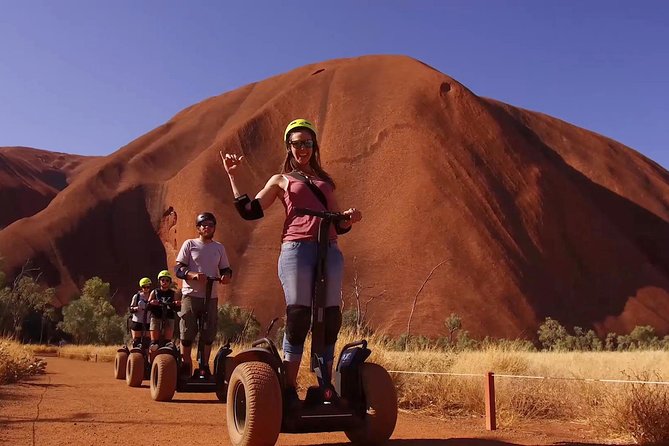
This Segway experience is best for people who want a guided mix of moving fast enough to feel efficient, but slow enough to actually hear the stories. If you’re comfortable with moderate walking and you’re able to ride a bicycle, you’re in the right zone.
It’s not for everyone. The activity requires you to be:
- At least 12 years old (children must be accompanied by an adult)
- Between 45 and 117 kg (99 to 257 pounds)
- Free from serious vision or balance impairments, and without illness or injury that could affect Segway riding
- Not recommended for pregnant women or people with a history of serious spinal injury
- Not recommended for those over 65
One more practical fit point: the tour is capped at 10 travelers, which helps first-timers get attention during coaching. If you like instruction and want a guided day rather than a DIY scramble, you’ll likely enjoy the pacing.
Should you book this Uluru Segway tour or skip it?
Book it if you want a close-up Uluru experience with reduced walking, a guided approach to Aboriginal cultural context, and Segway coaching that helps you feel confident quickly. The small group size and included hotel transfers are real time-savers.
Skip or consider another option if you mainly want maximum Segway time around the entire base. The ride covers roughly a quarter of Uluru’s circumference, and a fair bit of your morning (or afternoon) goes into training and safety practice. Also, if flies and heat are a big deal for you, plan carefully with sun protection and a fly net.
If those tradeoffs don’t bother you, this is a fun, efficient way to see Uluru while still learning what makes it meaningful.
FAQ
How long is the Uluru Segway tour?
The tour runs about 4 to 5 hours.
Is the Uluru National Park entry fee included?
No. The National Park entry fee is not included.
Are hotel transfers included?
Yes. Hotel pickup and drop-off are included.
Do I need prior Segway experience?
No. You’ll receive safety equipment and a lesson so you can use the Segway confidently, including training before you set off.
What are the age and weight limits?
You must be at least 12 years old. You also need to weigh between 45 and 117 kg.
What’s included with the sunset option?
The sunset option includes sunset viewing plus a glass of sparkling wine and picnic nibbles at the base of Uluru.