REVIEW · MILAN
Milan: Segway Tour with Local Tourist Guide Live – 3 hours & half
Book on Viator →Operated by City Guided Tour · Bookable on Viator
Segway beats Milan on a schedule, with a guide threading it all together. I love how efficiently you can reach big sights like Sforza Castle and the Duomo area without spending half your day walking. I also love the street-level storytelling from local guide Emilio, who knows the city well and can adjust the route when you want more time somewhere. One possible drawback: some of the biggest attractions are mostly seen from the outside, and tickets for Brera and the Duomo aren’t included.
This is a small-group Segway tour (up to 8 travelers) that runs about 3 hours 30 minutes, starting and ending at Via Lecco 18. You’ll get a helmet, you’ll ride in English, and you should have moderate physical fitness and comfortable balance for learning and gliding in busy areas.
In This Review
- Key highlights at a glance
- Segway in Milan: why this setup actually works
- Price and what you’re really buying for $90.11
- Meeting at Via Lecco 18 and getting your bearings fast
- Stop 0: Skyline of Milan for orientation
- Brera District and the story of artists and palaces
- Arco della Pace: a neoclassical break near Parco Sempione
- Castello Sforzesco: the big symbol up close
- Basilica di Sant’Ambrogio: a patron saint church stop
- Roman traces of the Imperial church: a quick historical clue
- Darsena: the canal-side harbor moment
- Piazza Mercanti: a medieval square for civic power
- Duomo di Milano from the outside: big wow, plus ticket choice
- Piazza della Scala: La Scala’s exterior and the theater neighborhood
- Galleria Vittorio Emanuele II: the 19th-century shopping arcade
- How the guide keeps it smooth in real traffic and real crowds
- Timing: what 3.5 hours feels like on the ground
- Who should book this Segway tour (and who might not)
- Practical tips to get the most out of your Segway day
- Should you book this Milan Segway tour?
- FAQ
- How long is the Milan Segway tour?
- What does it cost per person?
- What language is the tour offered in?
- How many people are in the group?
- What’s included, and what’s not included?
- Do I need tickets for the Duomo or Brera?
- Where does the tour start and end?
- Is the tour dependent on weather, and what about cancellation?
Key highlights at a glance
- Small-group pacing (max 8) keeps it controlled and lets you ask questions
- Local guide Emilio brings real street knowledge and can adjust the itinerary
- Major landmarks + quieter corners like Brera and the Darsena canal district
- Castle, churches, and monuments without the usual time-drain of transit
- Duomo and La Scala exteriors give you the wow-factor, with extra ticketing left to you
Segway in Milan: why this setup actually works
Milan is a city you can over-walk fast. Squares are wide, streets are busy, and the distances between highlights add up. A Segway tour helps because it turns “getting from A to B” into part of the sightseeing. In practice, you still pause, look, and learn at each stop—but you’re not spending the whole day tired.
You’re also getting a guided route, not just a ride. This one follows a sensible loop through the center: Brera, the Sforza area, Sant’Ambrogio, the canal-side harbor of Darsena, then back toward the Duomo/La Scala corridor. That matters because Milan’s best sights are spread out in different neighborhoods with different vibes.
You can also read our reviews of more tours and experiences in Milan.

Price and what you’re really buying for $90.11
At $90.11 per person for roughly 3.5 hours, the cost isn’t small. But you’re not only paying for the Segway itself. You’re paying for:
- a local guide plus a professional guide structure
- helmet provided
- a route designed to hit multiple landmark areas in one stretch
If you were doing this on foot, you’d likely spend more time moving than seeing. If you were using transit, you’d still lose time and energy transferring and walking the last blocks. This tour is one of those rare experiences where your money buys back time—and in a city like Milan, that’s real value.
Meeting at Via Lecco 18 and getting your bearings fast
The tour starts at Via Lecco, 18, Milano and returns to the same meeting point. That loop format is convenient: you’re not stuck figuring out how to get back after the last stop.
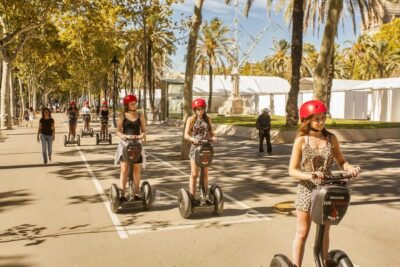
Since it’s a Segway experience, your first moments matter. You’ll have time to get comfortable before you roll into traffic-heavy zones. Guides keep the group safe in busy areas, and the small size (max 8) helps a lot with that.
Stop 0: Skyline of Milan for orientation
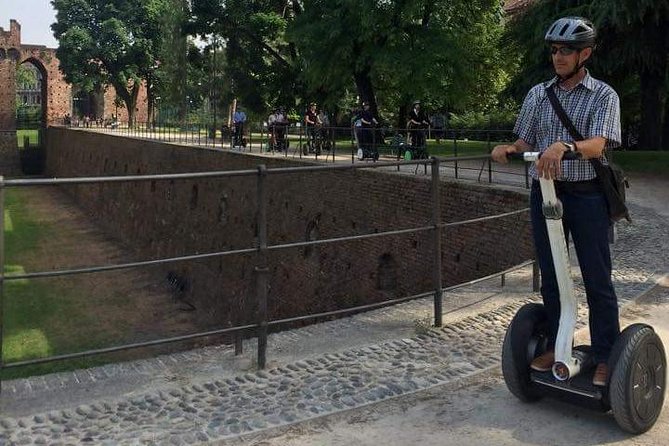
The tour begins with a Skyline of Milan stop. Think of it as your “set the map in your head” moment. Even if you don’t spend long here, it’s useful for two reasons. First, it helps you understand where you are relative to the sights you’ll see next. Second, it frames what Milan looks like from the inside out—classic center, newer sections, and the way the city spreads.
This kind of opening is practical. It makes the next stops feel connected, not random.
Brera District and the story of artists and palaces
Next comes Brera District, with a short stop focused on the history of the Brera palace and the district of artists. Brera is one of those Milan neighborhoods that feels cultured and human-scaled compared to the big monument zones. It’s also a great place to practice “slow looking” because the streets are packed with architecture and small details.
A key note: the admission ticket isn’t included here. That means you’re mainly getting the exterior and district context, not a ticketed interior visit. If you love museums, you might want to plan a separate Brera museum visit later with your own schedule.
Arco della Pace: a neoclassical break near Parco Sempione
Then you’ll reach Arco della Pace, described as the Peace Arch in front of Parco Sempione. This stop works well because it’s a quick breath between heavier monument clusters. Arches are also visual landmarks—easy to find, easy to photograph, and easy to orient with on a map.
You’ll spend only about 5 minutes, and the admission is free. The value here is less about formal entry and more about seeing the city’s design language: neoclassical monuments, park adjacency, and how Milan places monuments where people can gather around them.
Castello Sforzesco: the big symbol up close
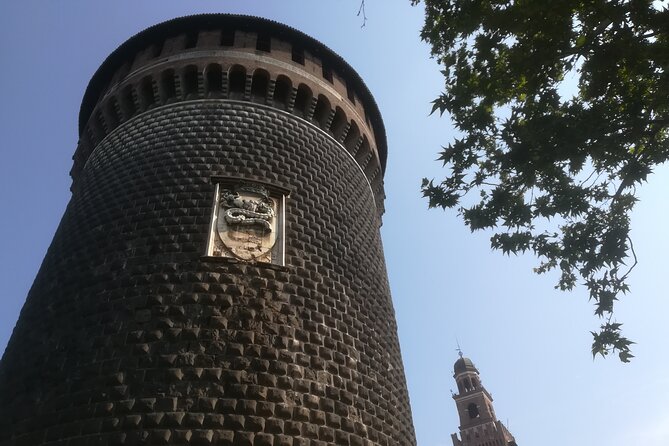
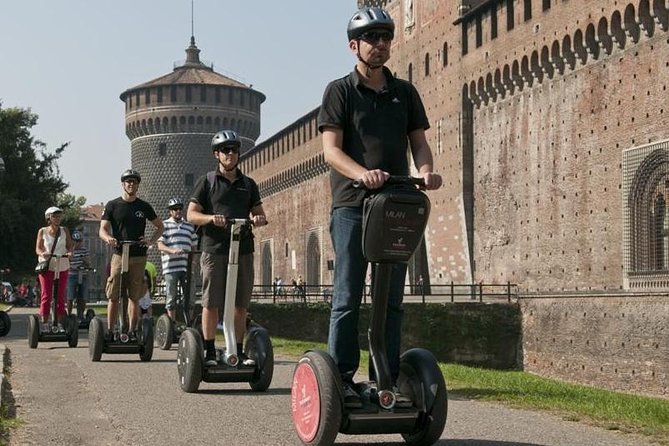
Castello Sforzesco is one of the main symbols of Milan and one of the largest castles in Europe, and you’ll get a focused stop there (about 10 minutes). Even with a short time window, a castle like this changes how you read the whole city. Milan becomes more than fashion or shopping; it’s power, defense, and centuries of institutions.
Admission is listed as free for this stop, so you can spend your attention on what’s outside and the general castle grounds. The downside of a short visit is obvious: you won’t see everything. But as part of a longer Segway loop, it’s a good balance—high-impact exterior time, then back to the flow.
Basilica di Sant’Ambrogio: a patron saint church stop
Sant’Ambrogio is the patron saint of the Roman Lombard church, and the tour includes a 15-minute stop here. This is where the tour gives you more than monuments—it gives you a slice of spiritual and cultural identity tied to Milan’s early roots.
Admission is free, so you’re not paying for this segment. The duration is longer than most stops, which is usually a sign that the guide wants you to actually slow down and look. Still, keep expectations realistic: 15 minutes doesn’t equal a full museum-style visit. It’s best for exteriors, the atmosphere, and a guided sense of what you’re looking at.
Roman traces of the Imperial church: a quick historical clue
The itinerary includes a stop for the Roman traces of the Imperial church. This one is less about a single postcard view and more about historical layering. Milan, like many European cities, has buildings that built on earlier buildings. A stop like this helps you connect the modern city to older timelines, even if you’re not seeing a full reconstructed ruin.
Since the details provided are brief, treat it like a guided pause for context. If you’re the type who loves history prompts (and then wants to read more later), you’ll likely enjoy this.
Darsena: the canal-side harbor moment
One of the tour’s most memorable areas is Darsena, the Navigli harbour of the canals of Milan. Here’s where Milan becomes more surprising. Even if you think you know Milan from images of the Duomo, the canals shift the mood—lighter, more local, and tied to trade and city building.
The guide approach here matters. You’ll learn about the canal story and how trade and construction shaped what you see. The provided info notes that parts of the canal system remain, and you’ll get the sense of what changed over time. Admission is free, and the stop is about 10 minutes, which is enough to absorb the waterfront feel without rushing.
Piazza Mercanti: a medieval square for civic power
Next is Piazza Mercanti, described as a medieval square seat of the ancient municipal administration. This is a quick stop (about 5 minutes), but it gives you a different kind of Milan view: not royal power, not religious power, but civic administration.
Short stops can be hit-or-miss. Here, it works because the site concept is clear: you’re learning what the square was for and why squares like this mattered in everyday governance. If you enjoy understanding how cities actually ran, this stop earns its place.
Duomo di Milano from the outside: big wow, plus ticket choice
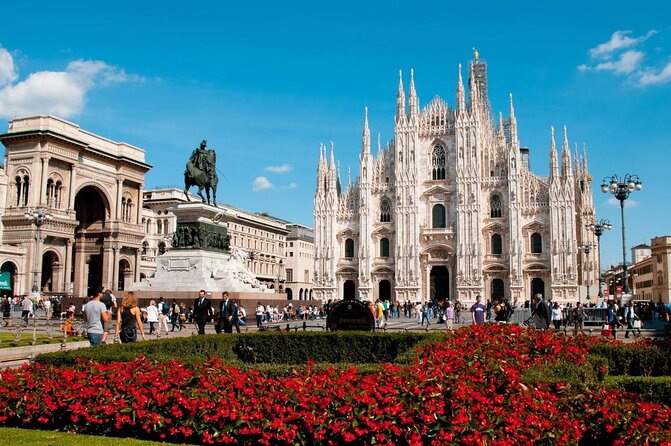
You’ll then arrive at Duomo di Milano, with an exterior-focused stop of about 10 minutes. The tour notes that admission isn’t included here. In other words, you get the imposing cathedral experience through the square and outside viewpoints—not a ticketed interior tour.
This is still a major value moment. The Duomo area is one of the most photogenic and dramatic urban spaces in Europe, and even a short stop can reset your day. The practical catch is that if you want the inside (or access that requires entry), you’ll need to arrange tickets yourself. If you’re okay with an exterior-first approach, you’ll still get plenty of impact.
Piazza della Scala: La Scala’s exterior and the theater neighborhood
Then you’ll stop in Piazza della Scala for an external view of La Scala and Palazzo Marino. This is another short stop (about 5 minutes) with admission not included. It’s not designed as a formal theater visit. Instead, it’s about place recognition: you’re in the neighborhood that wraps around one of the world’s most famous opera venues.
For first-timers, this helps you connect the name to the street setting. For repeat visitors, it’s still useful for context—especially when you’ve just come from the Duomo corridor and want a different kind of Milan architecture.
Galleria Vittorio Emanuele II: the 19th-century shopping arcade
Finally, you’ll reach the Galleria Vittorio Emanuele II, a luxury shopping arcade created at the end of the 19th century. The stop is about 5 minutes and admission is free.
This is an in-between moment. It’s not just shopping; it’s architecture and city theater. The galleria’s value in a tour like this is pacing. You end with something visually elegant and easy to enjoy even if you don’t plan to buy anything. It’s a good “wrap-up” location before returning to the meeting point.
How the guide keeps it smooth in real traffic and real crowds
A big part of why this tour scores so well is the way the guide manages the Segways in active areas. Emilio, a local guide, is highlighted for knowing streets and making sure the group is safe and comfortable. That matters because Milan can be chaotic: pedestrians step into crosswalks, vehicles move fast, and streets feel narrow when you’re trying to stay oriented.
The guide style also includes patience at the start. That’s important because a Segway isn’t hard, but it’s unfamiliar for many people. If you’re nervous, it helps to have a guide who adjusts pacing until everyone is comfortable. Also, the route can be customized within reason, especially if you want more time at certain sights and less at others.
Timing: what 3.5 hours feels like on the ground
The tour is listed around 3 hours 30 minutes, and the stops are mostly short. That’s exactly how you get value from a Segway format: enough time at each landmark to understand it, not enough time to stand around waiting.
Still, I’d plan mentally for a little flexibility. If the guide is adjusting around your pace, your group questions, and your interest in what’s next, you might end up with a longer day than the baseline estimate. With that mindset, you’re less likely to feel rushed.
Who should book this Segway tour (and who might not)
This is a strong fit if you want:
- a guided loop through central Milan landmarks
- an easier way to move than walking all day
- a guide who connects sights to stories, not just facts on a sign
It’s less ideal if you:
- want a strictly ticketed, inside-everything itinerary (Brera and the Duomo are noted as not included for admissions, and La Scala is exterior)
- are unwilling to spend time learning a new mobility tool, even briefly
- prefer to move at a slow, unstructured pace with no schedule at all
Practical tips to get the most out of your Segway day
- Wear comfortable shoes and clothes you can move in. The helmet is provided, but your clothes still matter when you learn.
- Bring a positive attitude for outdoor viewing. Several key sights are exterior-focused here, which is great for orientation but not the same as a paid interior experience.
- If Duomo and Brera are top priorities for you, plan extra time or separate tickets. This tour gives you the outside wow and context, not guaranteed entry.
- For photos, think “square first, details second.” You’ll get the best results by grabbing the big overall views during stops, then using any extra moments for close-ups.
Should you book this Milan Segway tour?
I’d book it if you want a smart first pass through Milan’s center with a small group, a real local guide, and a low-effort way to cover lots of ground in a single afternoon. The price is reasonable for the mix of guiding plus Segway time, especially if you’d otherwise spend hours traveling between neighborhoods.
I wouldn’t book it if your dream day is a stack of paid museum and cathedral interiors. This tour is built for orientation, landmarks, and guided understanding, with some admissions not included. If that trade-off sounds fine, you’ll likely have a fun, efficient Milan day on wheels.
FAQ
How long is the Milan Segway tour?
It’s about 3 hours 30 minutes (approx.).
What does it cost per person?
The price is $90.11 per person.
What language is the tour offered in?
The tour is offered in English, and it may be operated by a multi-lingual guide.
How many people are in the group?
The maximum group size is 8 travelers.
What’s included, and what’s not included?
Included items are a local guide, professional guide, and helmet use. Not included are food and drinks, hotel pickup, hotel drop-off, and transportation to/from attractions.
Do I need tickets for the Duomo or Brera?
Admission tickets are not included for the Brera District stop and for Duomo di Milano, while several other stops are listed as free.
Where does the tour start and end?
It starts at Via Lecco, 18, 20124 Milano MI, Italy, and it ends back at the same meeting point.
Is the tour dependent on weather, and what about cancellation?
It requires good weather. If it’s canceled due to poor weather, you’ll be offered a different date or a full refund. You can cancel for a full refund up to 24 hours in advance.