REVIEW · VALENCIA
Valencia: City of Arts and Sciences Segway Tour
Book on GetYourGuide →Operated by Segway Trip Valencia · Bookable on GetYourGuide
Futuristic Valencia moves at your pace. I love the Segway freedom here because the City of Arts and Sciences is huge, and it’s so much easier to see it all without walking. I also love the Turia transformation angle, since you’re not only admiring buildings—you’re learning how the old riverbed became a major cultural and garden zone.
One possible drawback: you’ll need to get comfortable during a short training curve before you start gliding for real, so arrive with comfortable shoes and a calm attitude.
In This Review
- Key highlights I’d plan around
- Why the City of Arts and Sciences feels different on a Segway
- Start at C/ Náquera: getting oriented for a 1.5-hour ride
- The training session: fast confidence before you glide
- Hemisfèric: when an iconic building comes at you fast
- Umbracle gardens over the old Turia: art and shade together
- Museu de les Ciències Príncipe Felipe: whale skeleton shapes
- What’s included, what’s not, and how that affects your budget
- Who should do this Segway tour in Valencia
- About the guides: the difference between a ride and a story
- Should you book this Valencia City of Arts and Sciences Segway tour?
- FAQ
- How long is the Segway tour in Valencia?
- What’s included in the price?
- How much does the tour cost?
- Where do we meet for the tour?
- Who can join the tour?
- Are there language options and free cancellation?
Key highlights I’d plan around
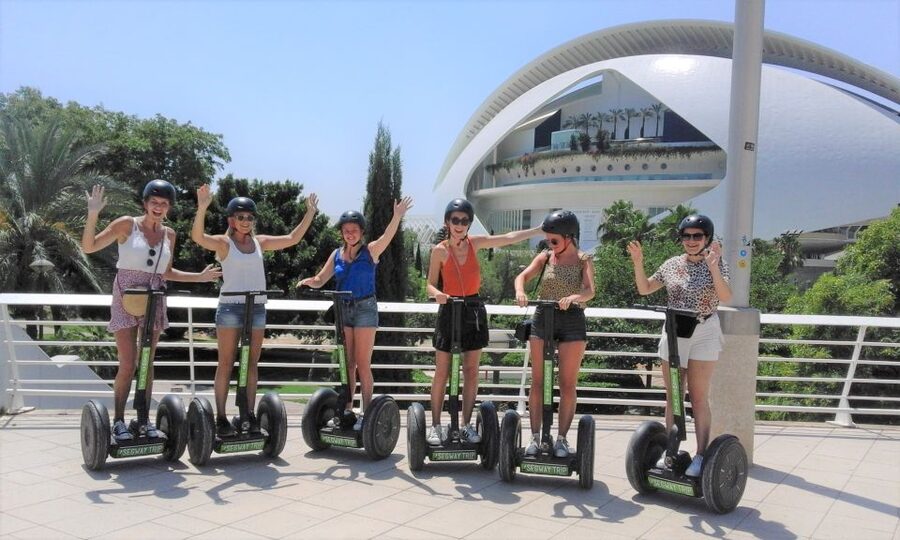
- Small group (max 9) keeps the pace relaxed and the guide easier to ask questions
- Short training session before you ride past Calatrava’s monuments
- City of Arts and Sciences viewpoints you can’t get from ground level alone
- Hemisfèric sighting for that “big idea” architecture moment
- Umbracle gardens built over the Turia Riverbed, where art and nature mix
- Museu de les Ciències Príncipe Felipe shaped like a whale skeleton
Why the City of Arts and Sciences feels different on a Segway
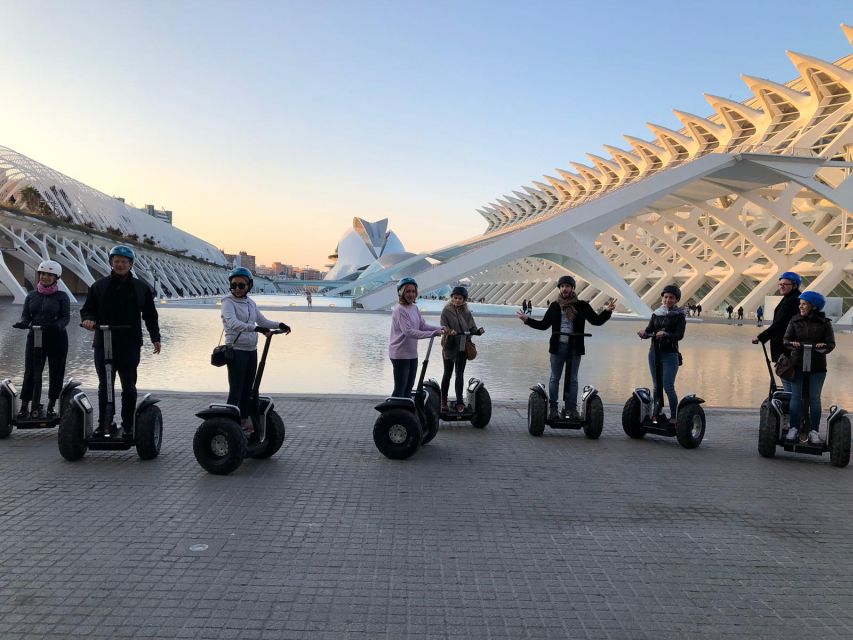
The City of Arts and Sciences in Valencia looks futuristic no matter what. But on a Segway, it becomes practical. These buildings sit across wide, designed spaces—terraces, plazas, and garden stretches—and the Segway helps you cover that distance without turning the tour into a long leg workout.
You also get a moving “camera” perspective. From a Segway, you naturally arrive at buildings from different angles—closer, then farther, then slightly above your typical standing viewpoint. That matters with the work of Santiago Calatrava, because the designs are not just about height. They’re about form, curves, and how structures relate to the sky and open space around them.
And there’s another layer. This is not only architecture sightseeing. You’ll also connect what you see to the story of the Turia Riverbed—how the bed of the old river was turned into important cultural gardens. That context makes the whole area feel intentional, like a modern city plan where nature and art were given real space.
You can also read our reviews of more tours and experiences in Valencia.

Start at C/ Náquera: getting oriented for a 1.5-hour ride
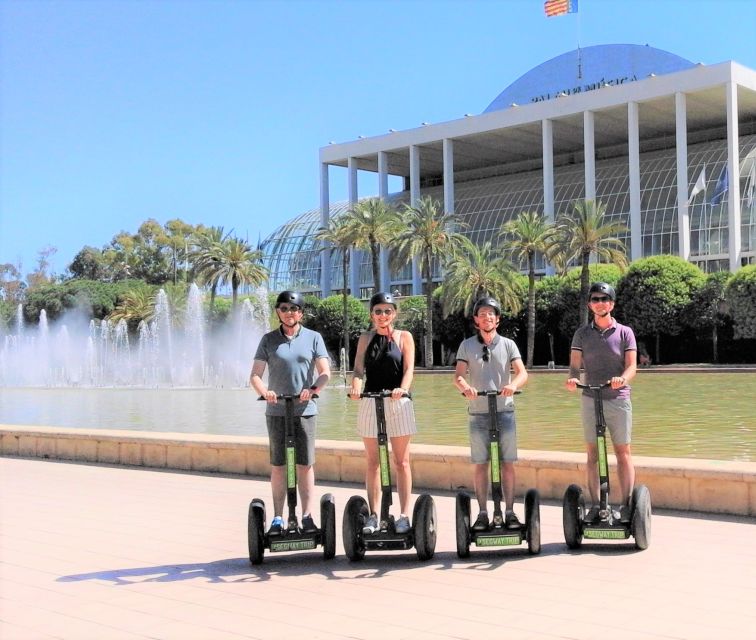
Your meeting point is at the local operator’s agency on C/ Náquera, 6, 46003, Valencia. From there, you’ll handle the Segway basics, get fitted with equipment, and then head out to see the main sights.
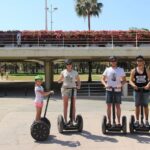
The tour runs about 1.5 hours. That time window is realistic for two reasons: you need some minutes to learn the transporter, and the City of Arts and Sciences is spread out enough that you’d lose time if you tried to walk at a casual pace. In a short group of up to 9 participants, the guide can manage traffic flow and keep everyone comfortable, which is a big deal when you’re riding a personal vehicle that’s new to most people.
Tip: wear shoes you could walk in for a bit, even if you’re mostly on the Segway. You’ll feel it more in your feet than in your legs.
The training session: fast confidence before you glide
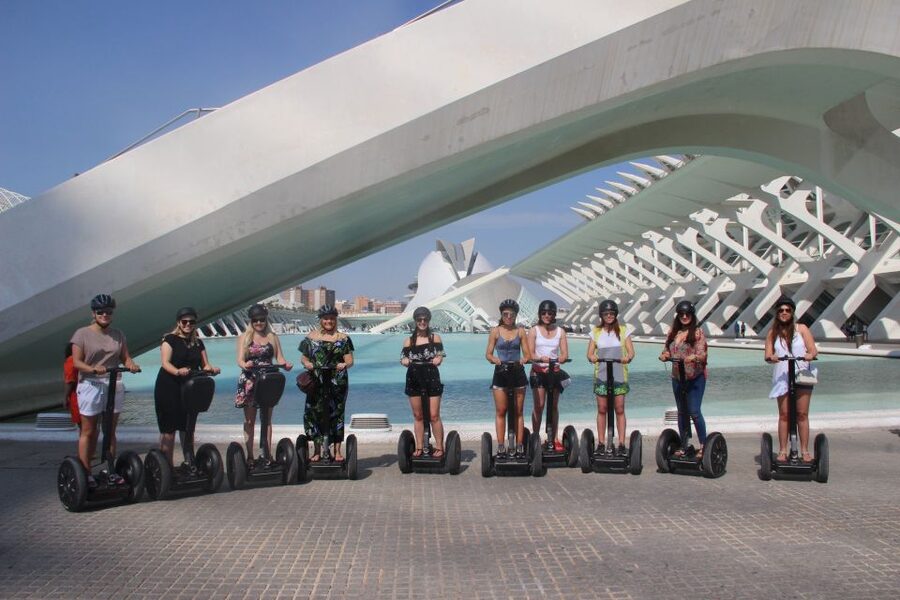
Before you start seeing monuments, you get a training session and guidance from your live tour guide. The goal is simple: learn how to move smoothly, slow down safely, and stay balanced while turning.
I like that the training happens first, because the City of Arts and Sciences is not the place you want to be learning your basics. You’ll be moving through designed spaces, near landmark architecture, so the sooner you’re comfortable, the more you’ll actually enjoy the views.
The vibe can vary depending on your group’s experience level. One guide you might encounter, Clementia, was specifically noted for adjusting based on prior Segway experience. That’s a smart way to run a tour, because it means confident riders don’t get slowed down, and first-timers don’t feel rushed.
If you’re newer to Segways, don’t try to “power through” nerves. Take the practice seriously. Smooth control is what makes the ride feel fun instead of stressful.
Hemisfèric: when an iconic building comes at you fast
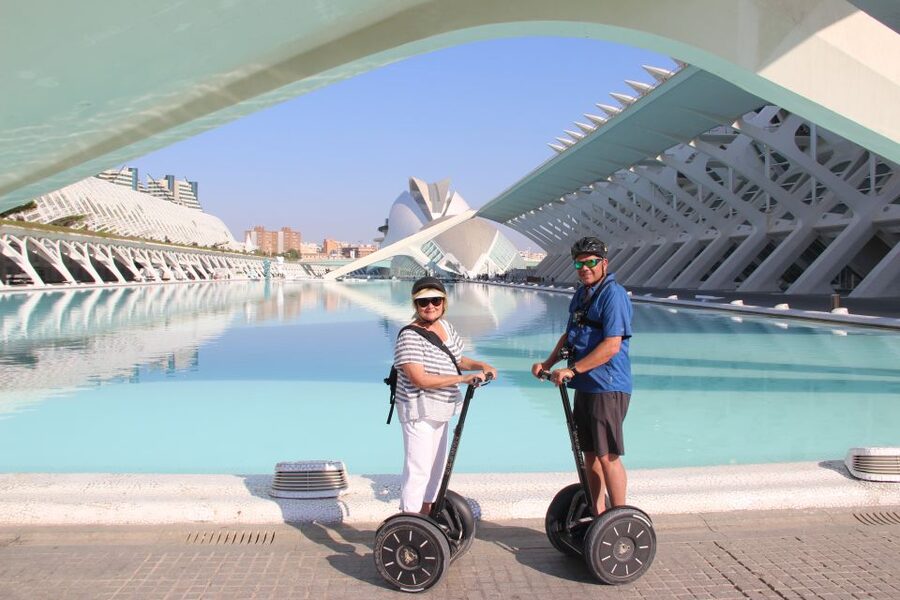
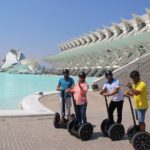
One of the key stops is the Hemisfèric, a standout piece of the City of Arts and Sciences skyline. Seeing it on foot is one thing. Seeing it while you’re moving—approaching from a different angle, then circling your line of sight—makes it feel larger and more designed.
What I’d focus on here is the shape and the way the building plays with the open space. Calatrava’s work tends to look like it’s in motion even when it’s completely still. From a Segway, that effect hits harder because your perspective changes continuously.
Practical note: buildings like Hemisfèric are photo-friendly, but traffic in any major tourist zone can be real. The Segway keeps you with the guide and group flow, which usually reduces the back-and-forth of stopping and starting for pictures.
Umbracle gardens over the old Turia: art and shade together
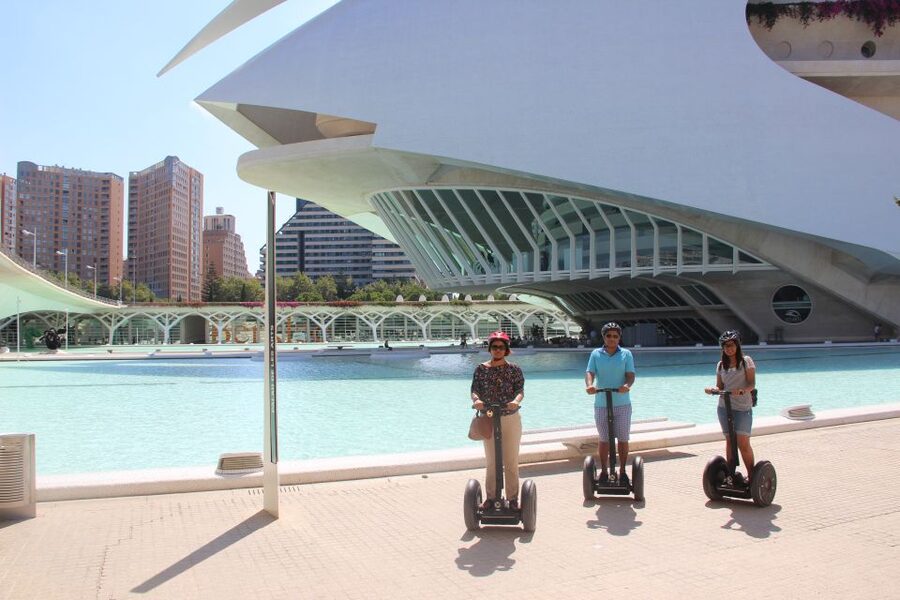
The Umbracle is where the tour connects the architecture to the landscape story you’ll want to remember. This area sits in the zone where the bed of the Turia River was transformed into gardens—so you’re not just looking at modern forms, you’re standing inside a reclaimed city idea.
Here’s what I like about hitting Umbracle on a Segway: you move along the edges and transitions rather than treating it like a single viewpoint stop. That makes it easier to understand how the gardens run alongside the architecture.
When you’re gliding through, you’ll notice the mix of curated plantings and designed structure. It’s a place where shade matters, and where walking would take more time to cover comfortably. On a warmer day, that can be a real advantage.
Also, the Umbracle area is part of why the City of Arts and Sciences feels like more than a museum cluster. It’s a cultural zone with room to breathe. The Segway helps you actually experience that “space” feeling instead of just rushing past it.





Museu de les Ciències Príncipe Felipe: whale skeleton shapes
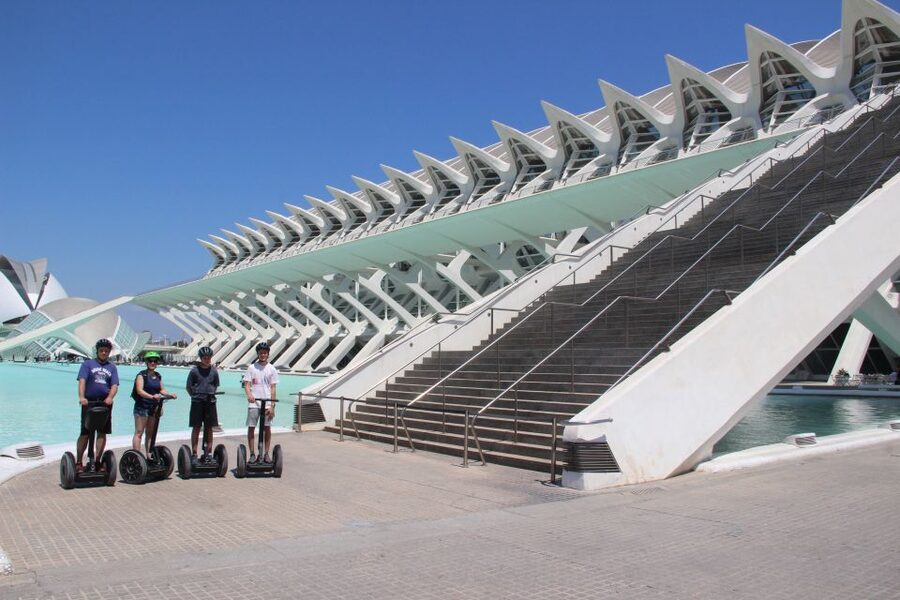
Another highlight is the Museu de les Ciències Príncipe Felipe. The building is shaped like the skeleton of a whale, and that design concept does not read the same way from every angle.
This is where your moving perspective pays off again. From one side, the form can look like pure structure. From another, you get the “skeleton” logic—how the elements echo ribs and curves. The Segway ride gives you those angle changes without the hassle of constant repositioning.
If you like architecture that’s concept-driven, this stop is worth slowing your attention down for a minute. Even if you don’t go inside (entrance fees aren’t included), the external design already tells part of the museum’s mission: science and nature translated into a form you can see.
And because the tour is only 1.5 hours total, you get a compact “hit list” that still feels varied: major structures, gardens over the Turia story, and a science museum concept all in one loop.
What’s included, what’s not, and how that affects your budget
The price is $59 per person for a 1.5-hour experience. What you get for that money is:
- Segway and equipment
- A training session
- A live guide
What you don’t get is entrance to monument or museums. That matters because it changes how you should think about value. You’re paying for the transportation experience plus interpretation—how to see and understand the City of Arts and Sciences quickly and comfortably—not for museum admissions.
So when is it a good value? When you’re coming mainly for the sights and context, not for spending long periods inside ticketed venues. If you’re the type who wants to walk away with strong outdoor architecture memories, you’ll likely feel like the cost makes sense.
Also consider the small group limit of 9 participants. In a place this spread out, a small group tends to mean the guide can keep your ride smooth and your stops meaningful instead of turning the tour into a rushed line.
Who should do this Segway tour in Valencia
This tour is a good fit if you:
- Want a fast, outdoor-focused way to see the City of Arts and Sciences area
- Enjoy architecture and want the Calatrava connection explained while you ride
- Prefer a small-group pace over big-bus tourism
- Are comfortable riding a Segway after a short training session
You should skip it if you:
- Are under 14 years old (the tour requires at least 14, or an adult if younger)
- Don’t meet the physical requirements: minimum 45 kilograms and minimum 1.40 meters
- Don’t like the idea of practicing basic driving/turning before sightseeing
Comfort tip: bring comfortable shoes. You’re not stuck walking, but you’ll still need stable footing during training and while positioning for views.
About the guides: the difference between a ride and a story
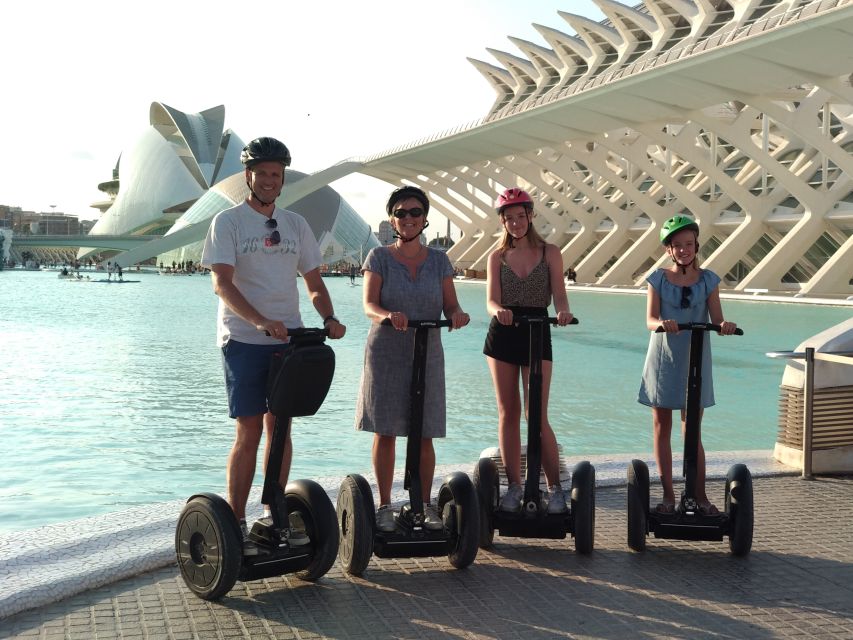
The tour is powered by the guide, because that’s where the architecture becomes something you understand rather than just something you pass.
In particular, Maria was noted for being both lovely and well-structured in explanations, making sure you see plenty during the time you have. Another guide, Clementia, was praised for tailoring the approach if you already have Segway experience, and even for being aware of plans beyond this tour—like if you’ve got another activity the next day.
That’s the kind of service you want: a guide who adjusts to your comfort and keeps the sightseeing moving without losing the explanation.
Should you book this Valencia City of Arts and Sciences Segway tour?
Book it if you want an efficient, fun, outdoor way to understand the City of Arts and Sciences—especially if you care about Calatrava’s design language and the Turia Riverbed story behind the gardens.
Skip it if you’re hoping for a long museum visit or if you’re not willing to spend a short block of time learning the Segway basics first.
If you’re on the fence, here’s my simple rule: when you only have a limited window in Valencia and you want the highlights to click quickly, this Segway format is a strong match. The combination of training + small group + major architecture stops is exactly what makes the time feel well spent.
FAQ
How long is the Segway tour in Valencia?
The tour lasts about 1.5 hours.
What’s included in the price?
You get the Segway and equipment, a training session, and a live tour guide. Entrance fees to monuments or museums are not included.
How much does the tour cost?
The tour costs $59 per person.
Where do we meet for the tour?
Meet at the local operator’s agency at C/ Náquera, 6, 46003, Valencia.
Who can join the tour?
You must be at least 14 years old. You also need a minimum weight of 45 kilograms and a minimum height of 1.40 meters.
Are there language options and free cancellation?
The live tour guide operates in Spanish and English. You can cancel up to 24 hours in advance for a full refund.