
REVIEW · MUNICH
Munich Segway Tour
Book on Viator →Operated by Fat Tire Tours - Berlin · Bookable on Viator
Segways turn Munich into moving sightseeing. I like the 30-minute orientation that gets you comfortable fast, and I like the max group of 8 riders for a more personal ride. One thing to weigh carefully: you must handle hills and stairs, meet the 100–250 lb weight range, and this isn’t a great pick if you have knee or balance issues.
You’ll meet near Karlsplatz 4 and set off from central Munich for a loop that hits green space, museum territory, and classic food-and-history stops in about 3 to 4 hours, returning mid-afternoon. The route is built for photos and short story breaks, with wet-weather ponchos and a helmet so you can focus on the city instead of the details.
Expect a guide who mixes practical instruction with clear English history storytelling, and who keeps the group moving at a safe, teachable pace. And if you’re wondering what the best part is: for many people, it’s how much you cover without feeling like you spent the day walking.
In This Review
- Key things that make this Munich Segway tour work
- Price, timing, and group size: what your $90.05 buys
- The 30-minute Segway lesson near Karlsplatz 4: how you get comfortable fast
- Hofgarten Royal Gardens: a calm opening before the pace picks up
- Englischer Garten and the Isar: big park views with guided storytelling
- Deutsches Museum area to Gärtnerplatz: culture and neighborhoods without the slog
- Viktualienmarkt and Residenz: Munich’s food energy and royal-era buildings
- Passing Ludwig-Maximilians-Universität and the Jewish Museum: layered Munich on one route
- Pacing, photos, and the reality of hills in a Segway tour
- Who should book this Munich Segway tour (and who should skip it)
- Should you book this Munich Segway tour?
- FAQ
- Where does the Munich Segway tour start?
- How long is the tour?
- What’s included with the price?
- Do I get training before I ride?
- How big is the group?
- What are the rider weight limits?
- What is the minimum age?
- Is food or drink included?
- Is the tour okay for people with knee or balance problems?
- What happens if the weather is bad?
- Can I cancel for free?
Key things that make this Munich Segway tour work

- 30-minute Segway training before you start touring for real
- Small group (8 max) means more help and less waiting
- Parks + market + royal sights in one half-day loop
- Photo stops so you’re not just passing by landmarks
- Helmet and ponchos included for comfort in real weather
- Pass-by museum and neighborhood stops without museum-ticket hassle
Price, timing, and group size: what your $90.05 buys
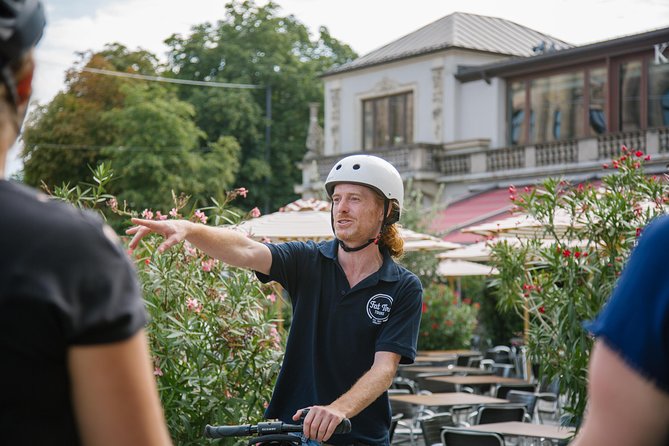
At about $90.05 per person for a 3 to 4 hour tour, you’re paying for more than “a guide.” You’re paying for the Segway itself, the safety gear, and the time it takes to teach you how to ride. That matters in Munich, because the best sights are spread out between the center, parks along the Isar, and older neighborhood areas.
The small group size (up to 8) is a big value point. With fewer people, the guide can slow down for first-timers and keep you from feeling rushed at stops.
This is also a half-day format, which means you can still fit in a museum visit or beer hall later without feeling like you lost your whole day. Just plan for a morning or early afternoon start so you’re not chasing timing.
You can also read our reviews of more tours and experiences in Munich.



The 30-minute Segway lesson near Karlsplatz 4: how you get comfortable fast
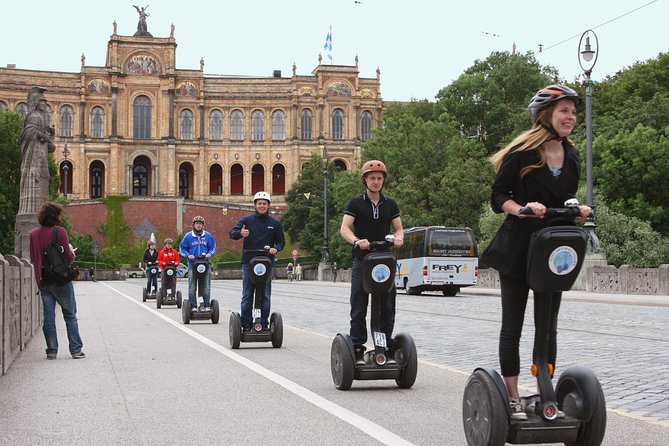
You start at Karlsplatz 4, 80335 München, at the tour office, then you get your orientation session for about 30 minutes. The lesson covers the basics of controlling the Segway—so you can actually enjoy the ride rather than white-knuckling your way through.
A few practical notes I’d treat as non-negotiable:
- Wear shoes you’re comfortable walking in (and that can handle quick turns).
- Dress for Munich weather; you’ll get wet weather ponchos if it rains.
- If you’re unsure about hills or stopping smoothly, tell the guide early during training.
The tour requires riders to be able to make motions like climbing and descending stairs without assistance. And while most people can participate, it’s specifically not recommended for knee or balance problems. Think of the training as helpful, but the ride still demands control.
Hofgarten Royal Gardens: a calm opening before the pace picks up
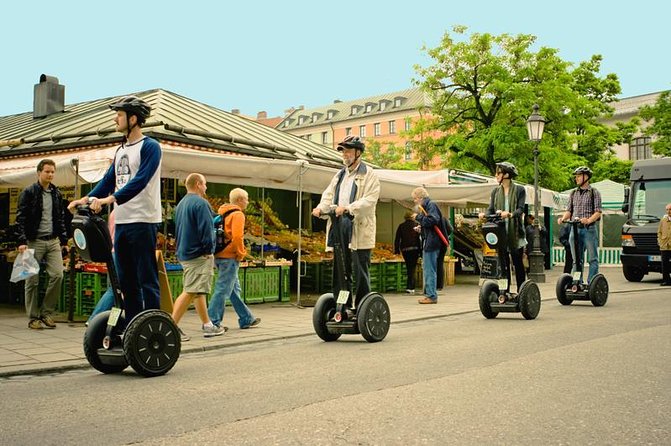
Hofgarten is a strong way to start because it’s a “pretty but manageable” introduction to Munich on wheels. You’ll spend about an hour at Hofgarten (Royal Gardens), which gives you a chance to practice smooth gliding after the orientation.
This stop works especially well if you’re new to Segways. You’re not thrown into tight traffic or complex navigation right away. Instead, you’re easing into the rhythm—steady speed, clean turns, and stops for photos.
One more value point: the guide’s history talk here isn’t just name-dropping. It sets the tone for the rest of the tour, connecting what you’re seeing in the gardens to Munich’s older roots.
Englischer Garten and the Isar: big park views with guided storytelling
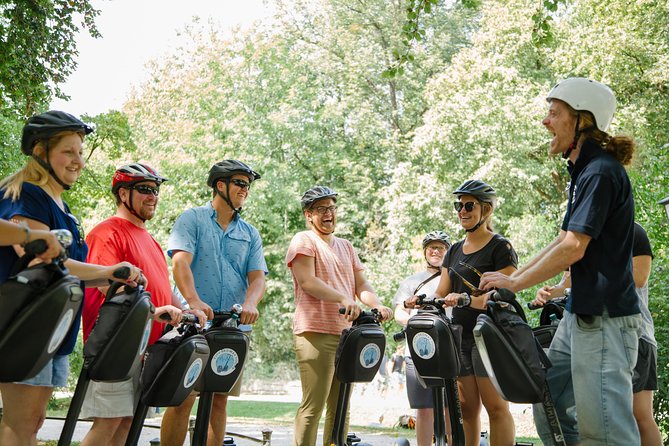
From Hofgarten you move into the bigger park-world zone. You’ll pass by the English Garden (Englischer Garten) and ride with views tied to Munich’s green spaces and the Isar waterfront.
Why I like this part of the route: parks let you feel the scale of the city. Even if you’ve only ever seen Munich in postcards, you’ll get that “this is how locals live outside” feeling—without needing to map out multiple bus rides.
The guide keeps it purposeful. Expect stories about Munich’s modern culture and the city’s traditions, alongside the longer timeline that shaped the neighborhoods you’re rolling through. Some guides also bring a book of pictures to help you understand what you’re passing, which can be a nice support if the architecture goes by quickly.
Deutsches Museum area to Gärtnerplatz: culture and neighborhoods without the slog
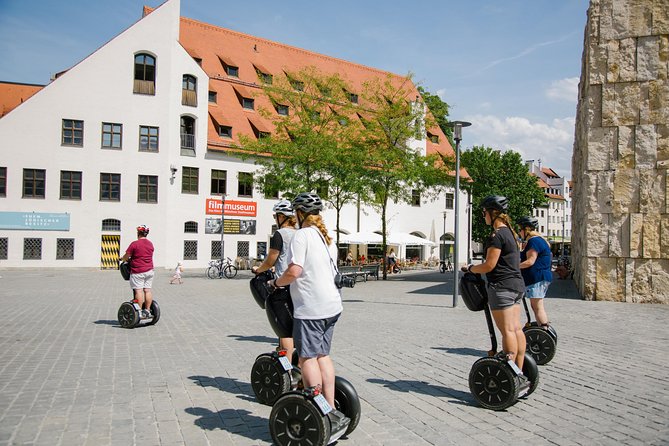
You’ll pass by Deutsches Museum, then head through the Gärtnerplatz neighborhood. These are the kinds of areas where a walking-only plan can start to feel like a lot of effort—especially if your itinerary also includes museums later.
On a Segway, you get motion plus context. The guide can explain what you’re seeing, then you cover the distance while the story stays connected. It’s a good way to shift from “park and postcard” into “city and daily life.”
A heads-up from real-world experience: if you rely heavily on the route display in an app, it might not match the exact path you ride. The fix is simple—follow your guide and use the app as a loose reference, not a command center.





Viktualienmarkt and Residenz: Munich’s food energy and royal-era buildings
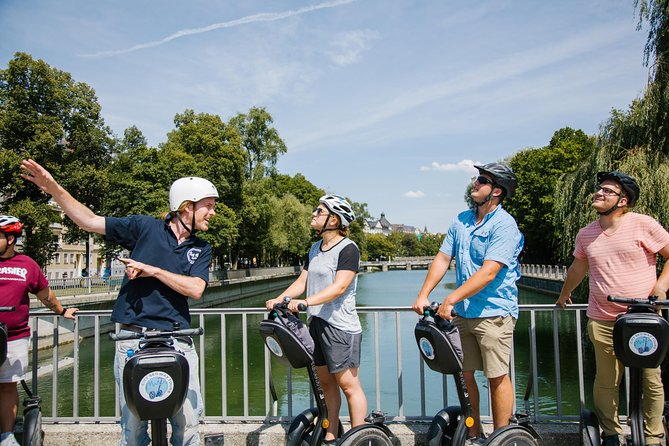
The tour includes time at Viktualienmarkt Market, which is one of Munich’s most iconic food-and-street-life places. This is where the tour becomes more than scenic riding. You can slow down, look around, and absorb how people actually shop and snack in the middle of the city.
Then you’ll stop at the former Royal Residence at Residenz. Even if you don’t go inside ticketed areas, the outside view and the guide’s framing can help you understand why this area matters. Residenz is a reminder that Munich wasn’t only a modern city—it grew through power, wealth, and institutions that still shape the layout.
What makes this combo work is balance. Market first brings you into the everyday present, and Residenz anchors the deeper past right after. It’s a smart half-day pairing.
Passing Ludwig-Maximilians-Universität and the Jewish Museum: layered Munich on one route
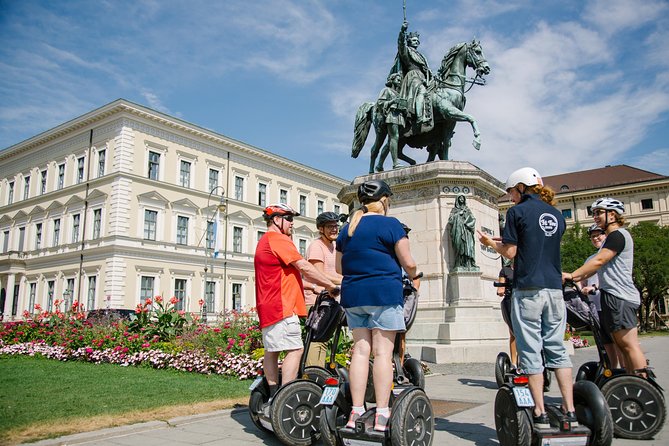
You’ll also pass by Ludwig-Maximilians-Universität and see the area near the Jewish Museum. These are the kinds of landmarks that can be hard to connect in your head if you’re piecing together a DIY route.
On the Segway, the guide can connect the dots quickly: where education sits in the city, how institutions shaped neighborhoods, and how different chapters of Munich’s story sit side by side. Expect the storytelling to be more than quick facts—guides often adjust to the group, so questions and small detours may happen within the tour flow.
This section is a reminder to pay attention even when the stop feels like a pass-by. “Passing” doesn’t mean “forgettable” if your guide is explaining what to notice as you move.
Pacing, photos, and the reality of hills in a Segway tour
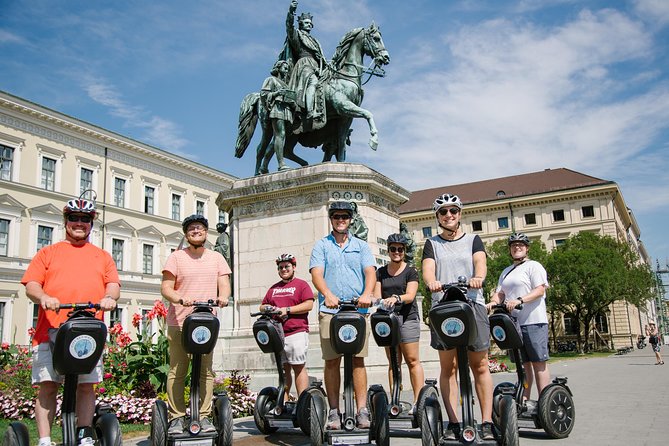
The whole ride typically runs 3 to 4 hours, and it returns to the starting point by mid-afternoon. The pace is built around practical stop-and-go sightseeing rather than long, exhausting stretches on foot.
You’ll also get built-in chances for pictures at stops and along key stretches. That’s a real advantage in Munich because some of the best scenes—garden lines, waterfront angles, and street views—are easier to capture when you’re not hunting for parking and rerouting every few minutes.
Still, here’s the honest consideration: Segway tours aren’t always perfectly flat. One bad experience reported involved a fall on a downhill section and a medical outcome. I’m not saying that will happen to you, but I am saying you should take training seriously and ride with care on hills.
Who should book this Munich Segway tour (and who should skip it)
This tour is a great fit if you:
- Want a half-day way to cover major Munich areas without long walks
- Enjoy history stories tied to specific stops, not just a generic overview
- Like the idea of a small group of 8 max with a guide who can help beginners
- Want parks, market time, and royal-era buildings in one plan
You should think twice if you:
- Have knee or balance problems
- Struggle with stairs or controlling speed downhill
- Want a totally calm, low-motion sightseeing day
If you’re a first-time Segway rider, that’s often when this tour shines most, as long as you listen during the orientation and ask questions before you start gliding.
Should you book this Munich Segway tour?
I’d book it if you want a smart “Munich in motion” plan: parks and waterfront, market life at Viktualienmarkt, and a stop at Residenz, all while getting a 30-minute training and staying in a small group. At around $90.05, the value is strongest when you’d otherwise spend time figuring out transport and walking routes between distant sights.
I would not book it if balance or knee issues are part of your day-to-day reality, or if hills and stairs make you nervous. In that case, you’ll likely get more comfort and confidence from a standard walking or transit-based tour.
If you do book, go in with the mindset that the lesson matters. When you get control early, the rest of the tour feels like sightseeing you actually remember, not sightseeing you survive.
FAQ
Where does the Munich Segway tour start?
It starts at Karlsplatz 4, 80335 München, Germany, at the tour office.
How long is the tour?
The duration is about 3 to 4 hours.
What’s included with the price?
Included are the Segway tour, a helmet, a 30-minute Segway orientation, and wet weather ponchos if it’s raining.
Do I get training before I ride?
Yes. You’ll have a Segway orientation session for about 30 minutes before the tour starts.
How big is the group?
The tour has a maximum group size of 8 travelers.
What are the rider weight limits?
Participants must weigh between 100 lbs and 250 lbs (about 45 kg and 110 kg).
What is the minimum age?
The minimum age is 14 years.
Is food or drink included?
No. Food and drink are not included.
Is the tour okay for people with knee or balance problems?
It is not recommended for travelers with knee or balance problems.
What happens if the weather is bad?
The experience requires good weather. If it’s canceled due to poor weather, you’ll be offered a different date or a full refund.
Can I cancel for free?
Yes. You can cancel up to 24 hours in advance for a full refund, and cut-off times are based on local time.