
REVIEW · ATHENS
Ancient Athens, Agora, and Keramikos Segway Tour
Book on GetYourGuide →Operated by Athens City Segway Tours · Bookable on GetYourGuide
Segways make Athens feel instantly yours. I love the mix of Keramikos cemetery atmosphere and Ancient Agora center-stage history, and I like that the route covers major hills with very little physical strain. The main catch is that you start with training and you’ll need to follow strict rules on weight and carrying bags.
This is one of those $78 tours that feels like practical value, not just a novelty ride. You’re in a small group (up to 10), with an experienced local guide and a helmet included, so you can focus on the sights instead of logistics.
Just be aware: the tour does not enter archaeological sites, so you’ll be viewing from the outside and paying nothing for entry here. Also, Segways aren’t for everyone, and pregnant travelers should skip this option.
In This Review
- Key highlights worth knowing
- Segway Training at Eschinou 9: Fast Start, Clear Rules
- Kerameikos (Keramikos): The Ancient Cemetery Stop You Can Feel
- Areopagus and Mars Hill: Your Acropolis-View Shortcut
- Thiseio to the Agora Corridor: How the Route Tells the Story
- Pnyka Hill and the Democracy View: The Payoff Moment
- Monastiraki Breaks and the Return Loop Through Central Athens
- Price and Value: Why $78 Works for a 2-Hour Route
- Who This Tour Suits (and Who Should Skip It)
- Should You Book the Ancient Athens, Agora, and Keramikos Segway Tour?
- FAQ
- How long is the Ancient Athens, Agora, and Keramikos Segway Tour?
- Where is the meeting point?
- Where does the tour end?
- Does the tour enter archaeological sites like the Agora or the Acropolis?
- What is included in the price?
- What should I wear or bring for the Segway ride?
- Are luggage or large bags allowed?
- What is the minimum age to ride?
- What are the weight limits?
- Is the tour recommended for pregnant women?
Key highlights worth knowing
- Kerameikos/Keramikos stop at Athens ancient cemetery zone with big “you’re walking through time” vibes
- Areopagus and Mars Hill photo moments plus quick breaks for photos and guided context
- Agora area time to understand why this was the heart of civic life, without sitting through site entry lines
- Acropolis approach viewpoints by way of Mars Hill and up toward Pnyka/Pnyx for panorama
- Small-group Segway flow with training first, then steady riding on hills and flatter stretches
- Guide-led tailoring when you tell them what you already saw the day before (some leaders are especially flexible)
Segway Training at Eschinou 9: Fast Start, Clear Rules
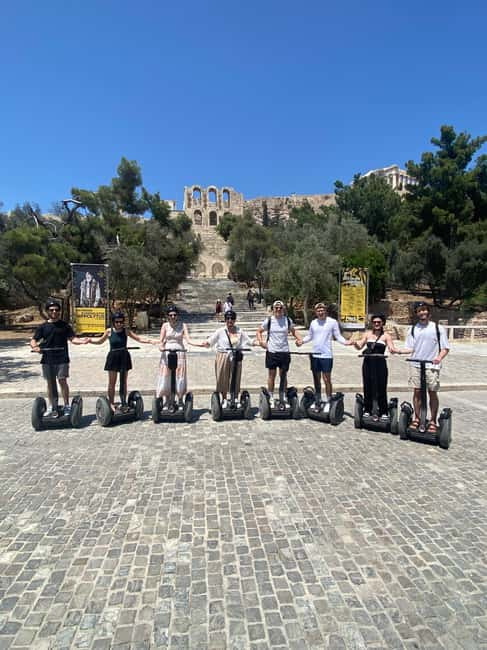
You begin at Eschinou 9 in Plaka, a convenient starting point for old Athens. The tour is designed to feel smooth, but it starts with a half-hour training session so you’re confident before you head into the more scenic parts.
You’ll get a helmet and an experienced local tour leader, and you’ll learn how to start, stop, and turn without overthinking it. The tour notes that you should be able to make motions like climbing and descending stairs without assistance, which matters because the city isn’t built for wheeled comfort.
There are also hard limits. Segways are not suitable for anyone under about 100 pounds (45 kg) or over 250 pounds (113 kg), and the tour is not recommended for pregnant women. Unaccompanied minors aren’t allowed, and riders under 18 must be accompanied by an adult.
If you’re a first-timer, this is the kind of activity where you’ll feel better after practice rather than during it. One past group described the guide as very patient with a 14-year-old during the learning process, which is exactly what you want when you’re getting comfortable on the machines.
You can also read our reviews of more tours and experiences in Athens.


Kerameikos (Keramikos): The Ancient Cemetery Stop You Can Feel
One of the most atmospheric parts is the ride to Kerameikos/Keramikos, the ancient cemetery of Athens. Even if you’ve read a few things about it, seeing the area through a moving, guided route helps you place it in the bigger city picture.
At this stop you’ll get time for photos and a guided look, plus you’ll cover a decent amount of ground without walking between every point. That’s a big deal here because Athens is hilly, and this tour is built to keep you moving while still stopping long enough to absorb what you’re seeing.
Because the tour doesn’t enter archaeological sites, you’re not going to “go inside” the cemetery grounds or museum spaces. You’ll get orientation and viewpoint time, which is still valuable if your main goal is understanding the geography and story of the area rather than collecting tickets.
The Segway element changes your relationship to the site. Instead of standing around trying to imagine ancient paths, you glide in the same general direction the tour is teaching you to think in—where people came in, moved through, and connected to the political and ceremonial center.
Areopagus and Mars Hill: Your Acropolis-View Shortcut
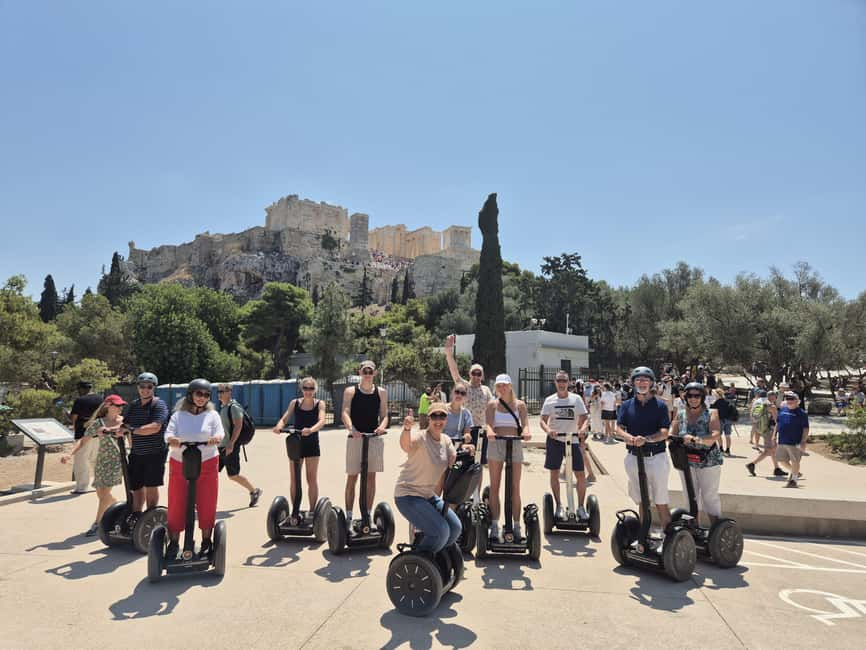
After training, the route heads toward Areopagus and then Mars Hill—a pairing that works extremely well for first-day orientation. There’s a break for photos and sightseeing along the way, plus a guided component so you’re not just riding past big names.
One highlight called out in the tour details is driving over Mars Hill and to the entrance area for the Acropolis. Even without entering the Acropolis itself, that moment of seeing the approach up the hill is useful because it makes the whole area click.
This is also where you’ll notice the hill riding in a way that feels manageable. The tour description emphasizes effortlessly traveling up and down Athens’ hills, and Mars Hill is the kind of climb that would be tiring on foot. On a Segway, you can concentrate on where you are rather than how you feel after the incline.
There’s also a practical consideration: one review flagged that it can be a bit hard to hear the guide while moving. That’s normal on any rides like this, so don’t be shy about asking questions during the stops, and let the guide do the talking when you’re parked and listening.
Thiseio to the Agora Corridor: How the Route Tells the Story
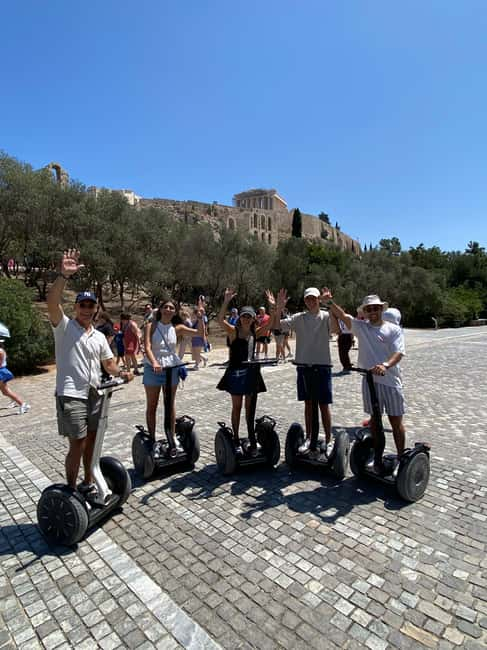
As you roll onward through Thiseio, the tour starts to feel like a guided map you can physically ride. You get more short Segway segments, photo stops, and guided context, which is a good way to learn without committing your entire day to slow wandering.
Then comes the Ancient Agora area, described as the heart of Athens. The value here is the context: the Agora wasn’t just one building, it was the civic center where decisions, discussion, and daily movement connected.
Because entry and guided tours at archaeological sites are not included, you’re not doing a ticketed Agora deep-dive. What you do instead is walk away with a sense of the big layout and the why behind it, so if you later choose to go into the sites on your own, you’ll recognize what you’re seeing.
The guide-led approach also helps you understand why “Athens” isn’t one single attraction. It’s a cluster of hills, viewpoints, and civic spaces that make more sense when you travel the distances between them. A Segway doesn’t replace reading or museum time, but it can set your bearings fast.
Pnyka Hill and the Democracy View: The Payoff Moment
The route pushes toward Pnyka/Pnyx Hill and the terraced area where democracy was born. Even though the tour doesn’t enter archaeological sites, getting up to the terraced viewpoints is one of the most satisfying parts because it gives you perspective over the modern city stretched out below.
This is where you’ll appreciate the “effortless” part of the experience. Athens hills are not gentle, and trying to do everything on foot can turn into a stair-and-sweat marathon. With the Segway, you can arrive with your energy intact and actually enjoy the panorama instead of just surviving it.
The tour also includes a path to the best panoramic view of Athens, and the stop structure generally gives you time to look around and take pictures. That panoramic moment is the kind of memory that stays even after you forget the exact details of one stop—so it’s worth treating it like the main event.
It also works well if you like photography. The tour includes multiple photo stops, and the hill-and-city views give you angles you wouldn’t get from only roaming flatter areas.




Monastiraki Breaks and the Return Loop Through Central Athens
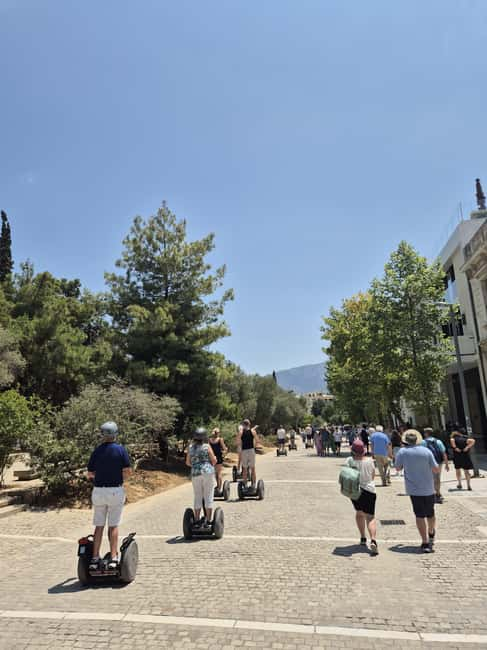
After the Agora segment, you reach Monastiraki, where you get another photo stop and guided tour component, plus a break and some free time. Monastiraki is a good reset point because it gives you a chance to step off the Segway and regroup.
Then the tour keeps rolling through central Athens for about an hour, with more sightseeing and passing stops on the way before returning to where you started. The important part is that you end back at Eschinou 9, which makes planning your evening much easier than tours that scatter you across town.
This final loop is also a chance to connect dots. You’ll see how these ancient areas sit inside a living modern neighborhood, not in a separate bubble. If you plan to wander on your own after, you’ll likely find it easier to pick directions since you’ve already ridden the main corridors.
One smart move: if you already saw big-ticket areas like the Acropolis earlier, tell your guide at the start what you did. In past experiences with guides like Gina, leaders have tailored the route to match what was already covered, which can help you avoid repeating the same sight in two days.
Price and Value: Why $78 Works for a 2-Hour Route
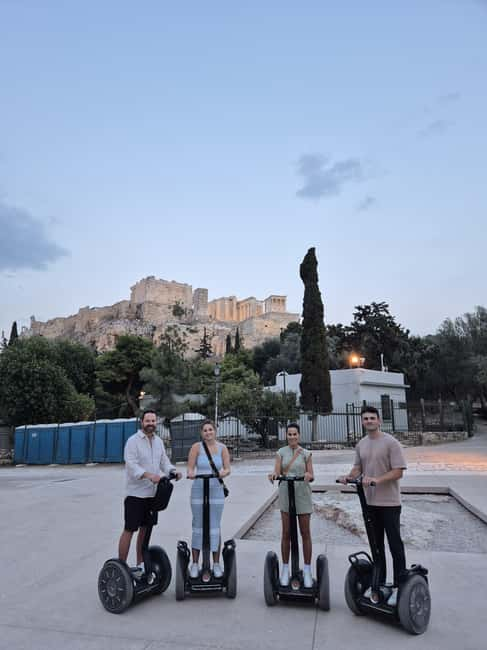
At $78 per person for about two hours, this Segway tour is priced for people who want maximum context without sacrificing half a day. You’re paying for the machines, the training, the helmet, and a local guide who manages the route and stops.
Value-wise, you’re getting more than “fun riding.” You’re covering major story beats: Kerameikos cemetery atmosphere, the civic center at the Agora, and hill-based viewpoints tied to Mars Hill and Pnyka/Pnyx. On foot, the same route would be longer and more tiring, and you’d spend more time navigating up and down streets than learning why each place matters.
Since entry and guided tours inside archaeological sites aren’t included, you should think of this as the orientation layer. It helps you understand what to prioritize later, whether you add a ticketed visit or just explore the neighborhoods around what you learned.
In short: the money goes toward access, pacing, and clarity. If you want a ticketed museum day, this isn’t built for that. If you want a sharp introduction to how ancient Athens connects, it’s a strong use of time.
Who This Tour Suits (and Who Should Skip It)
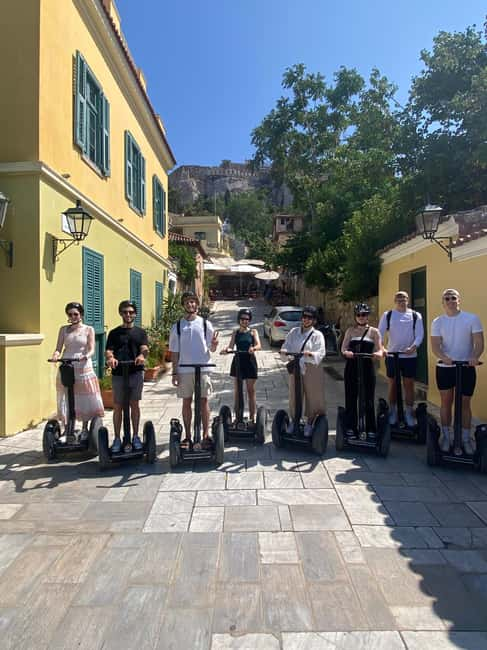
This tour is ideal for you if:
- You want first-day orientation in central Athens without wearing yourself out on hills
- You’re comfortable trying a first-time activity and following instructions
- You prefer guided stops and short photo breaks over long stretches of walking
It’s also a good fit for families with older teens, as long as the adult accompaniment and motion requirements are met. One described experience emphasized patience during the training phase, which is reassuring if you’re traveling with a teen who’s learning the Segway for the first time.
Skip this tour if:
- You’re pregnant (it’s not recommended)
- You can’t meet the weight limits (under 45 kg or over 113 kg)
- You don’t want to follow the no–large-bags rule
- You strongly dislike the idea of riding even briefly on uneven urban terrain
And one more realistic note: if you want to focus on hearing every word while moving, plan to catch key explanations during stop moments. The Segway experience is part sightseeing, part riding, so the audio experience depends on pace and conditions.
Should You Book the Ancient Athens, Agora, and Keramikos Segway Tour?
Book it if you want a smart, time-efficient way to connect Kerameikos, the Agora, and hill viewpoints tied to Mars Hill and the Acropolis entrance area—without spending your day buying and using entry tickets. The small-group size and included training make it feel structured, not chaotic.
Don’t book it if your main goal is stepping inside archaeological sites and doing full ticketed tours. This route is designed to show you the layout and viewpoint story from the outside, and it won’t replace the in-depth experience of a site visit.
Finally, if you’re deciding between this and a pure walking day, think about your energy level. If you want more than “just wandering,” and you’d like to see a lot while keeping your day intact, this Segway route is one of the more practical ways to do it.
FAQ
How long is the Ancient Athens, Agora, and Keramikos Segway Tour?
The tour duration is 2 hours.
Where is the meeting point?
Meet at Eschinou 9, Plaka, Athens 105 58, Greece.
Where does the tour end?
The activity ends back at the meeting point (Eschinou 9).
Does the tour enter archaeological sites like the Agora or the Acropolis?
No. The tour does not enter any archaeological sites. Entry and guided tours at archaeological sites are not included.
What is included in the price?
Included are the training session, a helmet, and an experienced local tour leader.
What should I wear or bring for the Segway ride?
Wear comfortable shoes. Large bags are not allowed.
Are luggage or large bags allowed?
No. Luggage or large bags are not allowed.
What is the minimum age to ride?
The minimum age to ride a Segway is 10 years.
What are the weight limits?
The tour is not suitable for anyone weighing less than 100 pounds (45 kg) or more than 250 pounds (113 kg).
Is the tour recommended for pregnant women?
No. It is not recommended for pregnant women.